

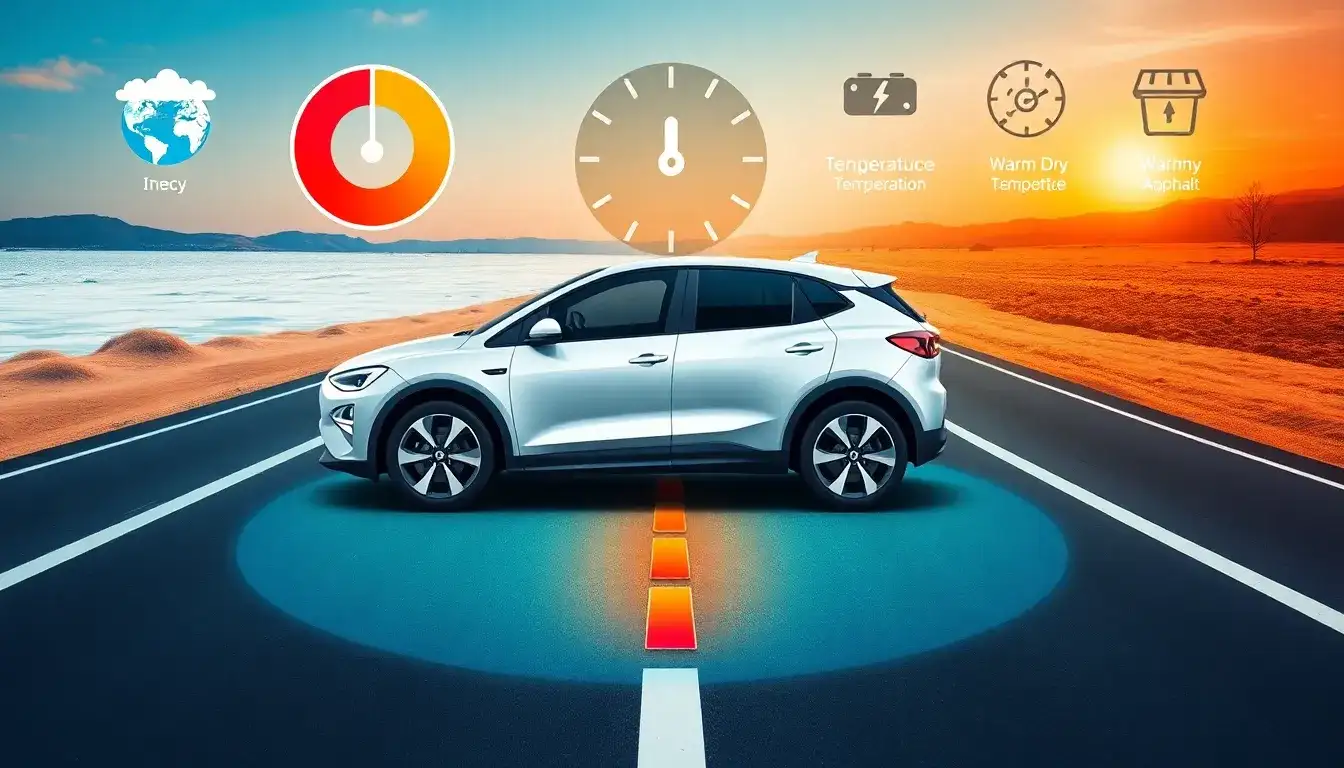
How Road Temperature Affects EV Efficiency
Temperature significantly impacts the efficiency and range of electric vehicles (EVs). Both cold and hot temperatures can affect EV performance, but the effects differ.
Cold Temperatures
- Reduced Range: Cold temperatures can significantly reduce EV range. Data suggests that at freezing temperatures, EV range can drop by 16% to 46% compared to optimal conditions. The decrease is primarily due to the energy required to heat the cabin and maintain battery temperature.
- Increased Charging Time: Cold weather can also slow down charging. EVs may charge up to three times slower in cold temperatures compared to warmer conditions.
Warm/Hot Temperatures
- Moderate Range Reduction: Hot temperatures can reduce EV range, but the impact is generally less severe than in cold conditions. For example, using air conditioning can lower the range by up to 17%, while temperatures around 95°F without AC reduce the range by about 4%.
- Less Severe Impact: While hot temperatures do affect EVs, the impact is less pronounced compared to cold temperatures, especially since most driving occurs within a moderate temperature range.
Optimal Temperatures
- EVs perform best at temperatures around 70°F (21.5°C), exceeding their rated range by up to 15%.
- This optimal temperature range allows for efficient battery operation and minimal additional energy consumption for heating or cooling.
Summary
In summary, cold temperatures have a more significant impact on EV efficiency by reducing range and increasing charging times. However, both cold and hot temperatures can affect EV range, and understanding these impacts can help drivers optimize their usage.
Original article by NenPower, If reposted, please credit the source: https://nenpower.com/blog/how-does-road-temperature-affect-ev-efficiency/

