

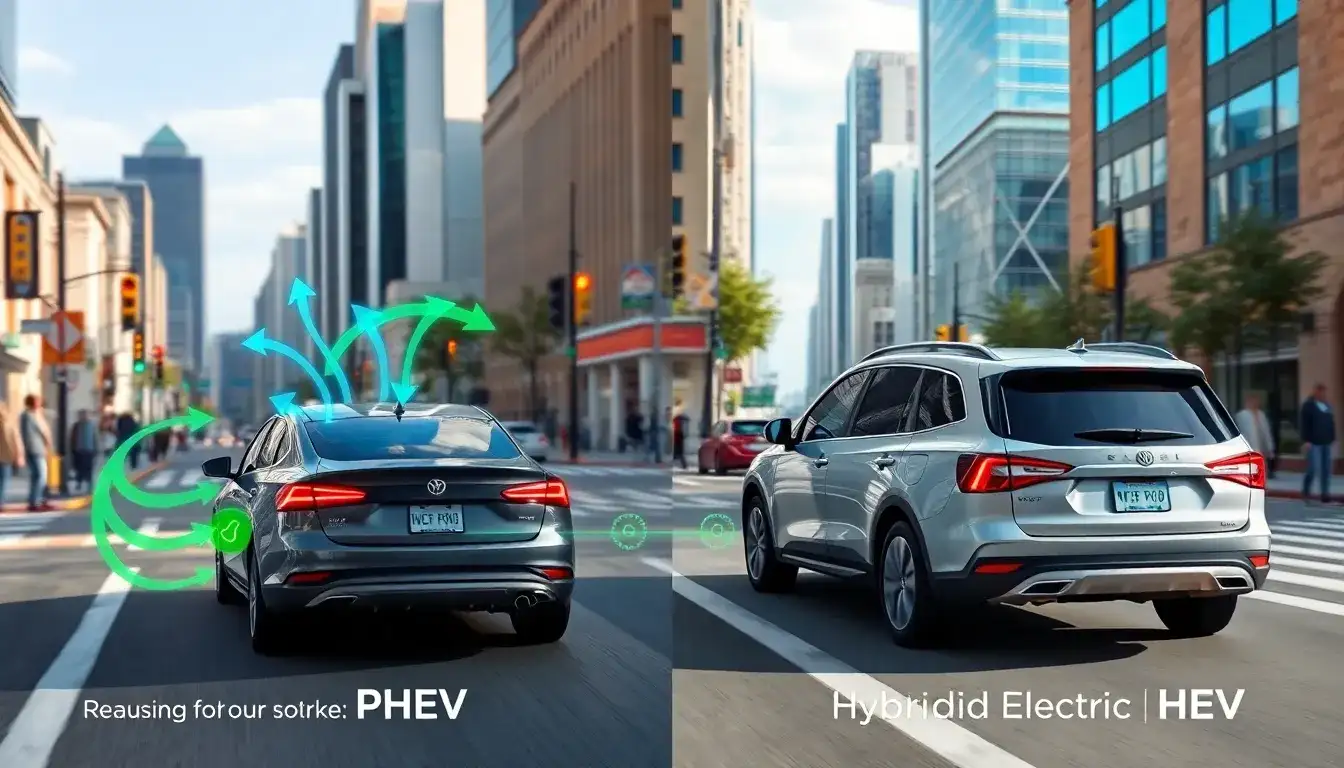
Regenerative Braking in PHEVs and HEVs: Differences in City Driving
Regenerative Braking Basics
Both Hybrid Electric Vehicles (HEVs) and Plug-in Hybrid Electric Vehicles (PHEVs) use regenerative braking to capture kinetic energy and convert it into electrical energy. This process occurs when the vehicle slows down or brakes, and the electric motor acts as a generator to charge the battery.
HEV Regenerative Braking
- Operation: In HEVs, regenerative braking is essential for maintaining the battery’s state of charge. The battery is relatively small, usually less than 1 kWh, and is continuously replenished during driving through regenerative braking.
- City Driving Benefits: In city driving, HEVs benefit significantly from regenerative braking due to frequent stops and starts. This frequent braking helps keep the battery charged, allowing the electric motor to assist more often, which improves fuel efficiency.
PHEV Regenerative Braking
- Operation: PHEVs also use regenerative braking but have a much larger battery compared to HEVs, often 10 to 20 times larger. While regenerative braking is crucial, it primarily supplements the larger battery’s charge when not plugged in.
- City Driving Benefits: In city driving, PHEVs can operate in electric-only mode for longer distances, benefiting from their larger batteries. Regenerative braking helps top off the battery during city driving, but the vehicle’s primary advantage comes from its ability to run on electric power for more of the trip, reducing fuel consumption and emissions.
Differences in City Driving
- Battery Size and Electric Range: The primary difference is the size of the battery and the ability to run longer distances on electric power. HEVs rely more on regenerative braking for battery replenishment, while PHEVs benefit from both regenerative braking and external charging.
- Fuel Efficiency and Emissions: HEVs offer improved fuel efficiency due to regenerative braking and electric assist during driving. PHEVs, however, can significantly reduce emissions and fuel use by operating in electric mode more frequently in city environments.
Original article by NenPower, If reposted, please credit the source: https://nenpower.com/blog/how-does-regenerative-braking-in-phevs-and-hevs-differ-in-city-driving/

