

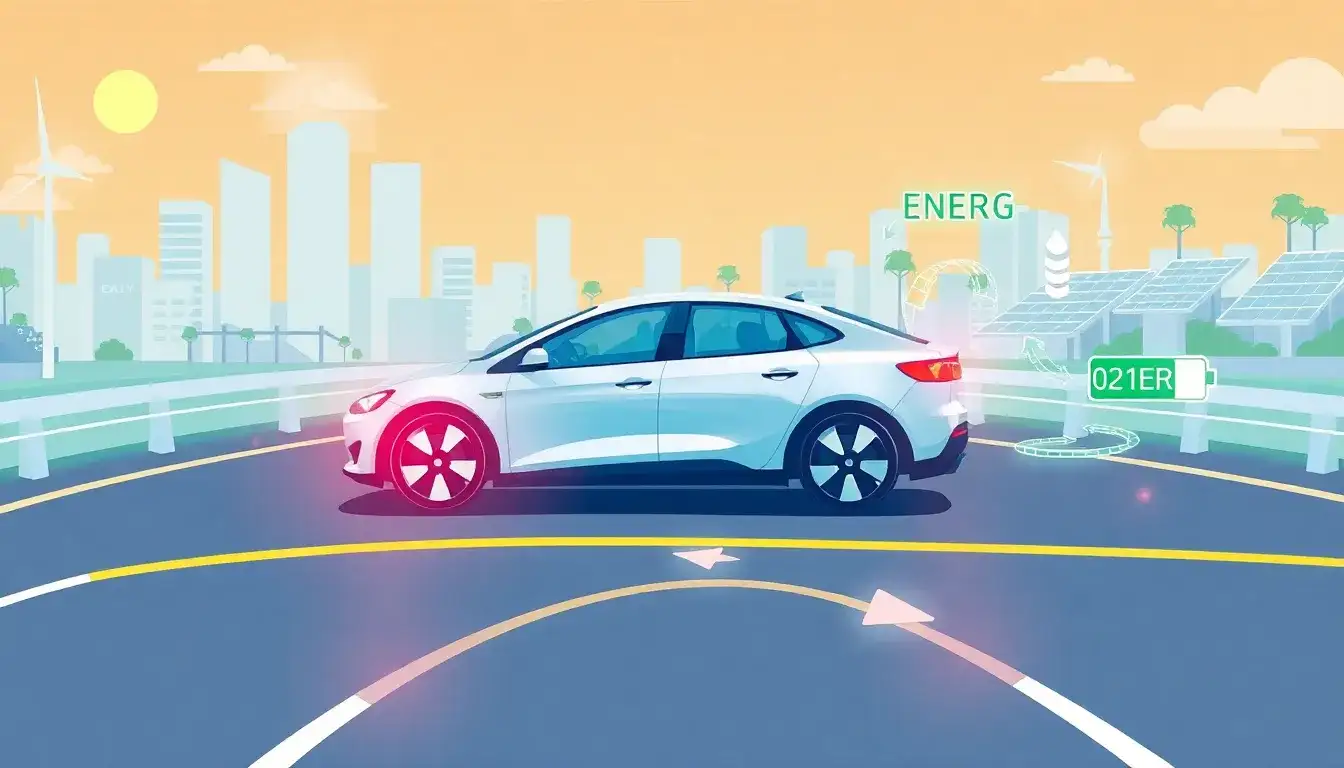
Regenerative braking improves electric vehicle efficiency through energy recovery and reduced battery strain, primarily by converting kinetic energy into stored electrical energy during deceleration. Here’s how it works:
Energy Recovery Process
When braking, the electric motor reverses its function, acting as a generator instead of a power consumer. This conversion captures kinetic energy that would otherwise dissipate as heat in traditional braking systems. The process typically recovers 60–70% of the kinetic energy lost during braking, depending on driving conditions.
Efficiency Gains
- Direct energy reuse: Recovered electricity is stored in the battery, reducing the need to draw power from the grid during acceleration.
- Reduced brake wear: Friction brakes are used less frequently, minimizing energy loss from heat and mechanical wear.
- Urban driving optimization: Regenerative braking provides up to 30% efficiency improvement in stop-and-go traffic, where frequent braking occurs.
Key Advantages Over ICE Vehicles
Internal combustion engines (ICE) lose 100% of braking energy as heat. In contrast, EVs recapture most of this energy, reducing overall energy consumption and extending driving range. For example, regenerative braking can add hundreds of miles of electric range annually, though efficiency drops under low-speed conditions.
Limitations
Energy losses occur during both energy conversion (10–20% lost during braking) and reuse (another 10–20% lost during acceleration). Despite this, regenerative braking remains a critical feature for optimizing EV performance and sustainability.
Original article by NenPower, If reposted, please credit the source: https://nenpower.com/blog/how-does-regenerative-braking-improve-the-overall-efficiency-of-an-electric-vehicle/

