

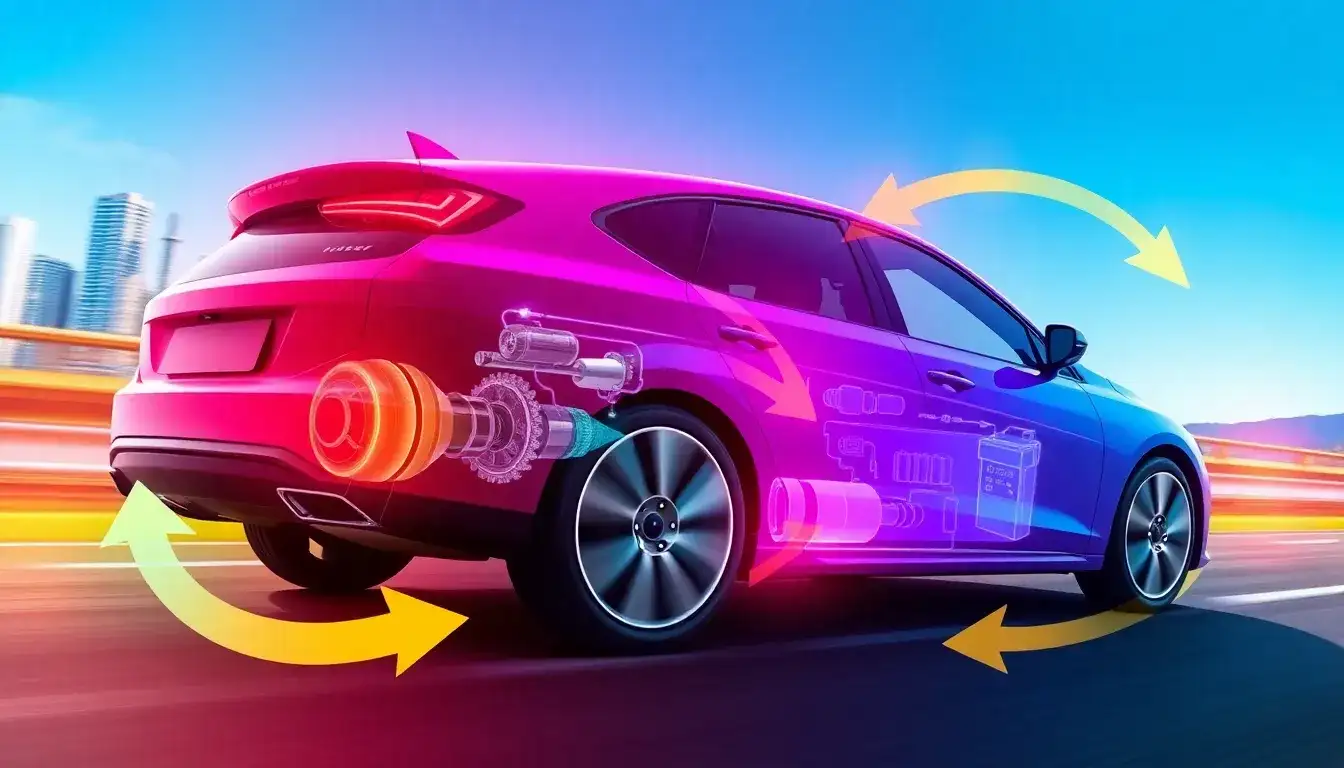
Regenerative braking significantly improves the efficiency of hybrid vehicles through several mechanisms:
How Regenerative Braking Works
- Capturing Kinetic Energy: When you apply the brakes or release the accelerator in a hybrid vehicle, the electric motor acts as a generator. It converts the vehicle’s kinetic energy into electrical energy.
- Energy Conversion and Storage: This electrical energy is then stored in the vehicle’s battery for later use, such as powering the electric motor during acceleration.
- Assisting Traditional Braking: Regenerative braking assists in slowing down the vehicle, reducing the need to engage the traditional friction-based braking system.
Efficiency Improvements
- Reduced Energy Loss: By converting kinetic energy into electrical energy, regenerative braking reduces the amount of energy lost as heat during braking.
- Improved Fuel Efficiency: The recovered energy helps keep the battery charged, reducing reliance on the gasoline engine and thus improving fuel efficiency.
- Extended Brake Lifespan: Since regenerative braking handles a portion of the deceleration, it reduces wear on brake components, extending their lifespan and lowering maintenance costs.
Benefits in Practice
- Smoother Deceleration: Regenerative braking provides smoother deceleration, enhancing driving experience, especially in stop-and-go traffic.
- Environmental Benefits: By reducing reliance on the engine and conserving energy, regenerative braking contributes to lower emissions and a smaller carbon footprint.
Overall, regenerative braking plays a crucial role in enhancing the efficiency, performance, and environmental sustainability of hybrid vehicles.
Original article by NenPower, If reposted, please credit the source: https://nenpower.com/blog/how-does-regenerative-braking-improve-the-efficiency-of-hybrid-vehicles/

