

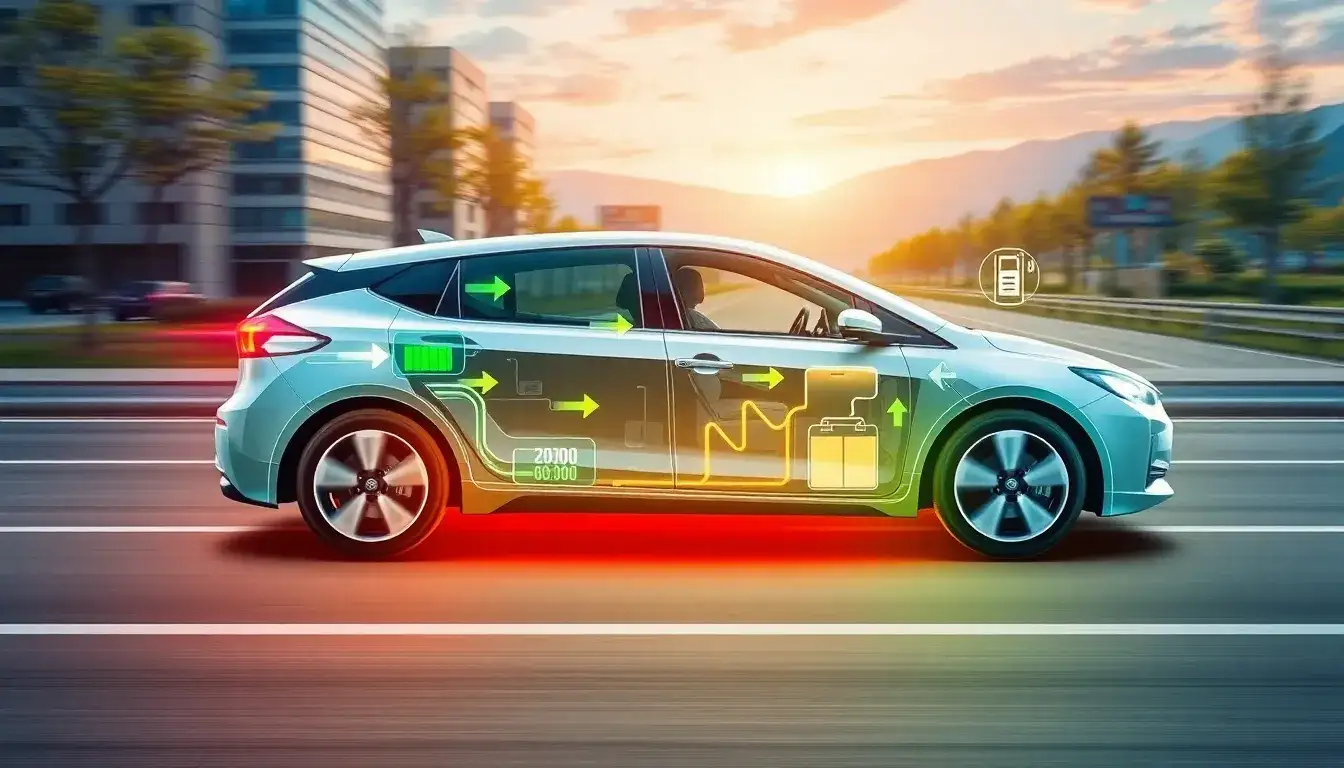
Regenerative braking significantly improves the fuel efficiency of plug-in hybrid electric vehicles (PHEVs) through energy recovery and reduced reliance on fossil fuels. Here’s how it works:
Energy Recovery and Storage
When braking or decelerating, the electric motor acts as a generator, converting kinetic energy into electricity stored in the battery. This reclaimed energy powers the electric motor during acceleration or electric-only driving modes, directly reducing gasoline consumption.
Reduced Engine Load
By supplementing power during acceleration and enabling electric-only driving (especially in city conditions), regenerative braking minimizes how often the combustion engine engages. This is particularly impactful in stop-and-go traffic, where frequent braking allows maximum energy recovery.
Long-Term Efficiency Gains
The system lowers brake wear through reduced mechanical braking reliance, indirectly improving efficiency by maintaining consistent vehicle performance. Combined with PHEVs’ ability to charge via the grid, regenerative braking helps optimize fuel economy by prioritizing electric propulsion.
Key Fuel Efficiency Metrics
- City Driving: Regenerative braking provides the greatest benefits in urban environments due to frequent braking.
- Electric Range Extension: Recovered energy increases the distance PHEVs can travel on electricity alone, reducing gasoline use.
- Hybrid Mode Optimization: Even when using gasoline, the combined electric-gasoline system operates more efficiently than conventional engines.
By capturing otherwise wasted energy, regenerative braking enhances PHEVs’ fuel economy and reduces emissions, making them more sustainable than traditional hybrids or gasoline vehicles.
Original article by NenPower, If reposted, please credit the source: https://nenpower.com/blog/how-does-regenerative-braking-impact-the-overall-fuel-efficiency-of-phevs/

