

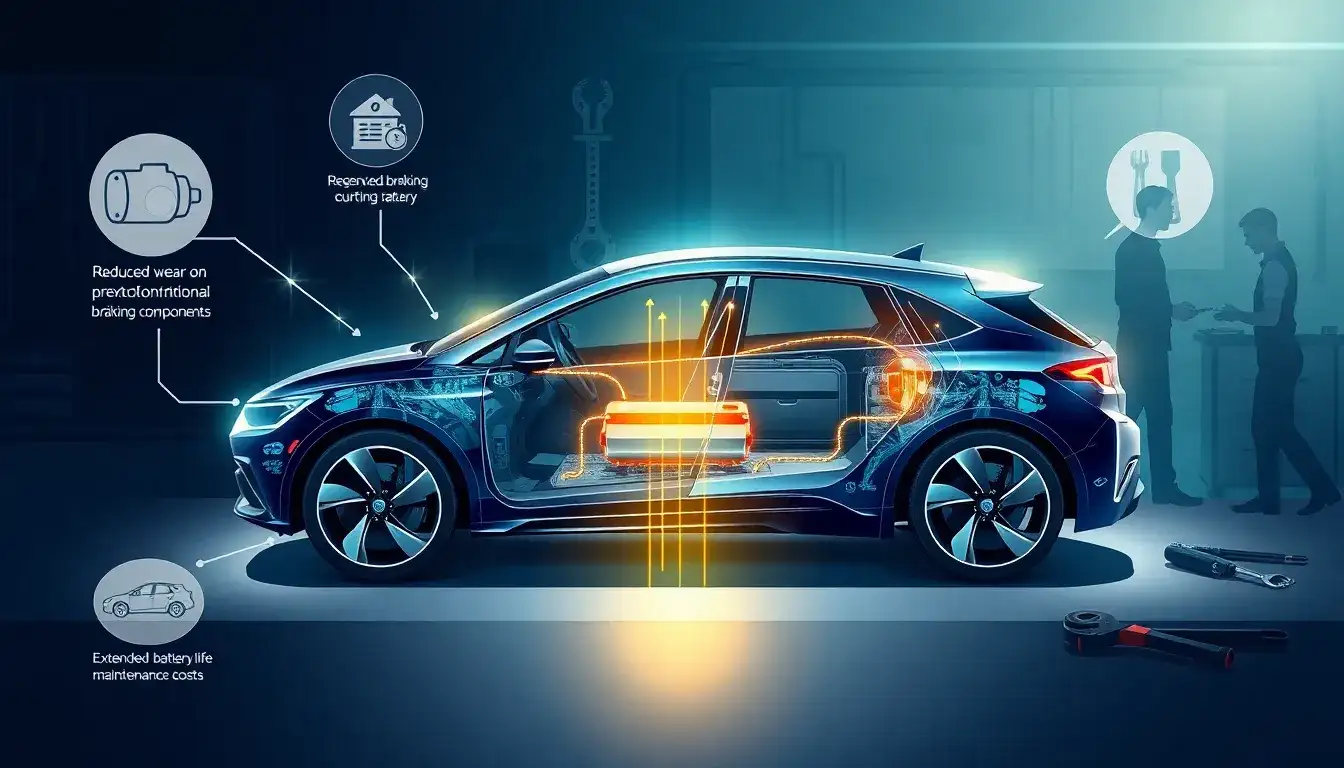
Regenerative braking significantly impacts the maintenance of Plug-in Hybrid Electric Vehicles (PHEVs) primarily by reducing wear and tear on traditional braking systems, which translates into lower maintenance needs and costs.
Impact on Maintenance of PHEVs
Reduced Brake Wear and Maintenance Frequency
Regenerative braking decreases reliance on the conventional friction brakes (brake pads and discs) by using the electric motor to slow the vehicle and recover energy during deceleration. This means brake pads and rotors are engaged less frequently and experience considerably less wear compared to traditional braking systems. As a result, these components last much longer between servicing intervals, reducing the frequency and cost of brake maintenance in PHEVs.
Longer Lifespan of Brake Components
Because the mechanical brakes are used minimally, the overall lifespan of the braking system is extended. This not only saves money on replacement parts but also lowers the likelihood of brake-related failures and the associated repairs.
Brake Fluid Considerations
Although regenerative braking reduces wear on physical brake components, other maintenance aspects like brake fluid still require attention. Regenerative braking systems require the electric motor to rotate oppositely during braking, which can place unique demands on brake fluid and hydraulic systems, necessitating regular inspections and fluid maintenance to ensure proper brake performance.
Additional Benefits
- Smoother and more controlled deceleration enabled by regenerative braking enhances the driving experience.
- Energy recovered during braking helps keep the battery charged, improving fuel efficiency and reducing engine load, indirectly contributing to less frequent engine maintenance needs.
Summary
Regenerative braking in PHEVs primarily reduces maintenance costs by significantly lowering the wear on traditional brake components such as pads and discs. This results in less frequent brake servicing and longer-lasting braking systems. However, it does not eliminate the need for regular brake fluid checks and other routine maintenance. Overall, regenerative braking not only helps maintain the vehicle more cost-effectively but also supports better driving comfort and energy efficiency.
Original article by NenPower, If reposted, please credit the source: https://nenpower.com/blog/how-does-regenerative-braking-impact-the-maintenance-of-phevs/

