

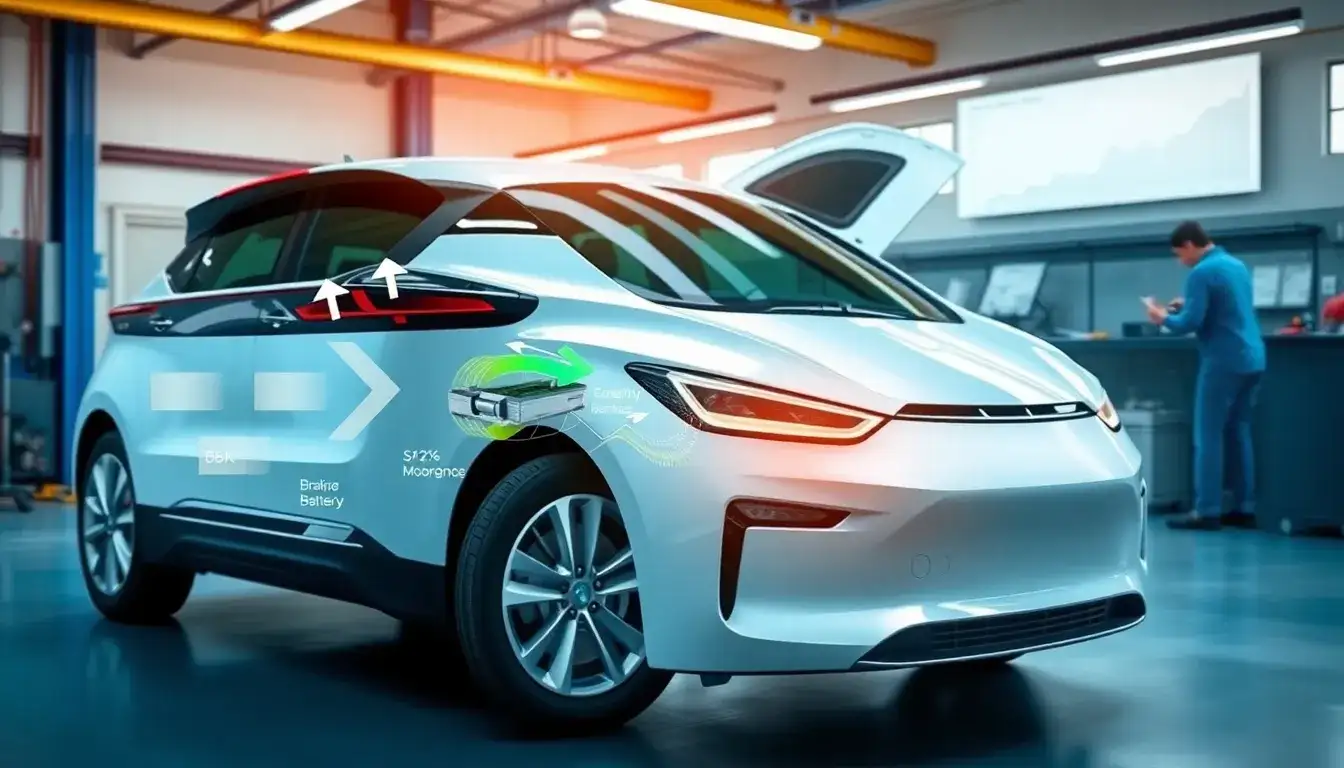
Regenerative braking significantly affects the maintenance costs of electric vehicles (EVs) by reducing wear on certain components. Here are the key impacts:
- Brake Pad Wear: Regenerative braking uses the vehicle’s electric motor to slow it down by converting kinetic energy back into electrical energy. This process reduces the reliance on traditional braking systems, which means brake pads wear out more slowly. As a result, EVs require fewer brake replacements over their lifespan, leading to cost savings on brake pad replacements and labor.
- Less Frequent Brake Fluid Changes: Since regenerative braking reduces the use of traditional braking systems, there is less stress on the brake fluid. This translates to less frequent brake fluid replacements, further reducing maintenance costs.
- Overall Maintenance Cost Reduction: The combined effect of reduced brake pad wear and fewer brake fluid changes contributes to the lower maintenance costs of EVs compared to internal combustion engine (ICE) vehicles. Studies indicate that EV maintenance costs are often significantly lower, partly due to regenerative braking and other factors like fewer moving parts and no oil changes required.
In summary, regenerative braking plays a crucial role in lowering the maintenance expenses of electric vehicles by minimizing wear and tear on braking components.
Original article by NenPower, If reposted, please credit the source: https://nenpower.com/blog/how-does-regenerative-braking-impact-ev-maintenance-costs/

