

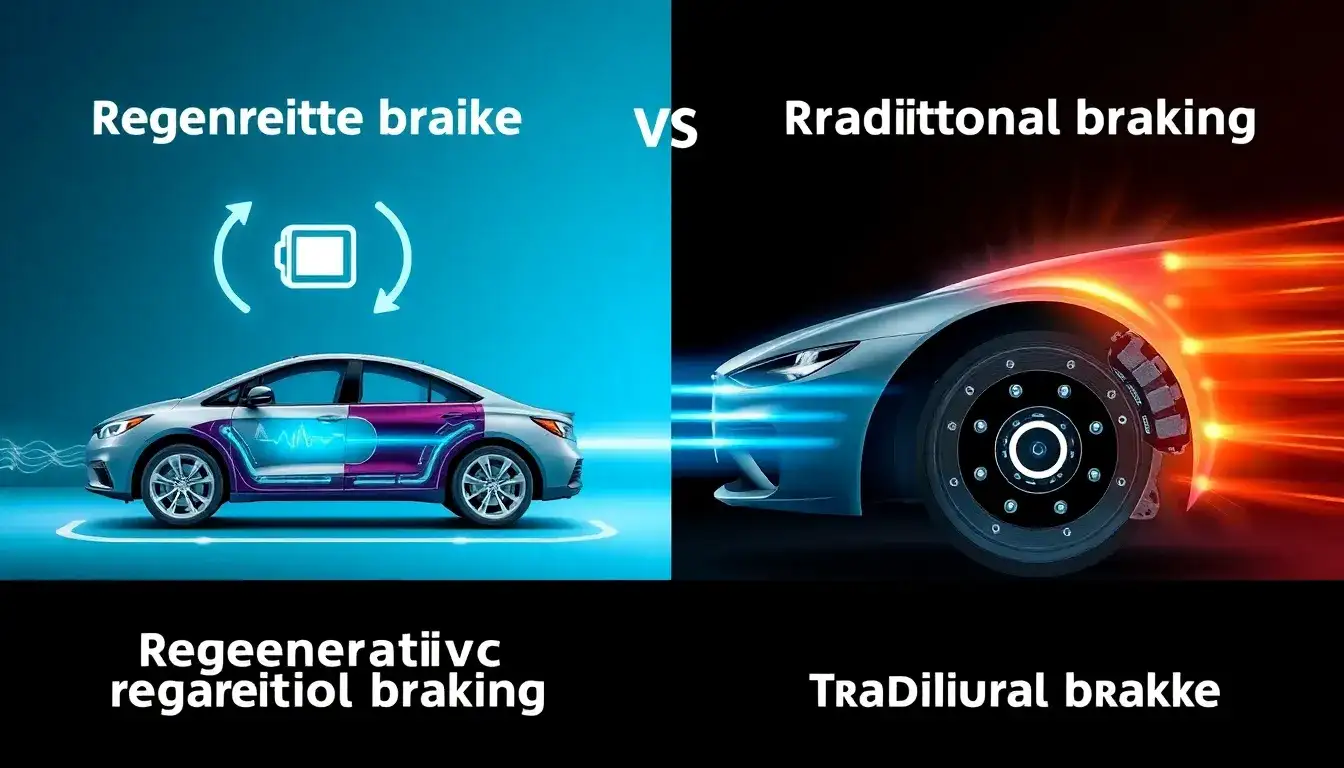
Regenerative braking differs from traditional braking systems primarily in how it handles the kinetic energy produced when slowing down a vehicle.
Traditional Braking Systems:
- Use friction-based mechanisms, where brake pads clamp onto rotors (or drums), converting the vehicle’s kinetic energy into heat through friction.
- This process efficiently slows the car but wastes nearly all of the kinetic energy as heat energy that dissipates into the environment.
- The friction causes wear on mechanical parts like brake pads and discs, requiring regular maintenance and replacement.
Regenerative Braking Systems:
- Found mainly in hybrid and full-electric vehicles, regenerative braking recaptures kinetic energy that would otherwise be lost.
- When braking, the electric motor reverses function and acts as a generator, converting the vehicle’s kinetic energy into electrical energy.
- This electrical energy is then stored in the vehicle’s battery for later use in propulsion or powering systems, increasing overall energy efficiency.
- Regenerative braking reduces the reliance on traditional friction brakes, which helps extend the lifespan of brake parts and reduce maintenance needs.
- While regenerative braking slows the vehicle, traditional friction brakes remain necessary for complete stopping power and safety, especially under heavy braking conditions.
In summary, traditional brakes dissipate kinetic energy as heat through friction, wasting it, while regenerative brakes recover that energy by converting it into electricity to recharge the battery, enhancing efficiency and reducing brake wear in hybrid and electric vehicles.
Original article by NenPower, If reposted, please credit the source: https://nenpower.com/blog/how-does-regenerative-braking-differ-from-traditional-braking-systems/

