

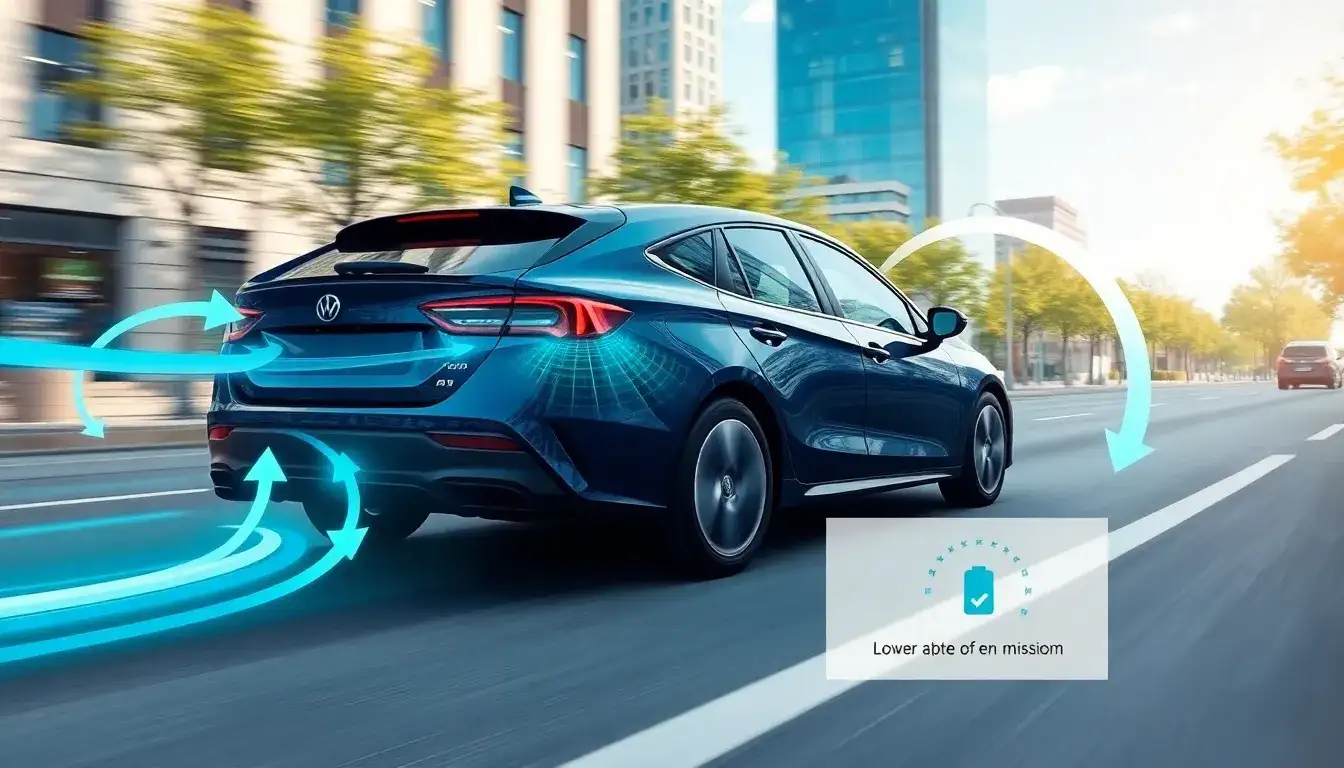
Regenerative braking in hybrid vehicles plays a crucial role in reducing emissions by efficiently capturing and reusing energy that would otherwise be wasted during braking. Here’s how it contributes to emission reduction:
Mechanism of Regenerative Braking
- Energy Capture: When a hybrid vehicle brakes, its electric motor acts as a generator. It captures the kinetic energy of the vehicle and converts it into electrical energy, which is stored in the car’s battery.
- Reduced Fuel Consumption: By reusing this captured energy to power the vehicle in electric mode, regenerative braking reduces the need for the internal combustion engine to generate power. This leads to lower fuel consumption, especially in city driving conditions where frequent stops occur.
- Lower CO2 Emissions: As fuel consumption decreases, the vehicle emits less CO2. This directly supports efforts to reduce greenhouse gas emissions and maintain a cleaner, more sustainable environment.
Enhanced Efficiency and Brake Wear Reduction
- Extended Brake Lifespan: Regenerative braking also reduces the wear on brake pads by taking some of the workload away from conventional braking systems. This not only prolongs the life of the brake pads but also reduces maintenance costs over time.
- Improved Performance: By optimizing energy usage, hybrid vehicles equipped with regenerative braking systems can achieve better overall performance and efficiency, contributing further to reduced emissions and better fuel economy.
Innovative brake systems like the Continental MK C1 further enhance these benefits by optimizing the braking process to achieve additional reductions in CO2 emissions. Overall, regenerative braking is a fundamental technology that supports the low-emission operation of hybrid vehicles.
Original article by NenPower, If reposted, please credit the source: https://nenpower.com/blog/how-does-regenerative-braking-contribute-to-the-reduction-of-emissions-in-hybrid-vehicles/

