

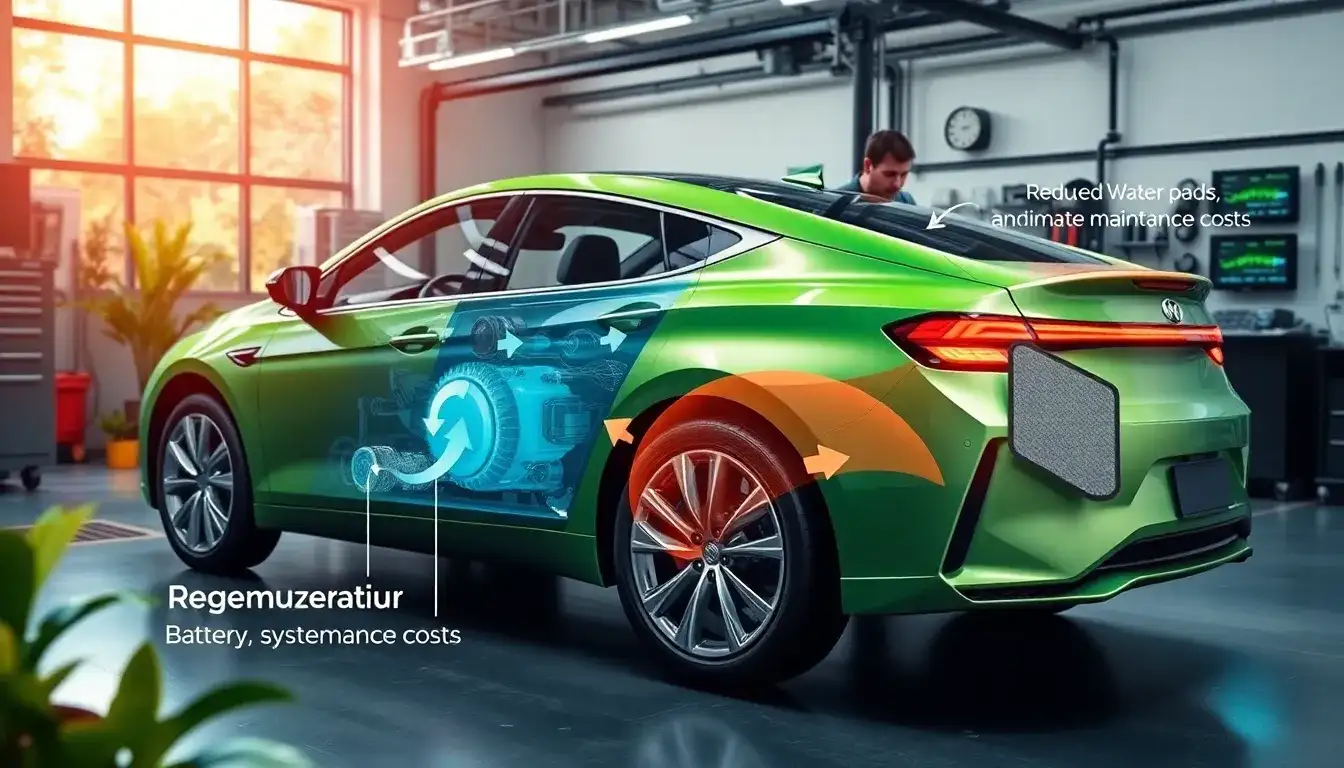
Regenerative braking benefits hybrid car maintenance primarily by significantly reducing the wear and tear on traditional braking components, which extends their lifespan and lowers maintenance costs. Unlike conventional braking systems that convert kinetic energy into heat (which wastes energy and causes brake pads to wear out faster), regenerative braking captures this kinetic energy during deceleration and converts it into electricity stored in the battery for later use. This decreases the frequency and intensity of using friction brakes, thus reducing the need for brake pad replacements and other related braking system maintenance.
Additionally, regenerative braking helps improve overall vehicle efficiency by keeping the battery charged without relying solely on the gasoline engine, which indirectly contributes to less frequent servicing of the engine and fuel system components. The smoother deceleration provided by regenerative braking also adds to better control and potentially less mechanical stress on the braking system.
In summary, the key maintenance benefits of regenerative braking in hybrid cars are:
- Reduced brake pad and rotor wear, leading to longer intervals between brake servicing.
- Lower maintenance costs due to less frequent brake replacements.
- Improved battery charging, reducing reliance on the gasoline engine and associated maintenance.
- Enhanced overall driving experience with smoother braking dynamics.
Original article by NenPower, If reposted, please credit the source: https://nenpower.com/blog/how-does-regenerative-braking-benefit-hybrid-car-maintenance/

