

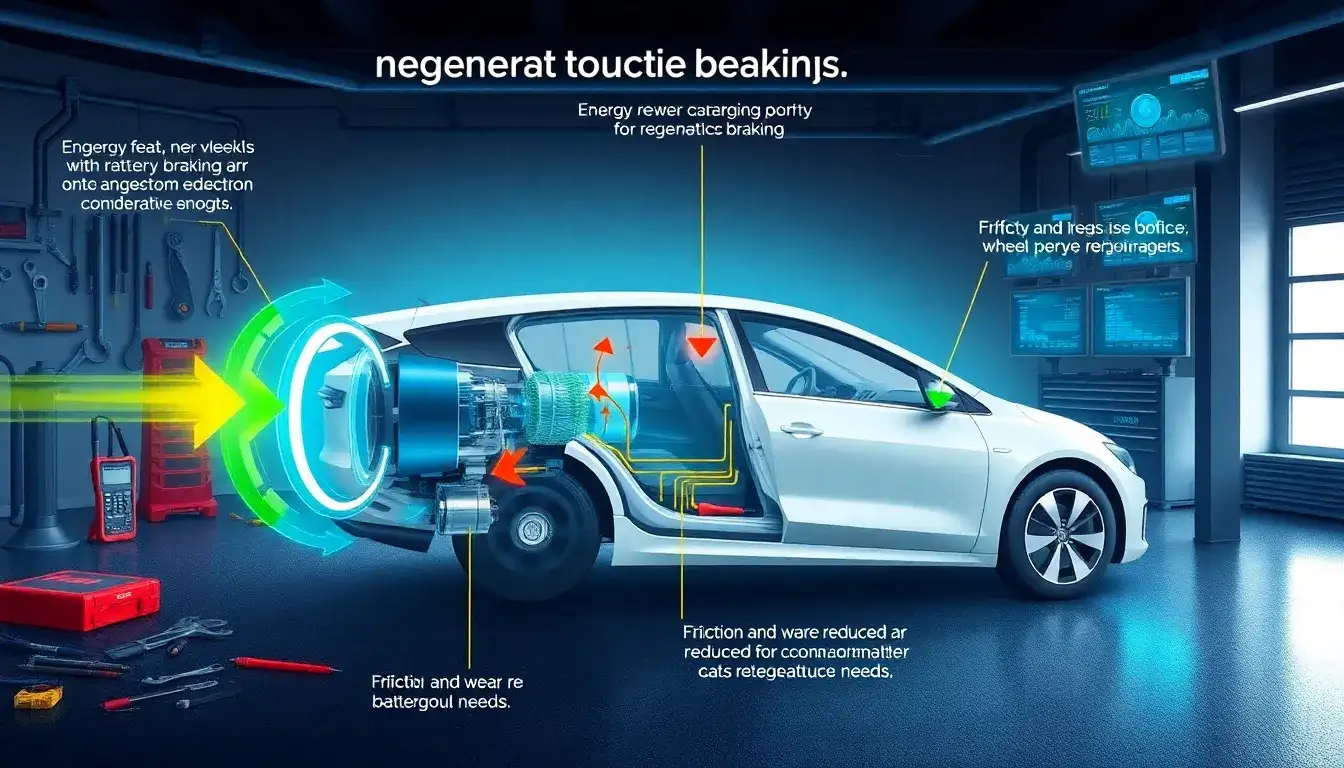
Regenerative Braking in a Plug-in Hybrid Electric Vehicle (PHEV)
Regenerative braking in a Plug-in Hybrid Electric Vehicle (PHEV) significantly impacts its overall maintenance, offering several benefits:
Key Effects on Maintenance
- Reduced Brake Wear: Regenerative braking captures kinetic energy and converts it into electrical energy, which reduces the reliance on traditional friction brakes. This leads to less wear on brake pads and rotors, extending their lifespan by up to 70%. As a result, brake maintenance needs are less frequent.
- Extended Battery Life: By recharging the battery during braking, regenerative braking can help extend battery life, although this effect may vary. This can reduce the need for early battery replacements.
- Fewer Moving Parts: Electric and hybrid vehicles have fewer moving parts compared to conventional vehicles, which inherently reduces overall maintenance needs. However, this is more applicable to fully electric vehicles than specifically to regenerative braking in PHEVs.
- Additional Checks: Despite reduced traditional brake wear, regular inspections are still necessary to ensure all components, including those related to regenerative braking, are functioning properly.
Maintenance Recommendations for PHEVs
- Regular Inspections: Include checks on the hybrid battery, air filter, inverter coolant, and regenerative braking system.
- Follow Manufacturer Guidelines: Adhere to the recommended maintenance schedule to ensure all systems, including regenerative braking, operate efficiently.
- Monitor Brake Condition: Although brake pads last longer, routine checks can prevent unexpected issues.
Overall, regenerative braking in PHEVs reduces maintenance costs by extending the life of certain components like brake pads but still requires regular inspections to maintain optimal performance and safety.
Original article by NenPower, If reposted, please credit the source: https://nenpower.com/blog/how-does-regenerative-braking-affect-the-overall-maintenance-of-a-phev/

