

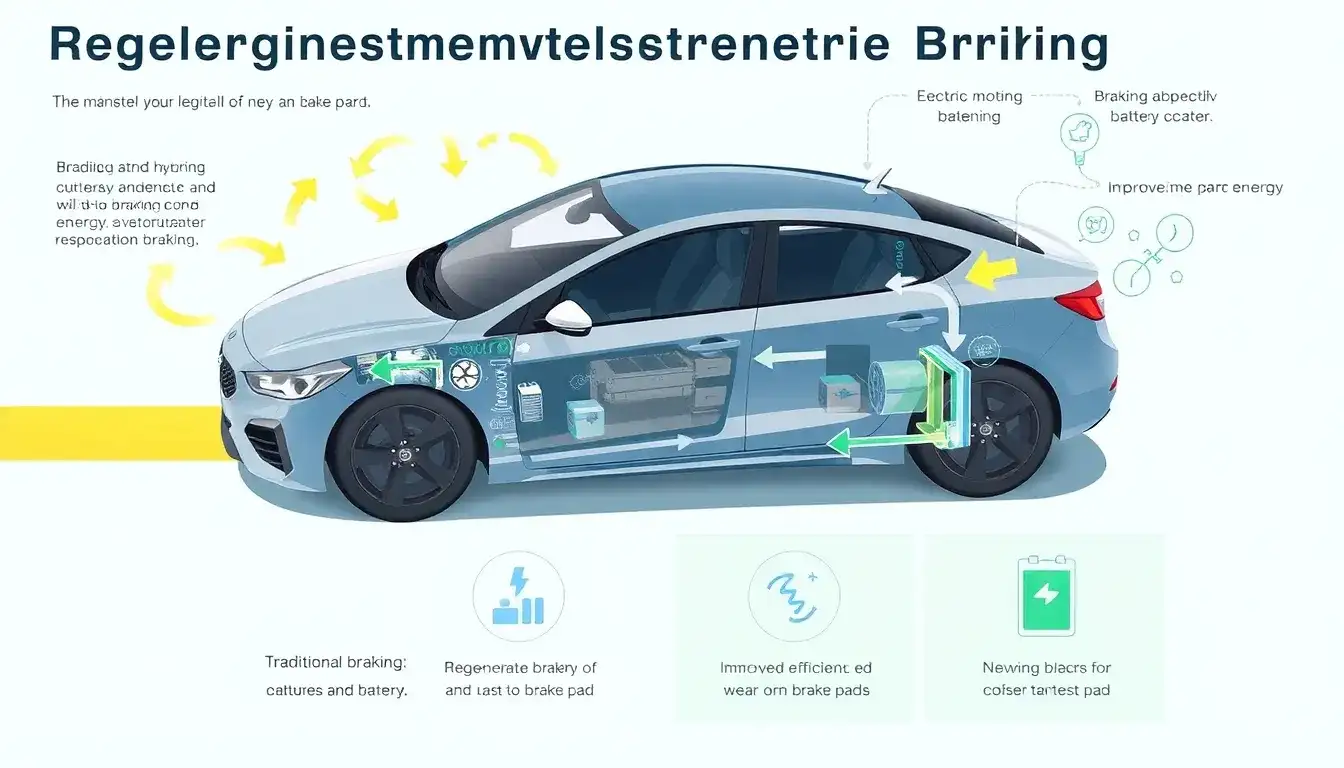
Regenerative braking in hybrid vehicles enhances overall braking performance by combining the benefits of both regenerative and traditional friction braking systems. Here’s how it impacts the braking experience:
Key Effects on Braking Performance
- Dual-Action Braking:
- Regenerative Component: During deceleration, the electric motor acts as a generator, capturing kinetic energy and converting it into electrical energy that is stored in the battery. This process helps slow the vehicle down and contributes to improved fuel efficiency and reduced emissions.
- Friction Component: Traditional hydraulic brakes are still present and assist when additional deceleration is needed, especially in hard or panic stops.
- Reduced Wear on Brake Components:
By doing most of the initial slowing down, regenerative braking reduces the wear on brake pads and rotors, extending their lifespan compared to conventional vehicles that rely entirely on friction braking. - Smoother Deceleration and Control:
Regenerative braking often provides a smoother braking experience, which can improve driver comfort, especially in stop-and-go traffic scenarios. It helps maintain a consistent deceleration rate, enhancing overall driving dynamics. - Enhanced Safety:
The dual-action nature of regenerative and friction braking ensures that vehicles can stop safely and efficiently under various driving conditions.
Overall, regenerative braking improves the braking performance of hybrids by offering improved efficiency, reduced wear on components, and smoother control, making it a key feature of these vehicles.
Original article by NenPower, If reposted, please credit the source: https://nenpower.com/blog/how-does-regenerative-braking-affect-the-overall-braking-performance-in-hybrids/

