

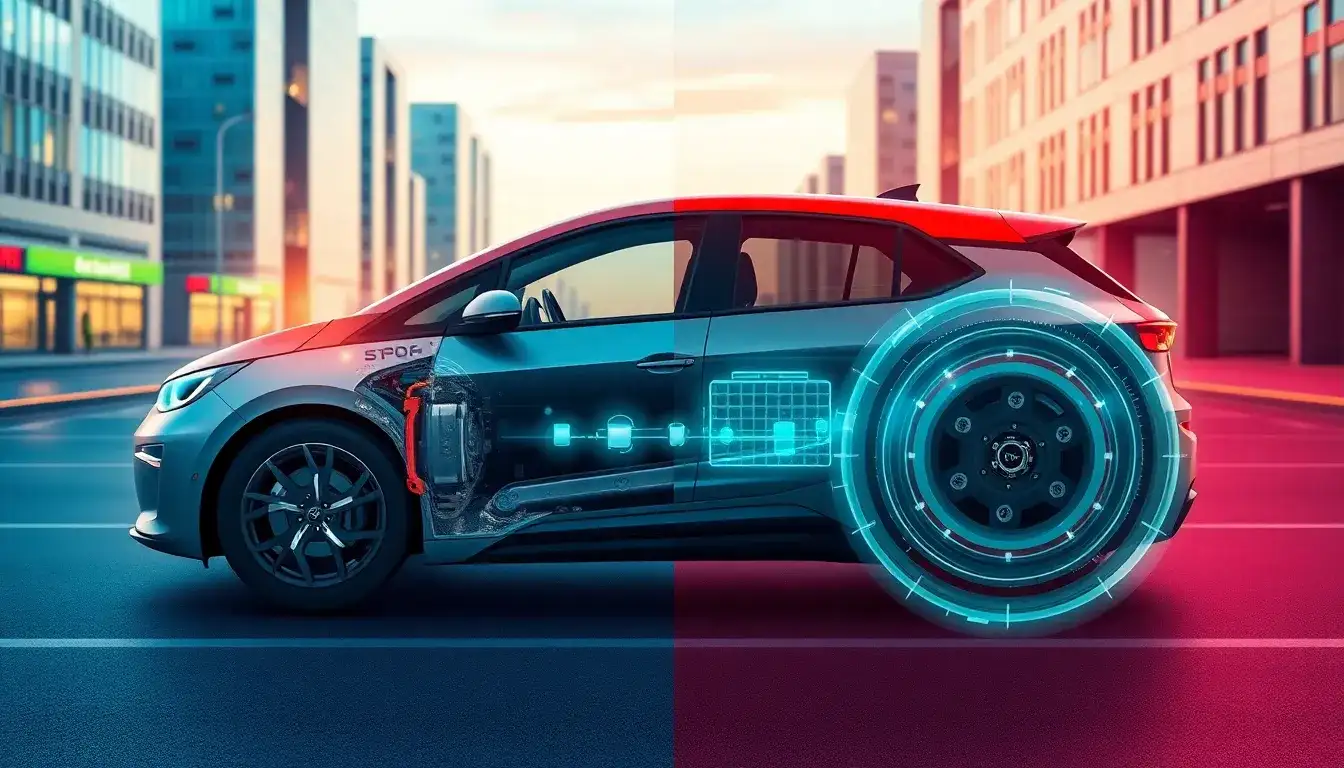
Regenerative braking in electric vehicles (EVs) significantly impacts the lifespan of their brake systems by reducing wear and tear on brake components. Here’s how it affects brake longevity:
What is Regenerative Braking?
Regenerative braking utilizes the electric motor to slow down the vehicle, converting kinetic energy into electrical energy and storing it in the battery. This process is highly energy-efficient and reduces reliance on traditional friction brakes.
Effects on Brake Lifespan
- Reduced Friction Brake Use: Since the electric motor handles much of the deceleration work, friction brakes (pads and discs) are used less frequently, leading to slower wear and tear.
- Less Heat and Dust: With friction brakes being used less often, there is less heat buildup and brake dust generated. This not only extends the life of brake components but also keeps the wheels cleaner.
- Extended Lifespan: Brake pads on EVs can last over 100,000 miles, far exceeding the typical 40,000-50,000 miles for gas-powered vehicles. Factors such as driving habits and vehicle weight also influence brake longevity.
- Efficiency: Regenerative braking is efficient, converting kinetic energy into usable power, which further reduces the need for friction braking.
Overall, regenerative braking in EVs is a key factor in extending the lifespan of brake systems, making them more durable and requiring less frequent maintenance than those in traditional vehicles.
Original article by NenPower, If reposted, please credit the source: https://nenpower.com/blog/how-does-regenerative-braking-affect-the-lifespan-of-ev-brake-systems/

