

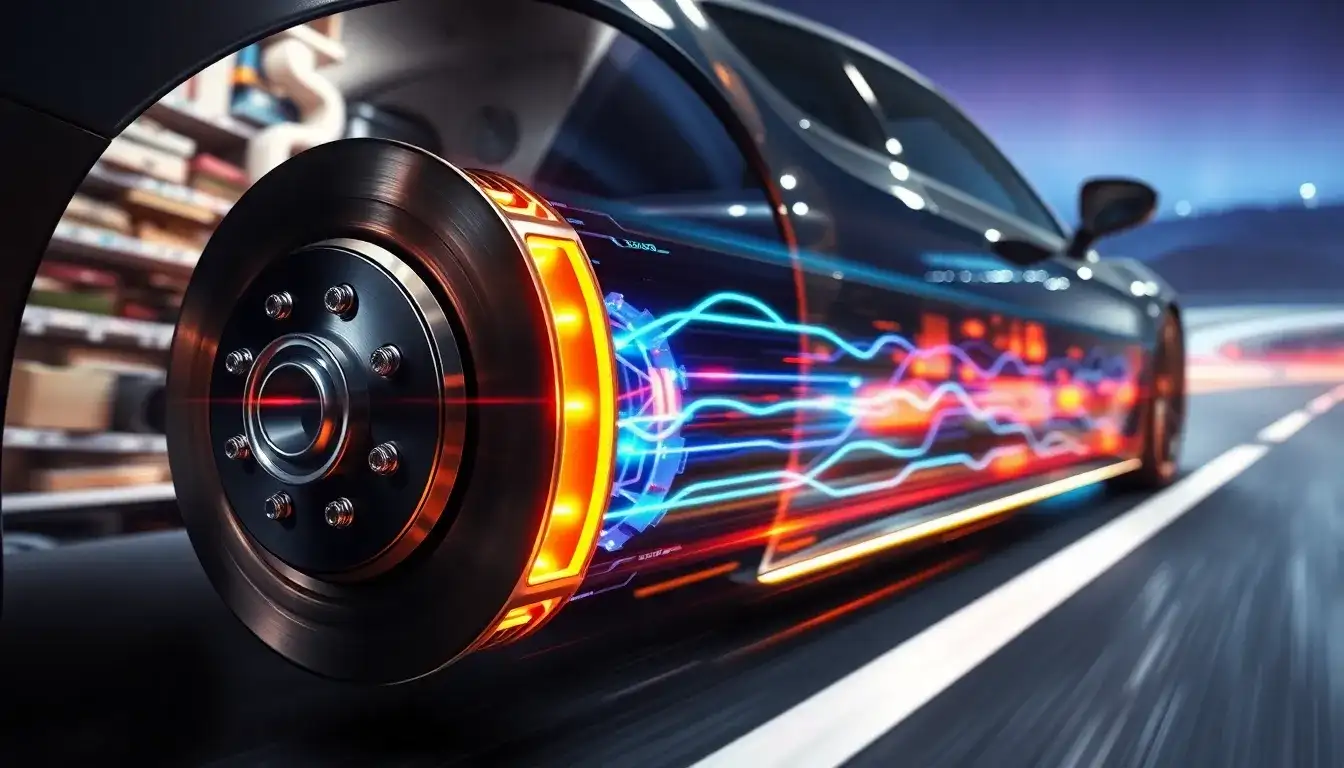
Effects of Regenerative Braking on Brake Component Lifespan
Regenerative braking has both positive and negative impacts on the lifespan of brake components in vehicles, especially those powered by electricity or hybrids.
Positive Effects
- Reduced Wear and Tear: Regenerative braking significantly reduces the wear and tear on brake pads and rotors because it uses the vehicle’s electric motor to slow down, thus doing much of the work that traditional mechanical brakes would handle. This results in less friction, which usually extends the lifespan of these components.
- Longer Brake Pad Life: Because EVs and hybrids rely more heavily on regenerative braking, they often experience less pressure on traditional braking systems. This can lead to longer lifetimes for brake pads in vehicles that use regenerative braking extensively, especially under typical driving conditions.
Negative Effects
- Corrosion and Rust: While regenerative braking reduces mechanical brake usage, it can also lead to issues like corrosion and rust buildup on rotors. This is because the traditional friction between pads and rotors, which serves as a self-cleaning mechanism, is reduced. Over time, this can cause uneven braking performance and increase maintenance costs, particularly in regions with high humidity or precipitation.
- Glazing and Uneven Wear: Brake pads may not be used enough to maintain their effectiveness, leading to glazing—a condition where the pad surface becomes smooth and fails to generate adequate friction. This can result in decreased braking performance, especially in emergency stops, and may require more frequent inspections or replacements.
- Driving Style Factors: The effectiveness of regenerative braking in extending brake component lifespan heavily depends on driving styles and conditions. It works best in city traffic or slow-speed environments; however, in situations requiring full mechanical braking, the benefits may be less pronounced.
In summary, while regenerative braking can extend the lifespan of brake components by reducing mechanical wear, it also poses risks of corrosion, glazing, and uneven wear if not managed properly. Regular maintenance and understanding of these factors are crucial to optimizing brake performance in vehicles equipped with regenerative braking systems.
Original article by NenPower, If reposted, please credit the source: https://nenpower.com/blog/how-does-regenerative-braking-affect-the-lifespan-of-brake-components/

