

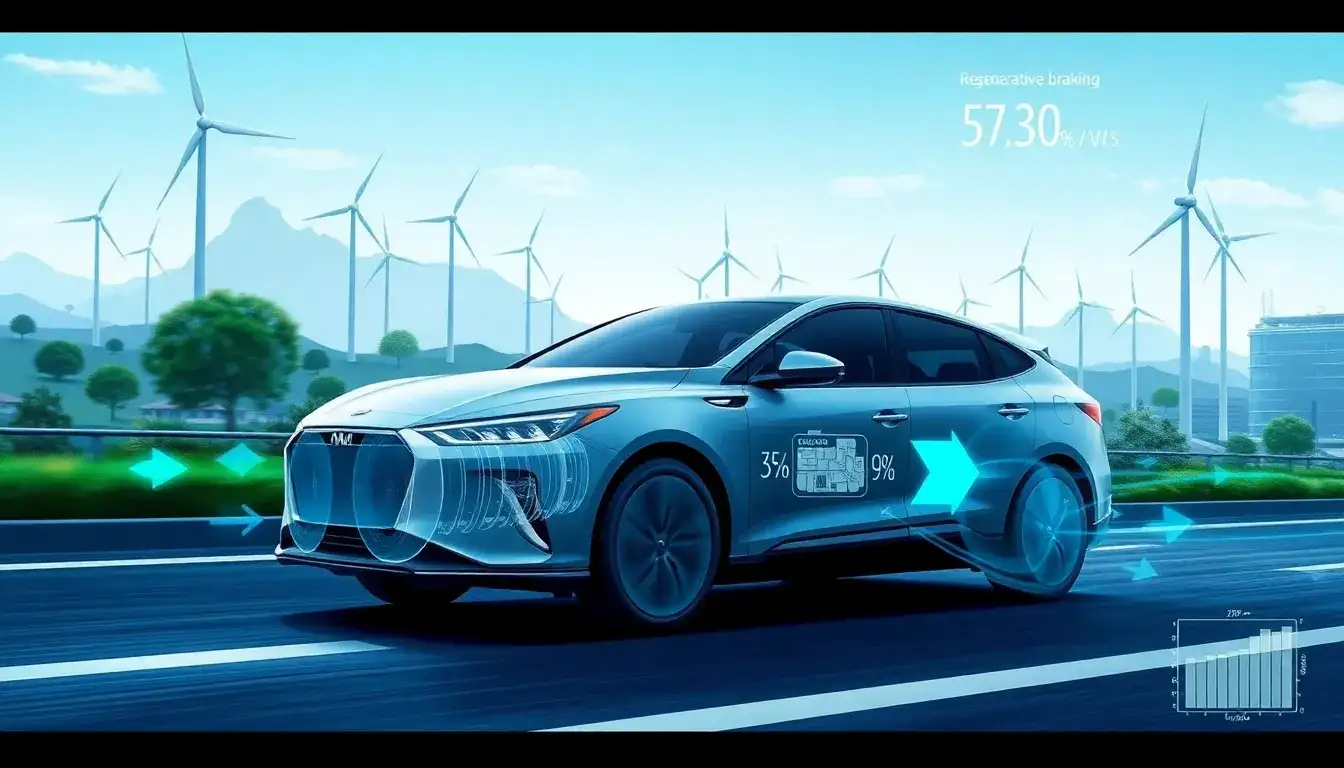
Regenerative braking in Plug-in Hybrid Electric Vehicles (PHEVs) significantly influences EV mode performance by enhancing energy efficiency and extending the electric driving range.
How Regenerative Braking Works in PHEVs
Regenerative braking captures kinetic energy that would normally be lost as heat during braking or deceleration. When the driver lifts off the accelerator or applies the brakes, the electric motor operates in reverse as a generator. This process converts the vehicle’s kinetic energy into electrical energy, which is then stored back in the battery.
Impact on EV Mode Performance
- Energy Recovery and Battery Optimization: In EV mode, regenerative braking helps recover energy during deceleration, effectively recharging the battery and thereby optimizing the electric range. This means the vehicle can travel farther on electric power alone before requiring a recharge or engaging the combustion engine.
- Smooth Deceleration Without Engine Intervention: When lifting off the accelerator in EV mode, the regenerative braking system slows the vehicle smoothly without activating the combustion engine, enhancing the electric driving experience.
- Increased Power Harvesting When Braking: The amount of energy recovered increases when the driver applies the brakes, which intensifies regeneration and further benefits battery charging in EV mode.
- Driving Mode Interaction: Some PHEVs have different regenerative braking levels. Higher regeneration settings (e.g., B3 in some models) may deactivate EV mode and cause the combustion engine to kick in, while lower settings (B0-B2) allow continued electric driving with regenerative braking supporting battery recharging.
Summary
Regenerative braking improves EV mode performance in PHEVs by converting kinetic energy into rechargeable electrical energy, thereby extending the electric-only range and providing smooth deceleration without immediate reliance on the combustion engine. However, aggressive regenerative settings might limit pure EV mode operation by triggering the engine. Overall, regenerative braking is essential to maximizing electric efficiency and driving convenience in PHEVs.
Original article by NenPower, If reposted, please credit the source: https://nenpower.com/blog/how-does-regenerative-braking-affect-ev-mode-performance-in-phevs/

