

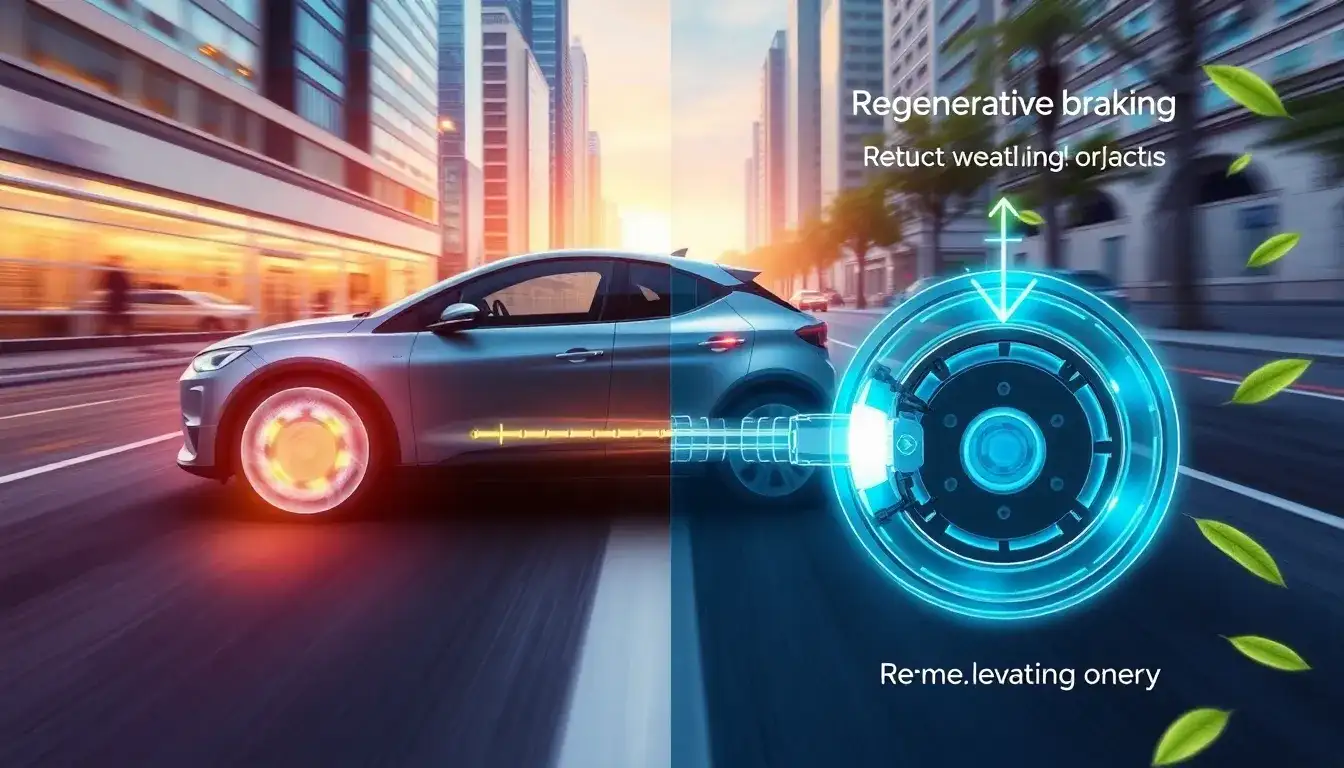
Regenerative braking in Plug-in Hybrid Electric Vehicles (PHEVs) significantly reduces brake wear compared to traditional friction braking systems. This is because regenerative braking slows the vehicle by converting its kinetic energy into electrical energy, which is stored in the battery for later use, rather than relying primarily on friction between brake pads and rotors to dissipate energy as heat. As a result, the friction brakes are used less frequently and less intensively, which extends the lifespan of brake components such as pads, discs, and drums.
Specifically, when the driver releases the accelerator or lightly presses the brake, the electric motor acts as a generator, recapturing energy and reducing the need for mechanical braking. This process leads to smoother deceleration and less physical wear on the braking system. Only when maximum regenerative braking has been reached or more braking force is required do the conventional brakes engage, which is known as the “handoff” point.
Overall, regenerative braking not only improves energy efficiency and increases vehicle range by reusing recovered energy but also lowers maintenance costs by reducing the frequency of brake pad replacement and other brake wear-related issues. This makes regenerative braking a key factor in the performance, efficiency, and longevity of braking systems in PHEVs.
Original article by NenPower, If reposted, please credit the source: https://nenpower.com/blog/how-does-regenerative-braking-affect-brake-wear-in-phevs/

