

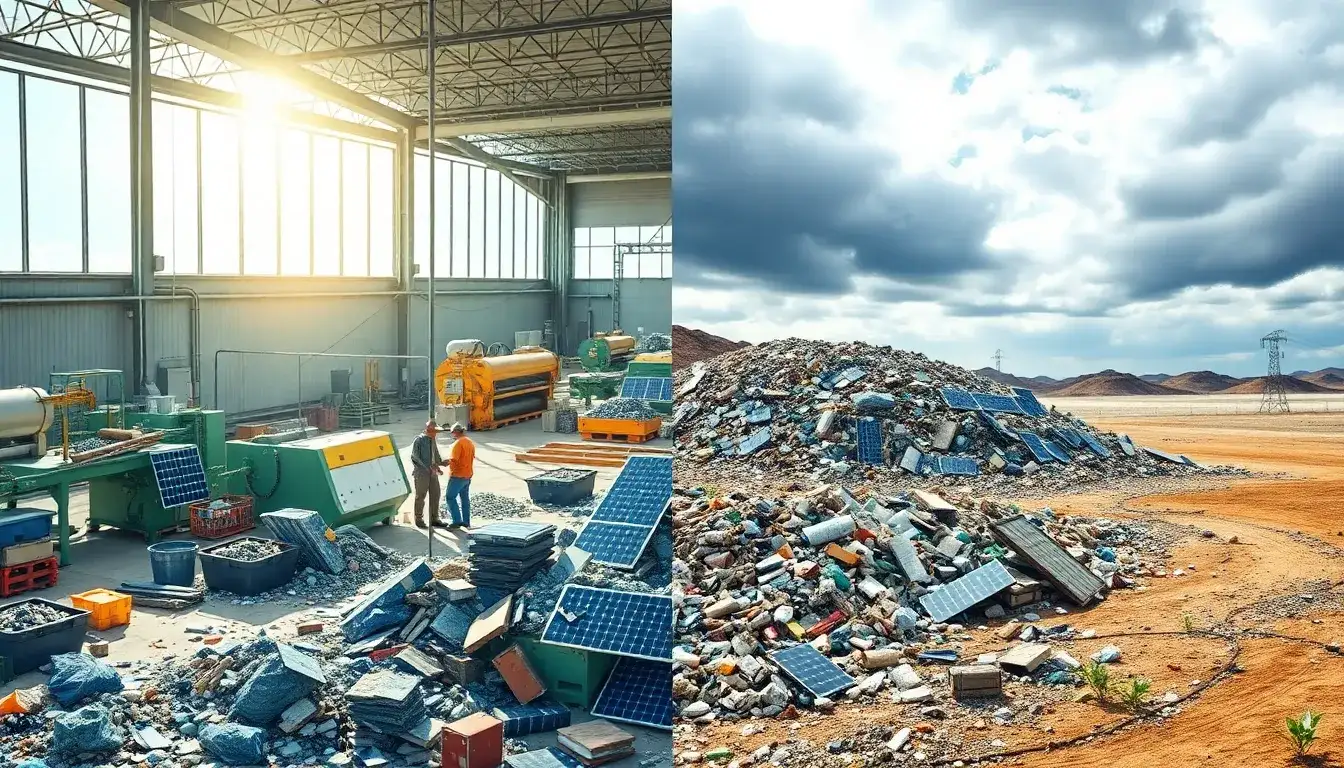
Recycling solar panels and disposing of them in landfills differ significantly in terms of environmental impact, cost, and sustainability:
Environmental Impact
- Recycling Benefits: Recycling solar panels recovers valuable materials such as aluminum, glass, and silicon, which reduces the need for mining and processing raw materials. For example, recycling aluminum from panels uses about 95% less energy than producing virgin aluminum. Recycling each panel also avoids approximately 97 pounds of CO2 emissions, with reuse potentially saving over 1.5 tons of CO2 per panel. This reduction in greenhouse gas emissions contributes positively to climate goals and decreases environmental harm.
- Landfill Drawbacks: Disposing of solar panels in landfills wastes these valuable materials and causes them to occupy landfill space, which is already limited in capacity. Since some solar panels contain hazardous substances, improper disposal can lead to environmental contamination and health risks. Moreover, adding billions of pounds of panel waste accelerates landfill capacity exhaustion, impacting local economies and broader social systems.
Cost Comparison
- Higher Recycling Costs: Recycling solar panels is currently much more expensive than landfilling. Recycling costs range roughly from $15 to $45 per panel in the U.S., whereas landfilling costs only $1 to $5 per panel. Net recycling costs, after accounting for the value of recovered materials, can still be $8 to $27 higher per panel than landfill disposal. Across millions of panels, this leads to significant annual costs—potentially up to $135 million nationally.
- Lower Landfill Costs but Hidden Externalities: Landfilling is the cheaper option, which makes it more attractive financially for many companies despite its detrimental environmental impact. However, landfills capable of accepting hazardous waste panels charge more ($1 to $5), and some companies prefer to pay the higher recycling fees to avoid legal liabilities and reduce environmental footprints.
Policy and Future Outlook
- Many U.S. states currently lack regulations banning solar panels from landfills, leading to improper disposal practices widely. However, policies like the 2025 North Carolina ban on solar panels in construction and demolition landfills are emerging to encourage responsible recycling.
- Without proactive policy intervention, the volume of discarded solar panels will create an avoidable waste management crisis by depleting landfill capacity and missing opportunities to recover valuable materials.
Summary Table
| Aspect | Recycling Solar Panels | Disposing in Landfills |
|---|---|---|
| Environmental Impact | Recovers materials, reduces CO2 emissions, less mining | Waste of materials, potential hazardous contamination |
| Cost per Panel | $15–$45, net cost $8–$27 higher than landfilling | $1–$5, cheaper upfront |
| Landfill Space Use | Saves landfill space | Consumes landfill space, accelerates capacity limits |
| Regulatory Trends | Growing regulations encouraging recycling | Limited bans currently, but changing |
| Sustainability | Supports circular economy, reduces environmental harm | Unsustainable long-term due to resource loss and pollution |
In conclusion, while recycling solar panels is more costly than landfilling at present, it is far superior in environmental sustainability and resource recovery. Increasing recycling rates through policy measures and technological improvements will be crucial to managing the growing volume of end-of-life solar panels responsibly.
Original article by NenPower, If reposted, please credit the source: https://nenpower.com/blog/how-does-recycling-solar-panels-compare-to-disposing-of-them-in-landfills/

