

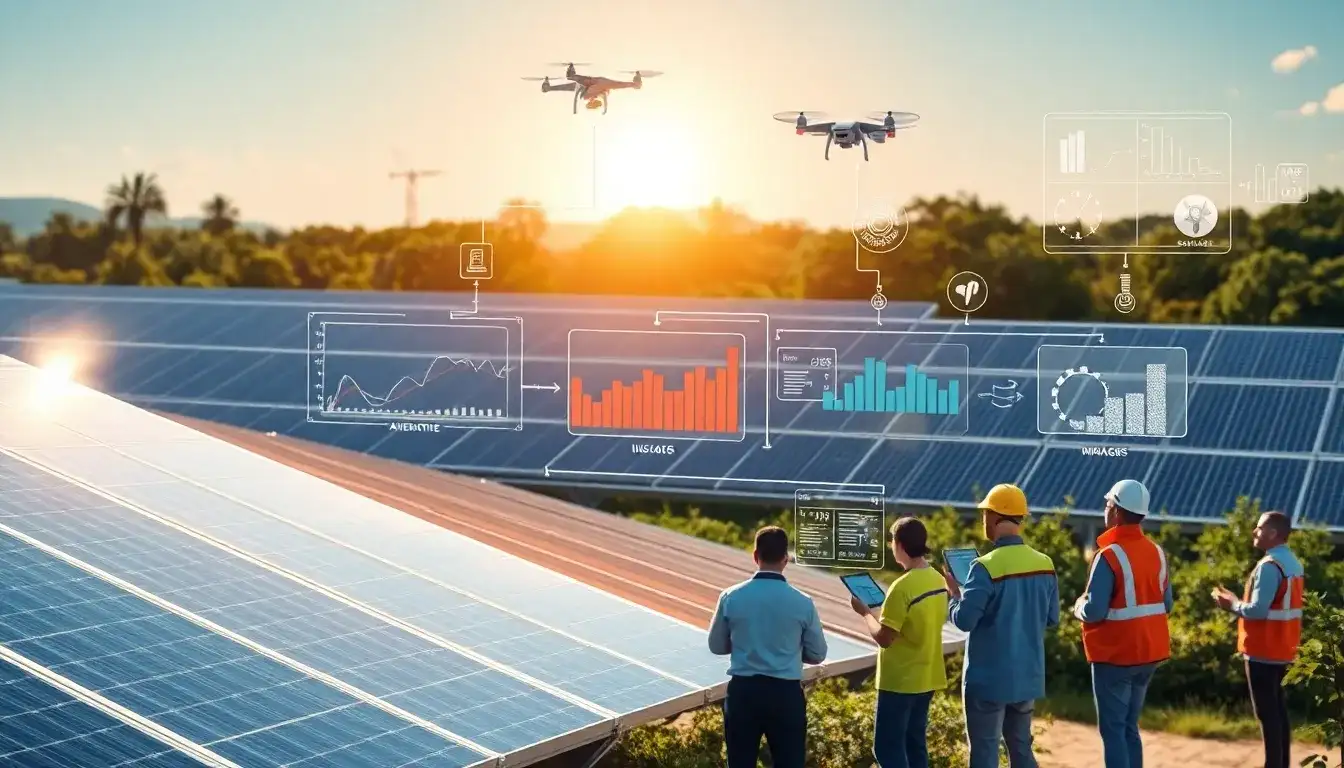
Real-time data integration significantly improves the efficiency of solar energy systems by addressing multiple operational challenges:
- Enhanced Monitoring and Control:
- Real-Time Insights: Real-time data allows minute-by-minute tracking of energy generation, enabling immediate identification and correction of system inefficiencies.
- Remote Monitoring: IoT devices and smart connectivity enable remote access to energy data, facilitating timely adjustments to optimize energy consumption.
- Predictive Maintenance:
- By analyzing real-time data from sensors and inverters, solar businesses can predict maintenance needs, reducing downtime and improving overall system reliability.
- Optimized Energy Production and Consumption:
- Real-time data helps in understanding peak energy production times, allowing users to align energy consumption with these periods, thereby maximizing efficiency and reducing grid reliance.
- Smart grids utilize real-time data to match energy supply with demand more accurately, reducing waste and optimizing energy use.
- Improved Customer Experience:
- Real-time data provides consumers with instant access to information about their energy savings and usage, enhancing customer engagement and satisfaction.
- Scalability and Forecasting:
- Real-time data integration supports scalable operations by providing precise forecasting, which helps in planning future expansions or adjustments based on current performance.
In summary, real-time data integration transforms solar energy systems into more efficient, responsive, and customer-centric operations by leveraging advanced technologies like IoT, cloud computing, and smart grids.
Original article by NenPower, If reposted, please credit the source: https://nenpower.com/blog/how-does-real-time-data-integration-improve-the-efficiency-of-solar-energy-systems/

