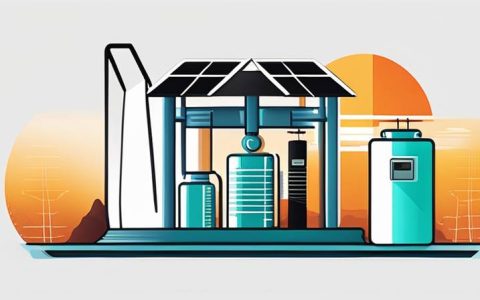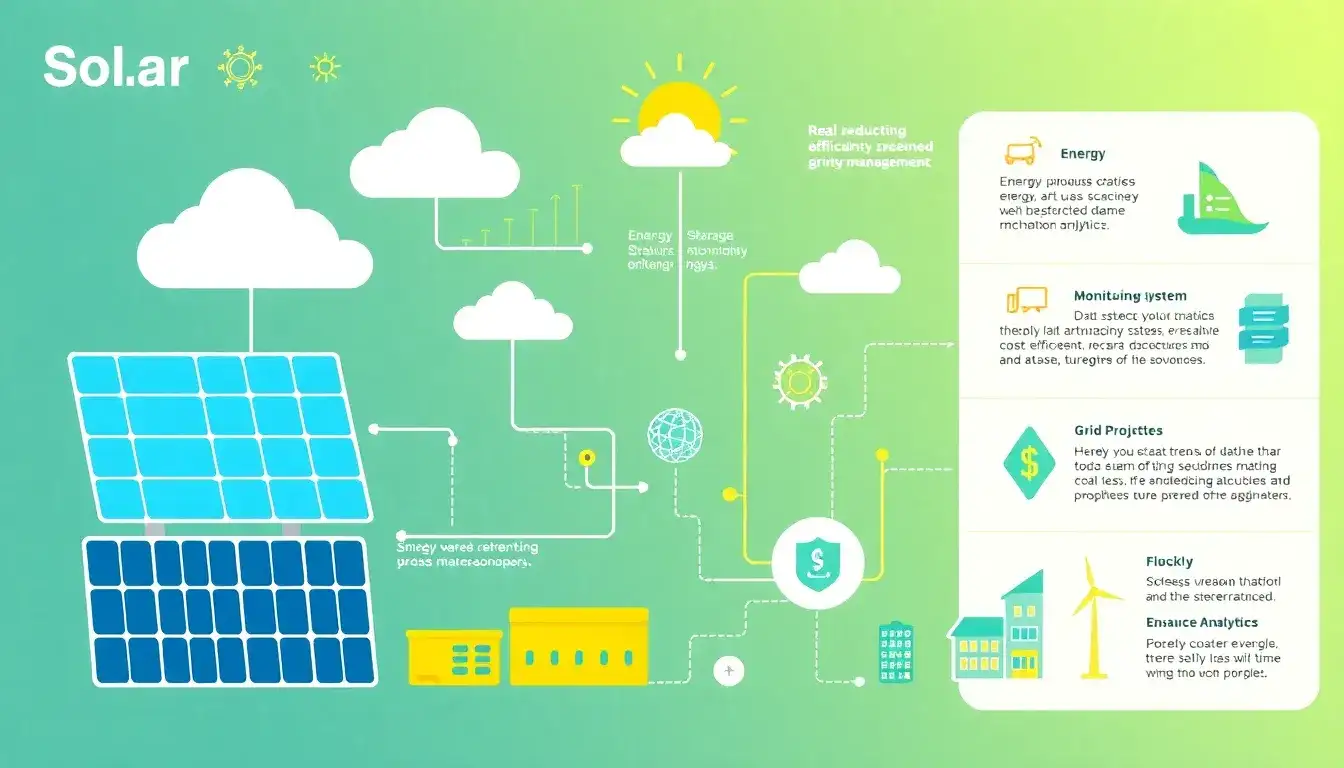
Real-time data integration significantly impacts the overall cost of solar energy projects by enhancing operational efficiency, reducing maintenance expenses, improving energy production, and enabling better decision-making. Here’s how:
Key Cost-Reducing Impacts of Real-Time Data Integration in Solar Projects
1. Improved Efficiency and Energy Production
Real-time data from sensors, weather stations, inverters, and energy meters allows continuous monitoring of solar PV systems. This immediate insight helps identify and rectify inefficiencies such as shading, dirt accumulation, or equipment faults without delay, thereby maximizing energy generation and reducing energy losses. Efficient energy production translates directly into better returns on investment and lowers the levelized cost of electricity from solar projects.
2. Predictive Maintenance and Reduced Operational Costs
Instead of reactive, often costly maintenance, real-time data enables predictive maintenance by continuously tracking system health. Potential issues are detected early, allowing for maintenance to be planned and resources allocated efficiently, which reduces downtime and prevents expensive repairs. This lowers the operational expenditure associated with solar installations.
3. Enhanced Forecasting and System Optimization
Using machine learning algorithms on real-time weather and performance data, solar systems can better anticipate sunlight availability and adjust operations accordingly, such as by optimizing battery storage or panel angles via solar tracking systems. This increases the usable energy output and reduces the need for backup energy sources, thus lowering overall energy costs.
4. Better Grid Integration and Demand Response
Real-time data integration supports advanced grid management through demand response strategies, balancing energy production and consumption on the grid more effectively. This reduces grid-related charges and penalties, leading to cost savings for solar project operators.
5. Overall Scalability and Improved Customer Experience
Real-time dashboards and automated reporting improve transparency and customer satisfaction by providing immediate data on energy savings and usage. This can increase adoption rates and economies of scale, further driving down project costs over time.
Summary Table of Cost Benefits
| Aspect | Cost Impact |
|---|---|
| Real-time Monitoring | Early detection of inefficiencies lowers energy loss costs |
| Predictive Maintenance | Planned maintenance reduces operational expenses and downtime |
| Weather Forecasting | Optimizes energy capture, reducing reliance on expensive backups |
| Solar Tracking Systems | Maximizes sunlight capture, increasing energy output |
| Grid Integration/Demand Response | Lowers grid fees and enhances energy value |
| Customer Engagement | Drives adoption and scaling, reducing unit costs |
In conclusion, real-time data integration transforms solar energy projects by streamlining operations, enhancing energy output, and cutting maintenance and grid-related costs. These improvements collectively lower the overall cost of solar energy projects, making them more economically viable and competitive.
Original article by NenPower, If reposted, please credit the source: https://nenpower.com/blog/how-does-real-time-data-integration-impact-the-overall-cost-of-solar-energy-projects/