

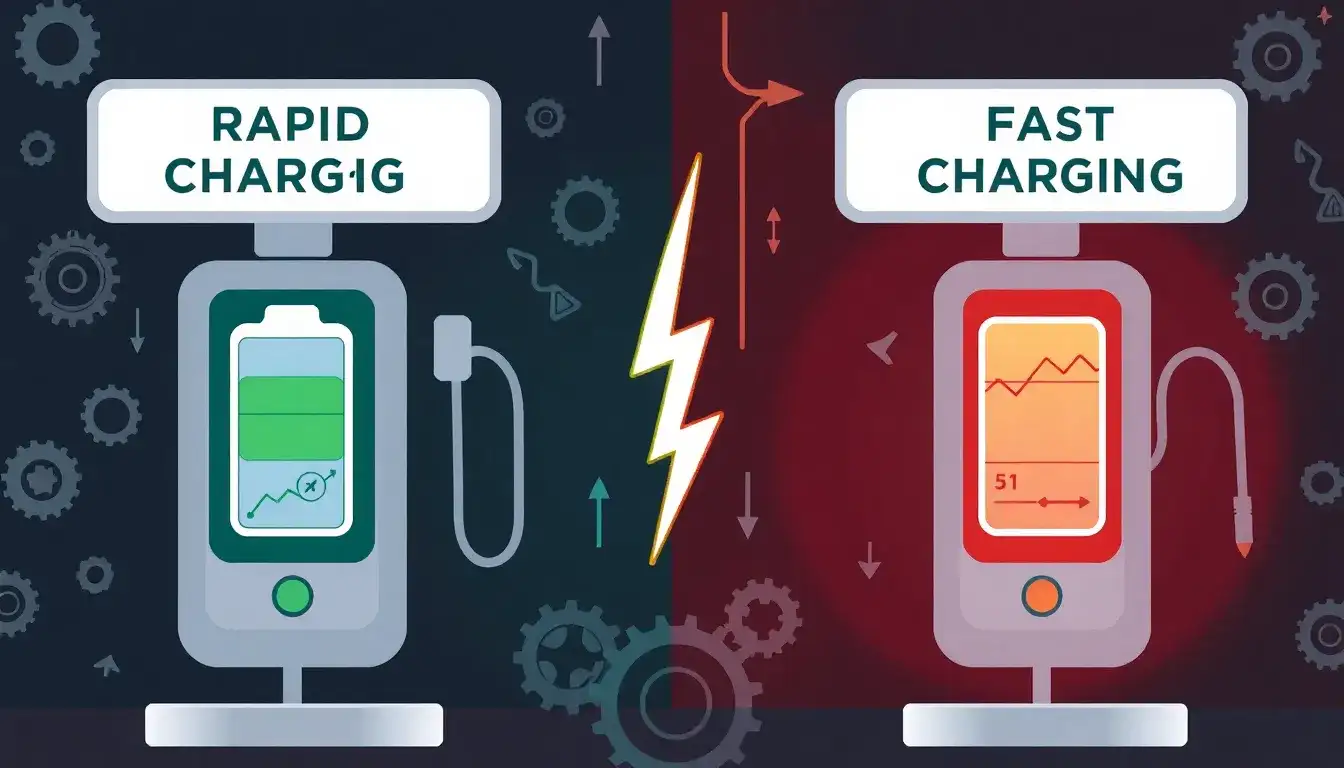
Rapid Charging vs. Fast Charging
Rapid charging and fast charging differ primarily in their charging speeds and their impacts on battery degradation. Here is a detailed comparison based on the latest insights:
Definitions
- Fast Charging: Usually refers to AC charging at power levels between about 7 kW and 22 kW.
- Rapid Charging: Typically refers to higher power DC charging, often significantly faster than fast charging.
Impact on Battery Degradation
Fast Charging
- Fast charging at moderate power levels (7 kW to 22 kW) generally does not significantly affect battery life and is suitable for frequent use in daily driving scenarios.
- While it can lead to some degradation over very long periods, modern EVs manage charging rates and temperatures effectively to minimize damage.
- Studies show that cars using primarily fast charging retain a bit less capacity over time compared to slow charging, but the difference is relatively small (e.g., around 5% less capacity retention after 50,000 miles).
Rapid Charging
- Rapid charging subjects batteries to higher voltage and current, which places greater strain and heat stress on the battery cells, accelerating degradation more noticeably compared to fast charging.
- Research indicates that exclusive use of rapid DC charging can increase the rate of battery capacity loss by about 16% compared to AC fast charging in tests with Nissan Leaf vehicles.
- The primary mechanisms for this increased degradation include lithium plating due to lithium ions being forced into the battery faster than they can diffuse properly, especially at high states of charge and elevated temperatures.
- Frequent rapid charging thus reduces battery capacity faster, leading to shorter usable driving range over time.
Summary Table
| Aspect | Fast Charging (7-22 kW AC) | Rapid Charging (High Power DC) |
|---|---|---|
| Charging Power | Moderate (7-22 kW) | High (often 50 kW+ and beyond) |
| Battery Strain | Low to moderate | High |
| Battery Degradation Rate | Slightly faster than slow charging (~5% more capacity loss over 50k miles) | Noticeably higher (~16% faster degradation than fast charging) |
| Causes of Degradation | Moderate heat, lithium plating minimized by thermal management | Elevated heat, lithium plating, SEI growth |
| Recommended Usage | Daily use preferred | Use sparingly, only when really needed |
Practical Advice
- Prioritize fast charging for routine battery replenishment to maximize lifespan.
- Reserve rapid charging for occasional, urgent needs to avoid accelerating battery wear.
- EVs incorporate smart thermal and charging management systems to mitigate some negative effects of fast and rapid charging.
In conclusion, while both fast and rapid charging contribute to battery degradation compared to slower charging, rapid charging has a significantly higher impact on battery wear due to the increased electrical and thermal stress it imposes on the battery cells. Fast charging strikes a better balance between convenience and preserving long-term battery health.
Original article by NenPower, If reposted, please credit the source: https://nenpower.com/blog/how-does-rapid-charging-compare-to-fast-charging-in-terms-of-battery-degradation/

