

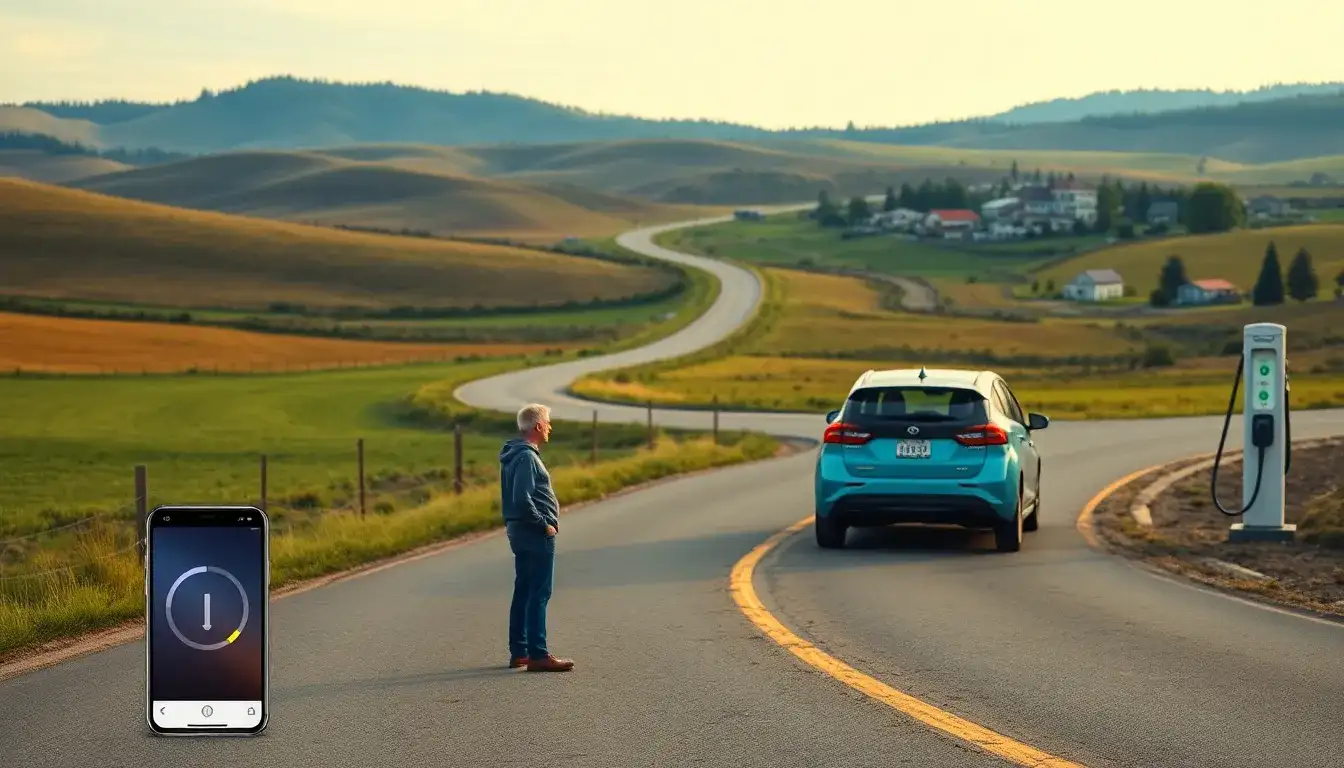
Range anxiety significantly impacts the adoption of electric vehicles (EVs) in rural communities by affecting potential buyers’ perceptions and behaviors. Here’s how it influences EV adoption:
Impact of Range Anxiety on EV Adoption
- Concerns About Distance Between Charging Stations: Rural areas have fewer charging stations, resulting in long distances between them. This leads to concerns among potential EV owners about running out of battery power without access to a charging station, which can be far away.
- Limited Fast-Charging Options: Unlike urban areas, rural regions often lack fast-charging options, making recharging a lengthy process. This compounds the problem of range anxiety, as drivers must plan extensively to ensure they can charge their vehicles in time.
- Purchase Intentions: Research shows that while range anxiety negatively affects attitudes toward EVs, it does not significantly reduce purchase intentions. However, when combined with charging inconvenience, it can discourage people from buying EVs if they prioritize factors like cost and charging speed.
- Perceived Risks: Even short trips can feel risky for rural drivers due to the uncertainty of finding charging stations. This perceived risk can deter individuals from adopting EVs, despite their environmental benefits.
To mitigate these issues, increasing the density of charging infrastructure, improving fast-charging capabilities, and offering incentives can help reduce range anxiety and encourage EV adoption in rural areas.
Original article by NenPower, If reposted, please credit the source: https://nenpower.com/blog/how-does-range-anxiety-specifically-impact-ev-adoption-in-rural-communities/

