

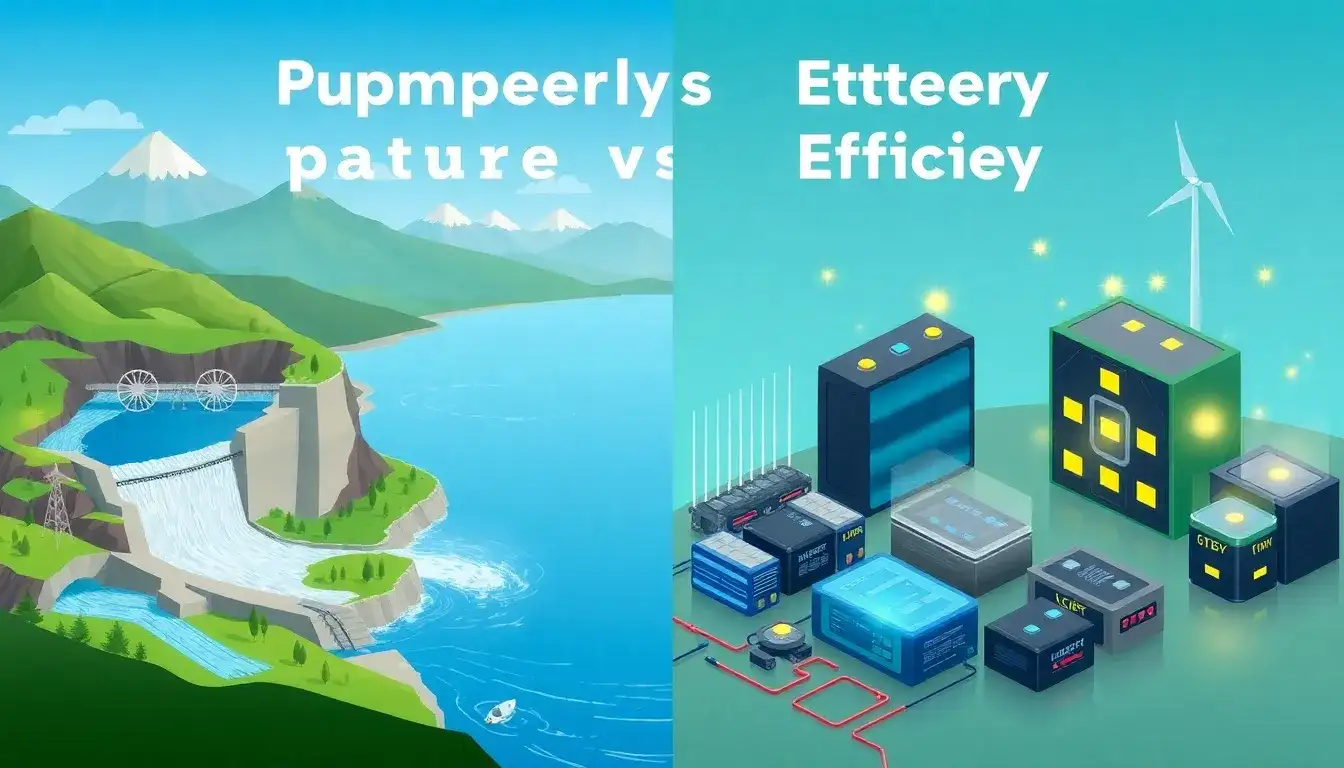
Pumped-storage hydropower (PSH) and battery storage are two prominent methods for storing energy, each with its own efficiency characteristics.
Efficiency Comparison
- Pumped-Storage Hydropower: PSH facilities have an efficiency ranging from approximately 70% to 87%, with typical values around 80% for a full cycle. They can provide substantial durations of power output, usually around 10 hours, making them ideal for large-scale, long-duration energy storage.
- Battery Storage: Utility-scale batteries generally offer higher round-trip efficiency, with recent data showing an average efficiency of about 82%. Batteries typically provide shorter durations of power compared to PSH, though advancements are increasing their capacity.
Key Differences
- Duration: PSH can store and release energy for longer periods compared to batteries, making it suitable for supporting grids during prolonged shortages.
- Scalability: PSH often has greater capacity, making it more suitable for large-scale energy systems.
- Environmental Impact: PSH requires significant land and water resources, potentially affecting ecosystems, while battery storage is generally more environmentally neutral.
- Cost and Maintenance: The cost profile and maintenance requirements differ significantly between the two technologies, with PSH involving substantial upfront infrastructure costs but long lifespans.
In summary, while battery storage tends to have slightly higher efficiency, pumped-storage hydropower offers longer-duration storage and greater capacity, making it a crucial component for integrating intermittent renewable energy sources into the grid.
Original article by NenPower, If reposted, please credit the source: https://nenpower.com/blog/how-does-pumped-storage-hydropower-compare-to-battery-storage-in-terms-of-efficiency/

