

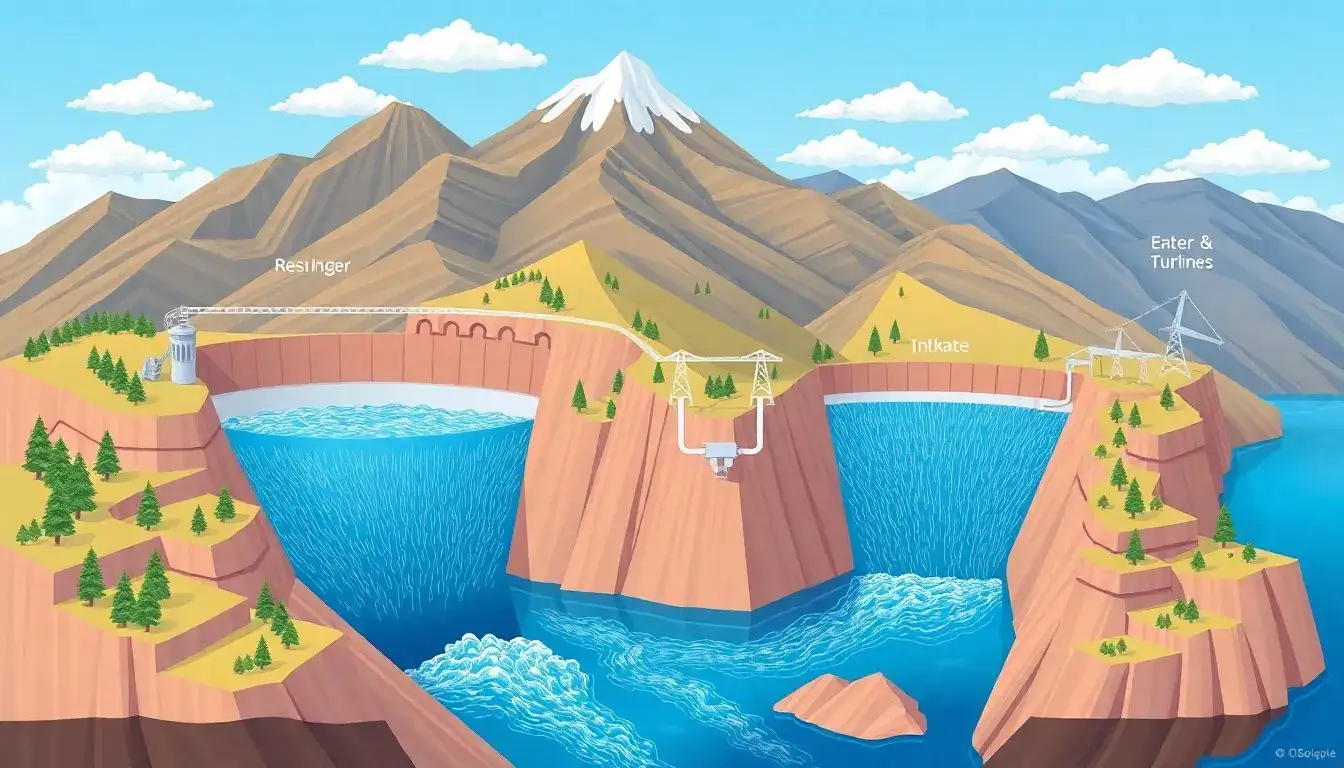
Pumped hydroelectric storage (PHS) is a type of hydroelectric energy storage and the largest-capacity form of grid energy storage available today. It works by using excess energy during periods of low demand to pump water from a lower-elevation reservoir to a higher-elevation reservoir. This stored energy is then released during peak demand to generate electricity by allowing the water to flow back down through turbines, converting gravitational potential energy into electrical energy.
Components and Process
- Reservoirs: PHS facilities require two large reservoirs at different elevations, which are connected by pipes or tunnels.
- Pumping Phase: During low demand or when there is surplus energy (e.g., from solar or wind power), the excess electricity is used to pump water from the lower reservoir to the upper reservoir.
- Generating Phase: When there is a high demand for electricity, the water from the upper reservoir is released back to the lower reservoir. As it flows downhill, it passes through turbines, which are coupled to generators, producing electricity.
Types of Systems
- Closed-Loop Systems: These have no natural inflows, meaning the water used is entirely within the system.
- Open-Loop Systems: These have a hydrologic connection to natural bodies of water.
Efficiency and Role in Energy Systems
- Efficiency: The round-trip efficiency of PHS is around 70-80%, meaning that for every unit of energy used to pump the water up, only 0.7 to 0.8 units are recovered as electricity when the water flows back down.
- Role: PHS is crucial for balancing the grid and providing long-duration energy storage, especially in systems with high renewable penetration by stabilizing electricity supply from intermittent sources like wind and solar power.
Advantages
- Long-duration Storage: PHS can store energy for extended periods, making it valuable for managing peak demand and grid stability.
- Quick Response: PHS plants can quickly start or stop generating electricity to respond to changes in grid demand.
Overall, pumped hydroelectric storage acts as a “water battery,” storing excess energy and releasing it when needed to ensure a stable and reliable electricity supply.
Original article by NenPower, If reposted, please credit the source: https://nenpower.com/blog/how-does-pumped-hydroelectric-storage-work/

