

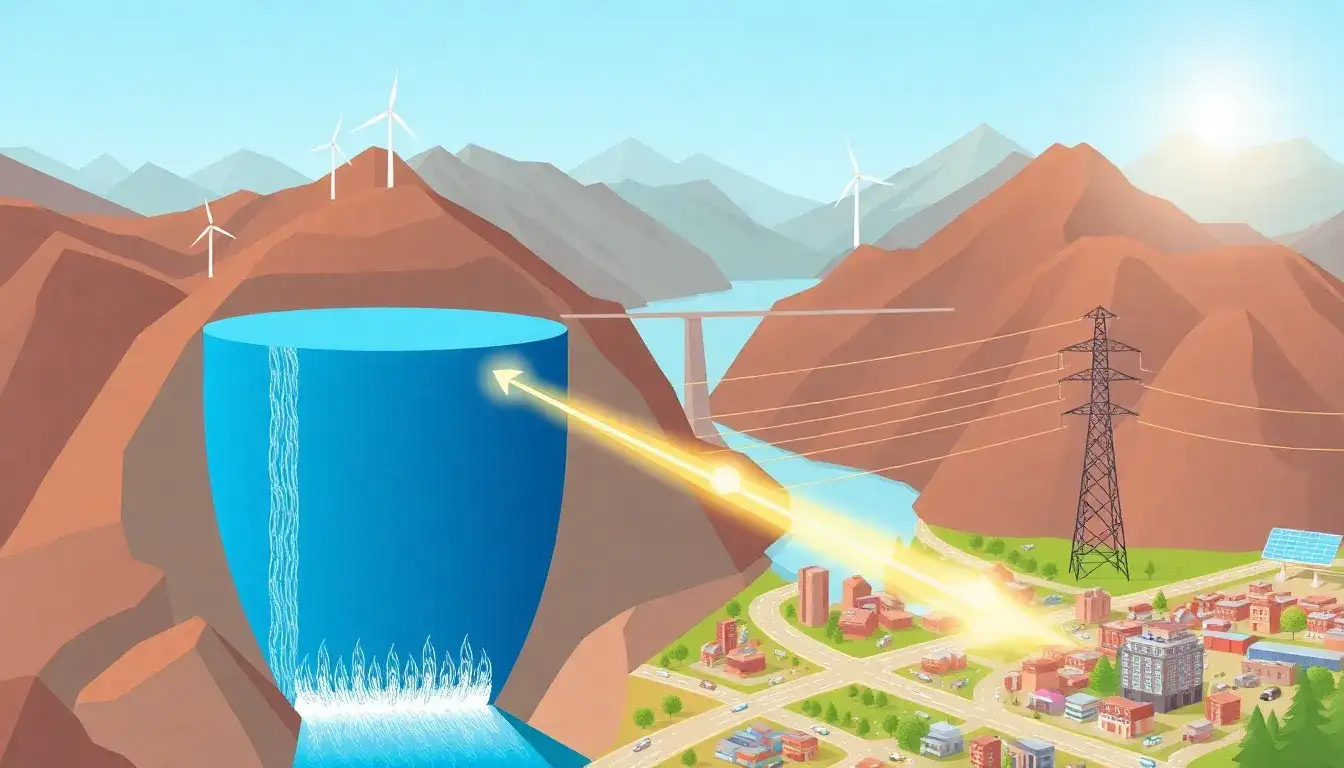
Pumped hydroelectric energy storage (PHES) helps balance supply and demand in the electricity grid by acting as a large-scale, rechargeable “water battery” that stores excess energy and releases it when needed. It operates using two water reservoirs at different elevations. When there is excess electricity on the grid—often from intermittent renewable sources like wind or solar—this surplus energy powers pumps to move water from the lower reservoir to the upper reservoir, effectively storing energy as gravitational potential energy.
When electricity demand is high or supply from renewables drops, water is released from the upper reservoir back down to the lower reservoir through turbines, generating electricity quickly to meet the demand. This process allows pumped storage plants to:
- Provide rapid response to changes in electricity demand or sudden outages, stabilizing the grid.
- Balance fluctuations in renewable energy generation by storing excess power when production is high and releasing it when production is low.
- Support grid reliability and frequency control by adjusting output within seconds, helping to maintain grid stability.
- Enable more efficient operation of other large power plants by smoothing load demand and providing reserve generation.
- Provide ancillary services such as network frequency control, reserves, and black start capability after outages.
- Operate flexibly with several hours (typically 6 to 20) of energy storage capacity, making it effective for load balancing over short and medium timescales.
While pumped storage plants consume electricity to pump water uphill, they are economically viable because they exploit the price difference between low-demand (off-peak) and high-demand (peak) periods, and provide valuable grid-stabilizing services. They are currently the most widely used form of grid-scale energy storage worldwide due to their proven reliability, long lifespan, and capability to integrate large amounts of variable renewable energy.
In summary, pumped hydroelectric energy storage helps balance supply and demand by storing surplus energy in the form of elevated water and rapidly generating electricity when needed, thereby enhancing grid stability, reliability, and enabling higher penetration of renewables.
Original article by NenPower, If reposted, please credit the source: https://nenpower.com/blog/how-does-pumped-hydroelectric-energy-storage-help-balance-supply-and-demand-in-the-grid/

