

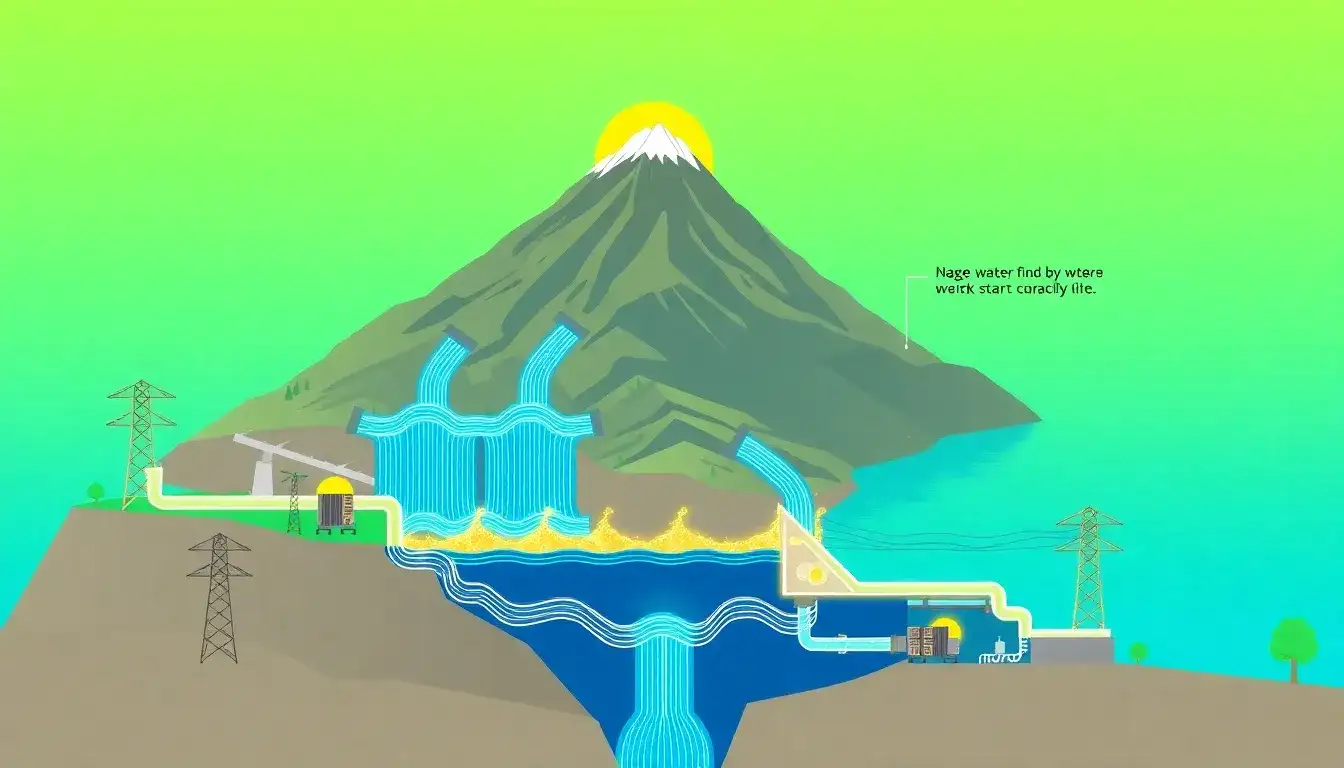
Pumped hydroelectric energy storage (PHES) significantly contributes to grid inertia and black start capability, playing a vital role in maintaining grid stability and reliability:
Contribution to Grid Inertia
- Inertia from Rotating Mass: PHES systems involve large rotating turbines driven by flowing water, which store kinetic energy in their rotating mass. This stored kinetic energy provides physical inertia, helping the grid resist sudden frequency changes when there is a disruption, such as a generation loss or sudden load change. The turbines remain spinning momentarily even if power input fluctuates, acting as a buffer against variability in power supply from intermittent renewable sources like wind and solar.
- Real-time Monitoring of Inertia: The inertia provided by pumped hydro plants generates unique signals when pumps transition between operation states. These signals can be measured to monitor grid inertia and stability in real time, demonstrating PHES’s active role in grid frequency regulation and stability.
- Improved Grid Stability: By supplying synchronous inertia from the rotating turbines, PHES helps maintain consistent grid frequency and voltage, thereby improving overall grid stability. This capability is especially important as the share of inverter-based renewable generation (which provides little or no inertia) increases, reducing the overall natural inertia of the grid.
- Fast Reactivity: Modern PHES plants, especially those with variable speed technology, offer very fast response times—in seconds or milliseconds—providing not only inertia but dynamic frequency support in both pumping and generating modes.
Black Start Capability
- Independent Start-Up: PHES plants can initiate generation without relying on external power supply, a key requirement for black start capability. This means they can help restart the grid after a blackout, supplying power to other plants or loads to progressively restore the system.
- Grid Support Functions: Besides inertia and frequency stabilization, PHES units provide other essential grid services such as voltage regulation, reactive power support, and reserve capacity, all critical during black start sequences and grid restoration.
- Replacing Fossil-Fueled Ancillary Services: PHES offers these services sustainably and with high reactivity, effectively replacing traditional fossil fuel plants that have historically provided inertia and black start services on the grid.
Summary Table
| Feature | How PHES Contributes |
|---|---|
| Grid Inertia | Provides kinetic energy through turbine rotation, stabilizing frequency and voltage during disturbances. |
| Frequency Control | Rapid response in turbine/pump mode for grid balancing and frequency regulation. |
| Black Start Capability | Can start generation without external power, enabling grid restoration after blackout. |
| Voltage and Reactive Power | Supports grid voltage regulation and reactive power supply during normal and restoration operations. |
| Sustainability | Offers CO2-free inertia and black start services, replacing fossil fuel plants. |
In conclusion, pumped hydroelectric energy storage is a mature, cost-effective technology that enhances grid inertia and provides black start capability, crucial for integrating renewable energy and ensuring grid resilience and stability. Its ability to quickly respond to grid fluctuations and assist in grid restoration underpins its essential role in the modern energy transition.
Original article by NenPower, If reposted, please credit the source: https://nenpower.com/blog/how-does-pumped-hydroelectric-energy-storage-contribute-to-grid-inertia-and-black-start-capability/

