

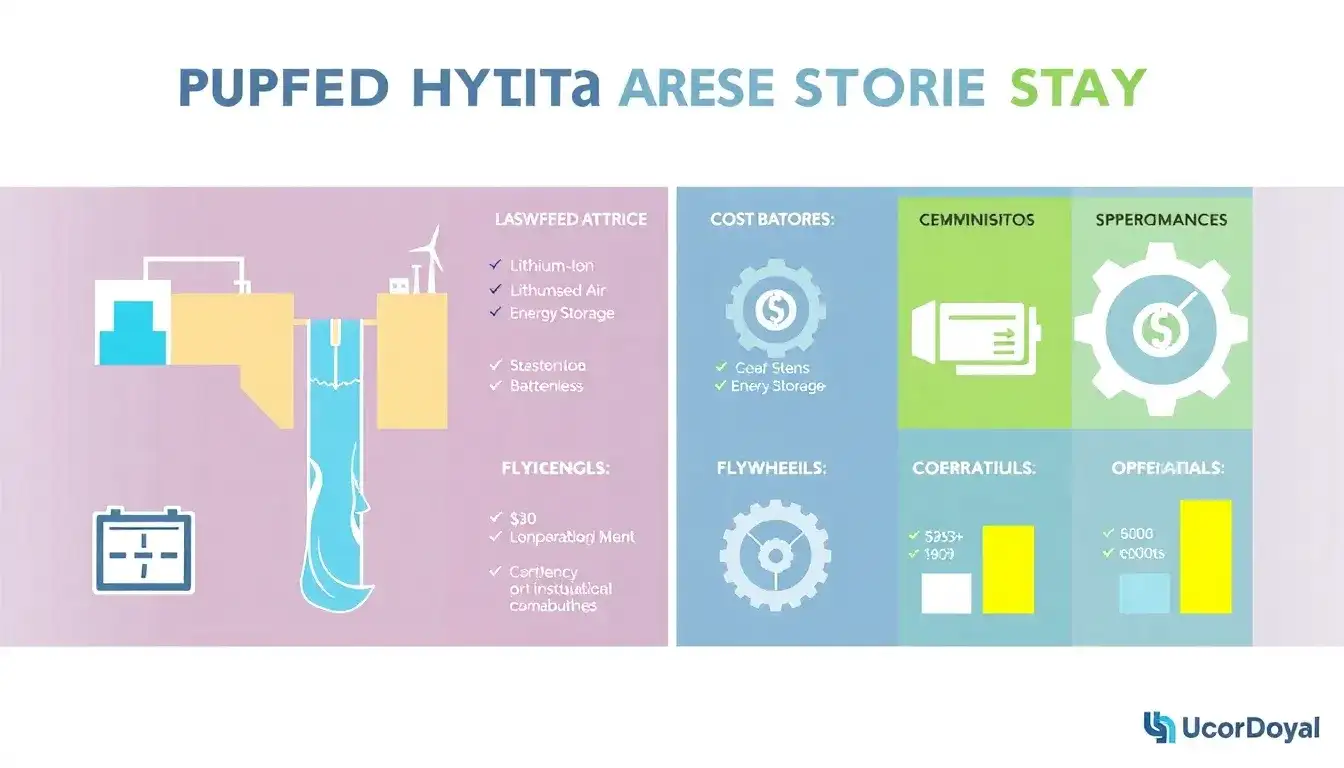
Pumped hydroelectric energy storage (PHES) generally offers significantly lower costs per unit of energy stored compared to other forms of energy storage, such as lithium-ion batteries.
Cost Comparison of Pumped Hydro vs Other Storage Technologies
-
Capital and Levelized Costs:
Pumped storage hydro typically costs between about $165 to $260 per megawatt-hour (MWh) for energy storage capacity, depending on the project specifics and study source. Specifically, estimates range around $200/MWh to $260/MWh, which is substantially lower than lithium-ion battery costs, which currently range from roughly $350/MWh to nearly $1000/MWh but are expected to decrease to about $120/MWh by 2025. -
Whole-of-Life Costs:
Pumped hydro plants have very long operational lifespans (potentially 100 years), while battery systems typically need replacement every 10-20 years. When factoring in replacement costs, lithium-ion batteries’ whole-life costs may still be in the $200/MWh to $330/MWh range, which can approach or exceed pumped storage costs over the long term. -
Economies of Scale:
Pumped hydro benefits from economies of scale, with system costs dropping approximately 16-35% for every 10-fold increase in power capacity. This is due to factors such as larger reservoir volumes and improved site efficiencies. -
Material and Carbon Footprint Considerations:
Studies comparing raw material costs for pumped hydro and lithium-ion batteries also emphasize pumped hydro’s advantages in terms of sustainability and long-term environmental impact, as battery production involves significant supply chain and material challenges.
Summary Table of Cost Metrics
| Storage Type | Capital Cost Estimate | Levelized Cost / MWh | Replacement / Lifecycle Notes |
|---|---|---|---|
| Pumped Hydroelectric | Approx. $1,800/kW to $165/kWh equivalent | $200 – $260/MWh | Very long life (up to 100 years), low replacement cost |
| Lithium-Ion Batteries | Variable, currently higher | $350 – $1000/MWh (falling to ~$120/MWh by 2025) | Needs replacement every 10-20 years, whole-life cost ~$200-$330/MWh |
Conclusion
Pumped hydroelectric energy storage remains one of the most cost-effective and durable large-scale energy storage technologies available today. Its low levelized cost per megawatt-hour and long operational life give it an advantage over battery storage technologies in terms of overall cost, especially for applications requiring large capacity and long-duration storage. Batteries, however, are improving rapidly in cost and offer advantages in flexibility and siting, meaning both technologies have important complementary roles.
Original article by NenPower, If reposted, please credit the source: https://nenpower.com/blog/how-does-pumped-hydroelectric-energy-storage-compare-to-other-forms-of-energy-storage-in-terms-of-cost/

