

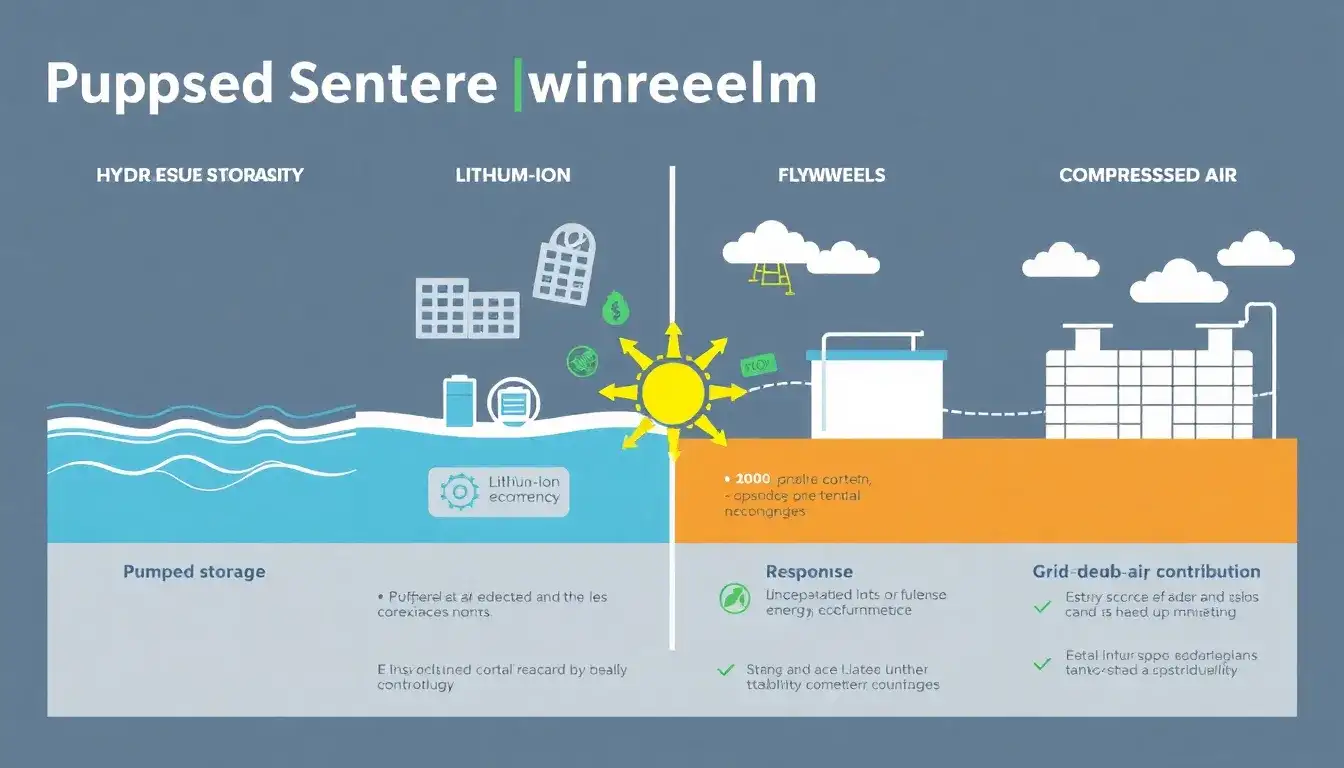
Pumped hydroelectric energy storage (PHES) stands out among energy storage technologies in terms of grid stability due to its unique combination of large-scale energy capacity, rapid responsiveness, and ancillary service capabilities.
Key Advantages of Pumped Hydroelectric Energy Storage for Grid Stability
1. Operational Flexibility and Fast Response
PHES can respond to load changes within seconds, adjusting generation or pumping modes quickly, which is critical for balancing supply and demand on the grid. This rapid response helps stabilize frequency and voltage fluctuations effectively. Variable-speed pumped hydro units further enhance this flexibility by minimizing startup times and enabling smooth transitions between pumping and generation modes.
2. Large-Scale Energy Storage Capacity
Pumped storage plants typically have large hydraulic reservoirs allowing 6 to 20 hours of storage capacity, enabling them to supply or absorb energy over extended periods. This makes them ideal for balancing intermittent renewable sources like wind and solar, which have variable output throughout the day.
3. Ancillary Grid Services
Beyond energy storage, PHES provides valuable ancillary services such as frequency control, reactive power support, spinning reserves, and black start capability (the ability to restart the grid after a blackout). The ability to operate in synchronous condenser and STATCOM modes also helps manage voltage stability and improve grid inertia, which dampens frequency fluctuations.
4. Proven, Low-Risk Technology with Long Lifespan
Pumped storage is a mature technology with decades of operational experience, offering reliability and a long operational lifetime, which is advantageous compared to newer, less-tested storage solutions.
Comparison to Other Energy Storage Technologies
| Feature | Pumped Hydro Storage | Battery Storage (e.g., Lithium-ion) | Compressed Air Energy Storage (CAES) | Flywheel Storage |
|---|---|---|---|---|
| Energy Capacity | Very large (hours of storage) | Limited by battery size, typically minutes to hours | Large, but site-dependent | Small, short-duration |
| Response Time | Seconds | Milliseconds to seconds | Seconds to minutes | Milliseconds to seconds |
| Grid Ancillary Services | Frequency control, spinning reserve, reactive power, black start | Frequency control, voltage regulation (limited) | Frequency regulation, some reserves | Frequency regulation |
| Longevity | Several decades | 5-15 years, degradation over time | Decades (depending on design) | High cycle life but small scale |
| Operational Flexibility | High, variable speed units improve it | High, but limited by battery management systems | Moderate, requires compressors and expansion turbines | High for short bursts |
| Scalability | Large-scale, site-specific | Highly scalable, modular | Site-dependent, less flexible | Limited to small-scale applications |
Summary
Pumped hydroelectric energy storage excels in grid stability due to its:
- Large-scale bulk energy capacity suitable for long-duration energy balancing.
- Extremely fast response times to grid fluctuations, enabling immediate frequency and voltage support.
- Provision of critical ancillary services such as spinning reserve, reactive power, and black start.
- Operational flexibility, particularly with variable-speed technology, enhancing its ability to integrate with variable renewables.
- Proven reliability and longevity, distinguishing it from newer, less mature technologies.
While batteries and other storage types like CAES and flywheels provide valuable, often faster responses at smaller scales or for shorter durations, pumped hydro remains the cornerstone for large-scale, stable grid integration especially as renewable penetration increases.
Thus, pumped hydro offers a uniquely comprehensive suite of grid stability benefits that few other storage technologies can match.
Original article by NenPower, If reposted, please credit the source: https://nenpower.com/blog/how-does-pumped-hydroelectric-energy-storage-compare-to-other-energy-storage-technologies-in-terms-of-grid-stability/

