

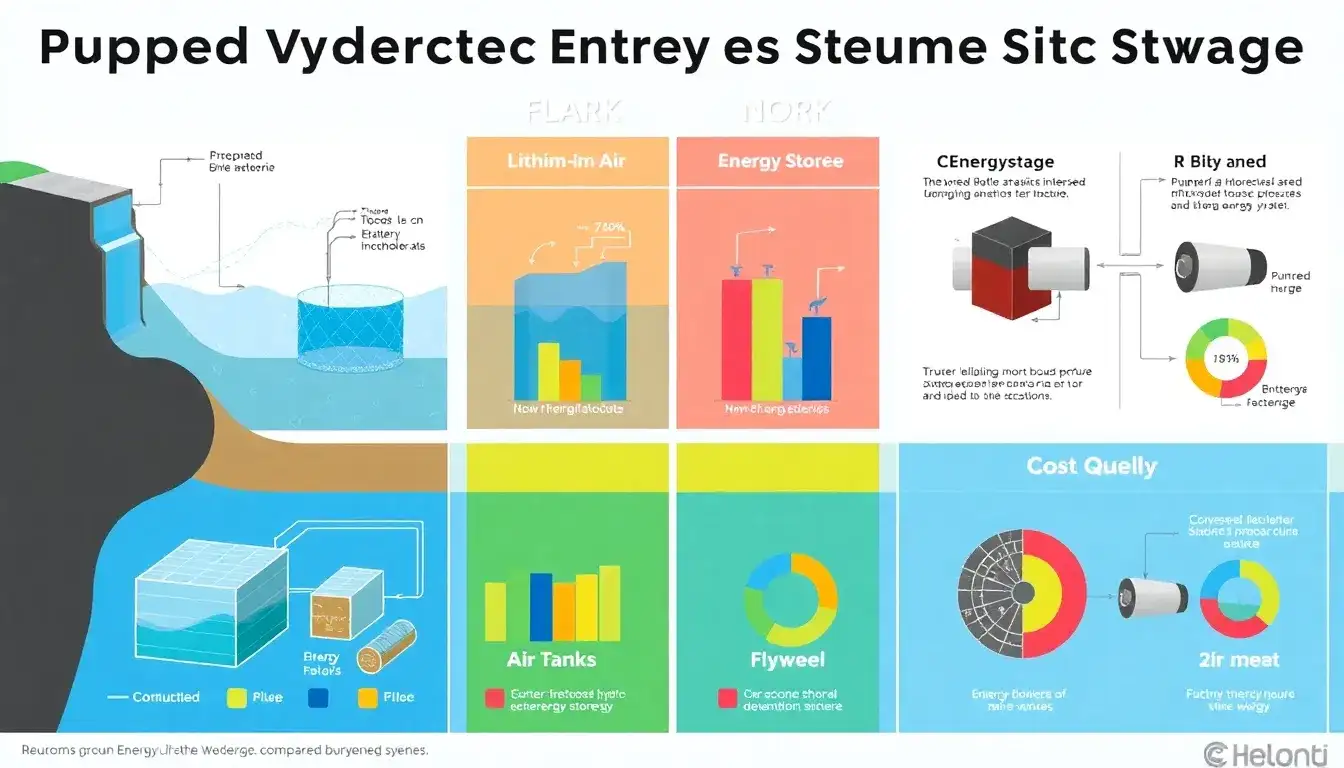
Pumped Hydroelectric Energy Storage (PHS)
- Efficiency: PHS typically achieves a round-trip efficiency of about 70% to 80%, meaning that for every unit of electricity used to pump water, 0.70 to 0.80 units are generated back during the release.
- Cost: The initial construction costs of PHS facilities are high due to the requirement for specific geography and infrastructure, but they provide long-term, low-maintenance energy storage solutions.
- Capacity: PHS is the largest form of grid-scale energy storage, accounting for over 94% of installed energy storage capacity globally.
Lithium-Ion Batteries (LIBs)
- Efficiency: LIBs generally have a higher round-trip efficiency compared to PHS, often reaching up to 90% or more.
- Cost: While the upfront costs of lithium-ion batteries are decreasing, they remain more expensive per kilowatt-hour compared to PHS over a long term.
- Capacity: LIBs are versatile but typically used for shorter duration storage compared to PHS.
Compressed Air Energy Storage (CAES)
- Efficiency: CAES is less efficient than PHS, typically ranging from 40% to 50% in round-trip efficiency.
- Cost: CAES can offer lower costs compared to some battery technologies but is often competitive with PHS in certain scenarios.
- Capacity: CAES is suitable for long-duration energy storage like PHS but requires specific geological formations.
Other Technologies (e.g., Vanadium Redox Flow Batteries, Lead-Acid Batteries)
- Efficiency: These technologies have varying efficiencies but generally are less efficient than PHS or LIBs.
- Cost: They offer different cost profiles, often higher than PHS when considered for large-scale applications.
- Capacity: They are typically used for shorter durations or smaller scale applications compared to PHS.
Summary Comparison Table
| Technology | Efficiency | Cost | Capacity & Use Case |
|---|---|---|---|
| PHS | 70-80% | High upfront, low maintenance | Large-scale, long-duration |
| LIBs | Up to 90% | Decreasing, relatively high per kWh | Versatile, short to medium duration |
| CAES | 40-50% | Competitive with PHS for large-scale | Long-duration, site-specific |
| VRFBs & PbAc | Variable | Higher for large-scale | Smaller scale, shorter duration |
In summary, while PHS is the cornerstone of large-scale energy storage due to its high capacity and efficiency, its specific site requirements and high upfront costs are significant drawbacks. Other technologies like LIBs offer higher efficiency at a typically higher cost per unit but are more versatile in application. CAES provides long-duration storage with lower efficiency but requires specific geological conditions.
Original article by NenPower, If reposted, please credit the source: https://nenpower.com/blog/how-does-pumped-hydroelectric-energy-storage-compare-to-other-energy-storage-technologies-in-terms-of-cost-and-efficiency/

