

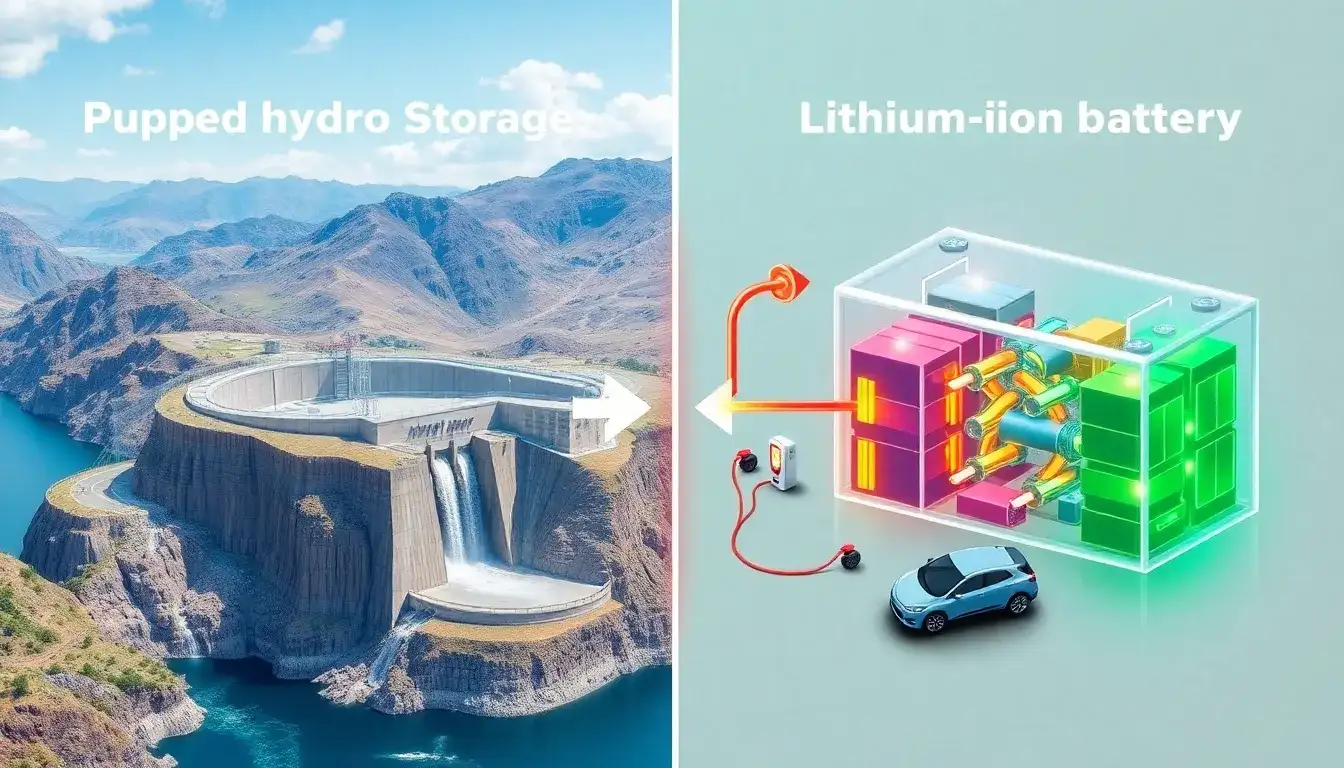
Pumped hydroelectric energy storage (PSH) and lithium-ion batteries differ significantly in terms of cost and efficiency, each with distinct advantages and limitations.
Efficiency
- Pumped hydroelectric storage typically achieves energy efficiency of around 70% to 85% on a full cycle, meaning it can recover most of the energy used to pump water uphill when the water is released to generate electricity.
- Lithium-ion batteries have a comparable round-trip efficiency, generally around 85% to 95%, but often provide shorter discharge durations (around 6 hours) compared to PSH’s typical 10 hours or more of electricity supply.
- PSH is notably more efficient than other large-scale storage technologies like compressed air energy storage (CAES) or flywheels, which suffer bigger conversion losses.
Cost
- Pumped hydro facilities entail high upfront capital costs due to the need for significant infrastructure and specific geological conditions (two bodies of water at different elevations close by), but once built, have very low operational and maintenance costs and can last for several decades (50+ years in many cases).
- Lithium-ion batteries have lower initial installation costs relative to pumped hydro and greater siting flexibility but tend to degrade over time, losing capacity with each charge cycle, typically requiring replacement or augmentation after 10-15 years depending on usage.
- PSH dominates the global large-scale energy storage market, accounting for over 94% of installed capacity, reflecting its cost-effectiveness and longevity at scale despite geographical constraints.
Summary Comparison
| Feature | Pumped Hydroelectric Storage | Lithium-ion Batteries |
|---|---|---|
| Round-trip Efficiency | 70-85% | ~85-95% |
| Typical Discharge Duration | ~10 hours | ~6 hours |
| Lifetime | 50+ years with minimal degradation | ~10-15 years with gradual capacity loss |
| Capital Cost | High upfront (site-specific infrastructure) | Moderate upfront; more scalable and flexible |
| Operating Cost | Very low after construction | Moderate, includes eventual replacement |
| Geographic Constraints | Requires specific topography (water and elevation difference) | Can be deployed almost anywhere |
In conclusion, pumped hydroelectric storage offers comparable efficiency to lithium-ion batteries but excels in long-duration energy supply and exceptionally long operational lifespan with low ongoing costs, albeit with greater upfront investment and site restrictions. Lithium-ion batteries provide more flexible siting and faster deployment but at the expense of shorter lifespans and higher overall replacement costs in the long term.
Original article by NenPower, If reposted, please credit the source: https://nenpower.com/blog/how-does-pumped-hydroelectric-energy-storage-compare-to-lithium-ion-batteries-in-terms-of-cost-and-efficiency/

