

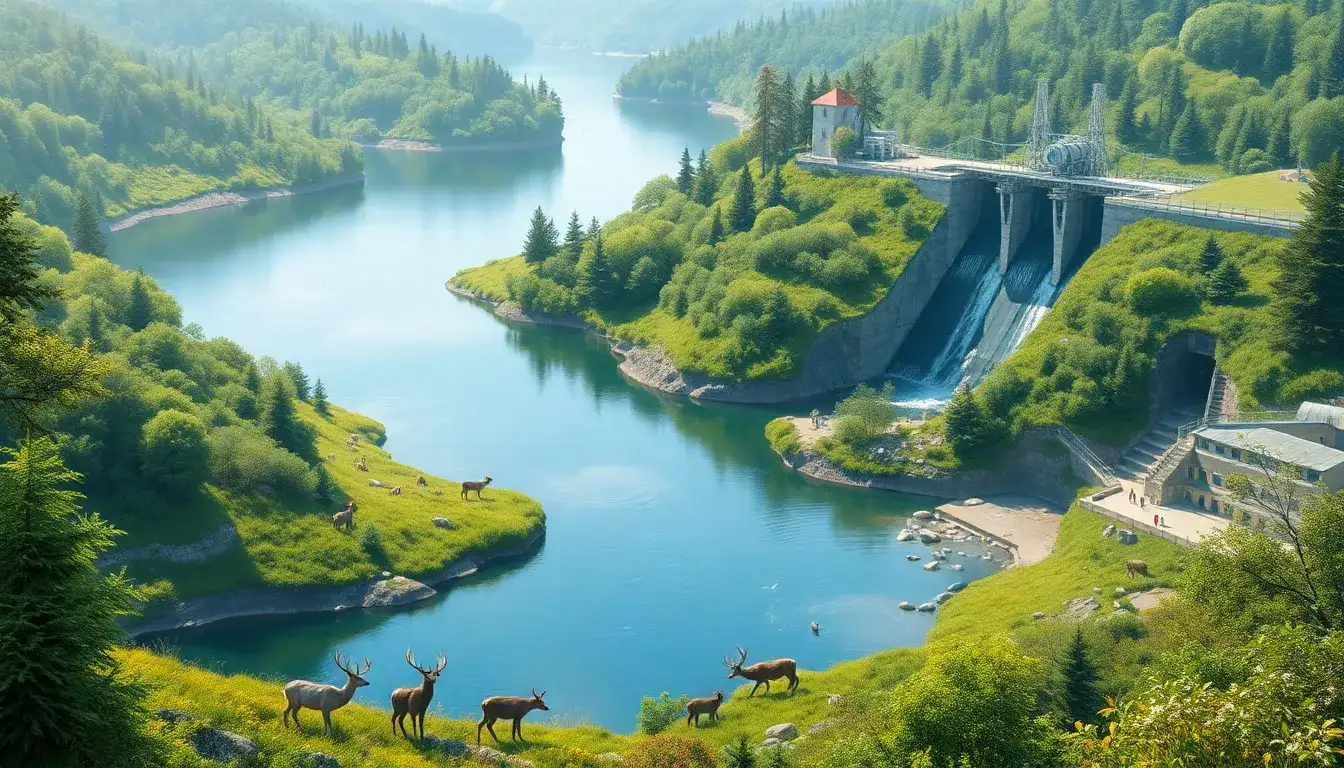
Pumped hydroelectric energy storage (PHES) can significantly affect local wildlife habitats through multiple mechanisms, particularly during construction and operation phases. Here’s a breakdown of key impacts:
Habitat Disruption
- Construction disturbances: PHES projects often involve large-scale infrastructure development, including dams, tunnels, and reservoirs. This leads to vegetation clearing and habitat fragmentation, directly affecting species dependent on contiguous ecosystems. In subalpine and alpine regions (e.g., Kosciuszko National Park in Australia), such disturbances threaten specialized flora and fauna adapted to these sensitive environments.
- Hydrological changes: Altering water flow patterns between upper and lower reservoirs can disrupt aquatic and riparian ecosystems. While closed-loop PHES systems (using existing water bodies) may reduce some impacts compared to open-loop systems, they still risk altering groundwater levels and damaging wetland habitats.
Invasive Species and Biodiversity Loss
- Exotic flora proliferation: Cleared vegetation and disturbed soils during construction create openings for invasive plant species, which can outcompete native vegetation and reduce habitat quality for wildlife.
- Direct wildlife displacement: Noise, vibration, and human activity during construction can drive sensitive species (e.g., ground-dwelling mammals, nesting birds) from their habitats.
Water Sourcing and Aquatic Impacts
Closed-loop PHES systems may avoid diverting natural waterways, but water sourcing for reservoirs can strain local supplies, especially in arid regions. Reduced downstream flows in open-loop systems may degrade aquatic habitats, affecting fish populations and migratory species.
Mitigation and Trade-offs
While PHES has lower greenhouse gas emissions compared to fossil-fuel-based energy storage, its biodiversity impacts often require site-specific mitigation, such as:
- Habitat restoration programs post-construction.
- Invasive species management to protect native ecosystems.
- Strict siting criteria to avoid ecologically sensitive areas.
These measures can reduce but not eliminate risks to wildlife habitats, particularly in fragile alpine and subalpine zones.
Original article by NenPower, If reposted, please credit the source: https://nenpower.com/blog/how-does-pumped-hydroelectric-energy-storage-affect-local-wildlife-habitats/

