

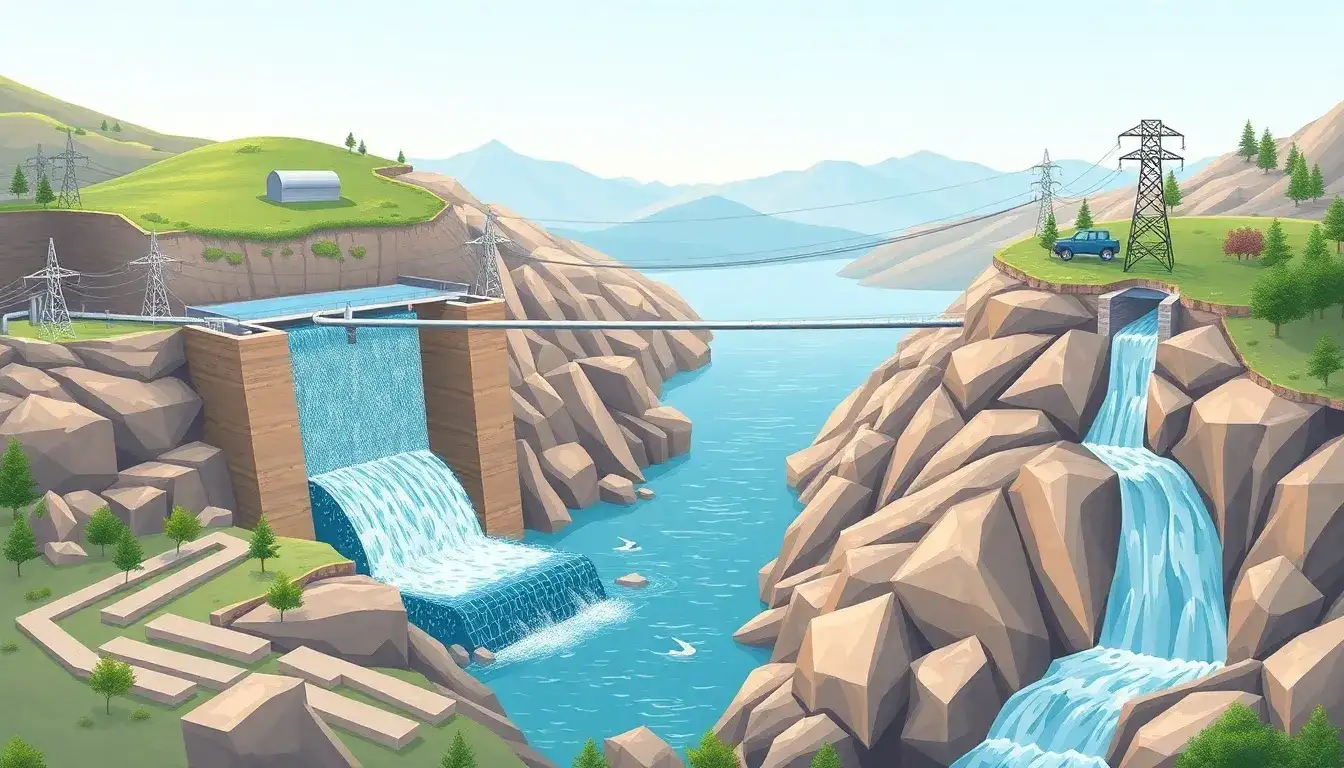
Pumped hydro storage (PHS) is a major form of energy storage technology that plays a crucial role in stabilizing power grids, especially with the integration of renewable energy sources. Here’s how it works:
Basic Principle
- Reservoirs: Pumped hydro storage uses two water reservoirs located at different elevations.
- Pumping Phase: During periods of low electricity demand (e.g., night or weekends) and high electricity supply (e.g., from solar or wind), excess energy is used to pump water from the lower reservoir up to the upper reservoir.
- Generation Phase: When electricity demand peaks, water from the upper reservoir is released back down to the lower reservoir. This flow drives turbines connected to generators, producing electricity.
Operational Mechanism
- Reversible Turbines: The turbines used in PHS facilities can operate in both directions—pumping water uphill during low demand and generating electricity during high demand.
- Efficiency and Economics: While PHS has a round-trip efficiency of about 70-80%, it still offers significant economic benefits by allowing the sale of electricity at peak hours when prices are higher.
- Grid Stability: Beyond energy storage, PHS plants help maintain grid stability by providing immediate response capabilities and ancillary services like frequency regulation.
Benefits
- Renewable Integration: PHS supports the integration of intermittent renewable energy sources by storing excess energy generated during favorable weather conditions for later use.
- Long-Duration Storage: It provides long-duration energy storage, which is critical for managing seasonal variations in energy demand and supply.
Original article by NenPower, If reposted, please credit the source: https://nenpower.com/blog/how-does-pumped-hydro-storage-work/

