

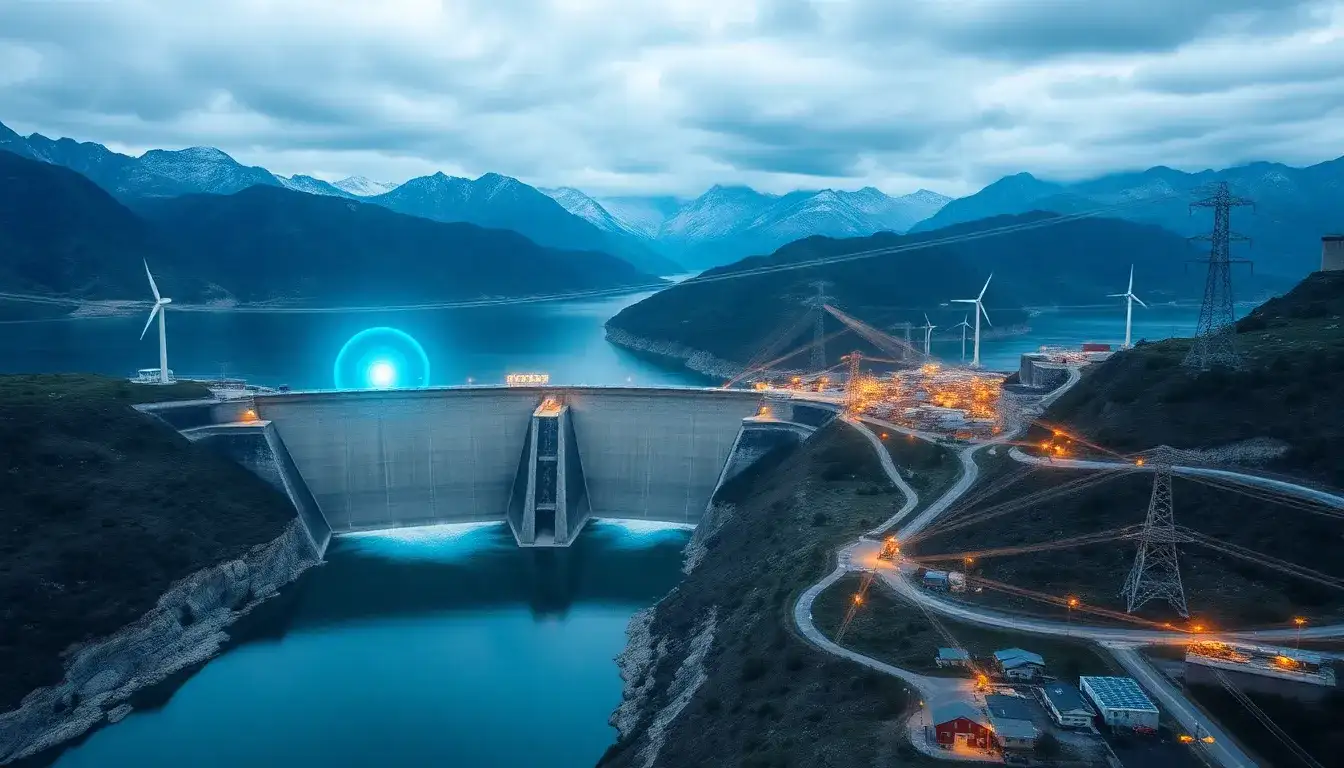
Pumped Storage Hydropower (PSH) plays a crucial role in supporting grid resilience and reliability by offering several key benefits:
Key Features and Benefits
Long-Duration Energy Storage
- Support for Renewable Energy: PSH acts as a buffer for intermittent renewable sources like wind and solar by storing excess energy generated during periods of low demand. This excess energy is stored as potential energy in the form of water at an elevated reservoir, which can then be released to generate electricity when demand increases, thus preventing curtailment and allowing more renewable energy to be integrated into the grid.
- Duration of Storage: PSH can provide energy storage for more than eight hours, making it ideal for long-duration energy needs such as during extreme weather events or prolonged power outages.
Grid Reliability
- Dispatchability and Flexibility: PSH facilities can quickly adjust their output to meet changing demand conditions, providing both rapid ramping capabilities and dispatchability. This helps ensure a stable power supply by mitigating transmission congestion and maintaining grid frequency stability.
- Black Start Capability: Unlike most renewable sources, hydropower, including PSH, can provide a “black start,” enabling the grid to recover quickly from a total blackout by generating power without an external power source.
Grid Resilience
- Physical Inertia: PSH contributes to the grid’s physical inertia due to the large spinning turbines. This inertia helps maintain grid stability, especially important with increasing integration of variable renewable sources that lack such mechanical components.
- Recovery Post-Disruption: The spinning mass of hydropower equipment enhances grid resilience by allowing quick recovery from disruptions. This ability to maintain frequency stability is crucial during transient grid conditions like sudden changes in supply or demand.
Economic and Environmental Benefits
- Low Environmental Impact: Closed-loop PSH systems have a low global warming potential compared to other energy storage technologies, making them a cleaner option for long-duration energy storage.
- Energy Arbitrage: PSH facilities can optimize financial returns by buying electricity at off-peak hours and selling it during peak hours, thus improving grid efficiency and profitability.
Overall, PSH enhances grid resilience and reliability by offering long-duration storage, flexibility, and inertia—features that are essential for integrating higher levels of renewable energy sources into the power grid.
Original article by NenPower, If reposted, please credit the source: https://nenpower.com/blog/how-does-pumped-hydro-storage-support-grid-resilience-and-reliability/

