

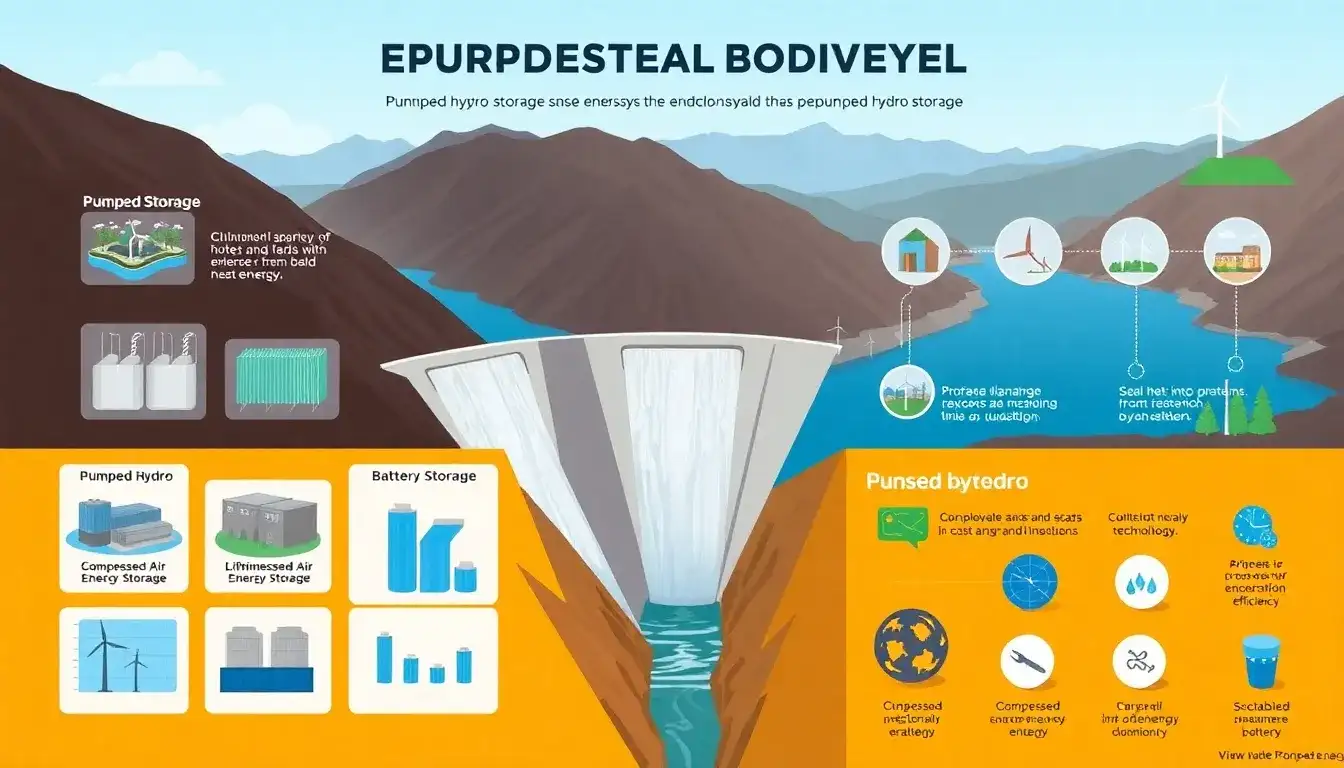
Cost Comparison of Pumped Hydro Storage with Other Energy Storage Technologies
Pumped hydro storage (PHS) is one of the most cost-effective forms of long-term energy storage, especially when compared to other technologies over extended periods. Here’s a comparison based on cost metrics:
Pumped Hydro Storage (PHS)
- Cost: The cost of PHS is typically lower for long-term storage needs. It is often cited at around $165/kWh when considering the cost per unit of energy stored and retrieved.
- Capital Costs: PHS has lower capital costs compared to batteries for storage durations exceeding four hours.
- Lifespan: PHS systems can operate for 50 to 100 years, significantly longer than many other storage technologies.
Lithium-ion Batteries
- Cost: While batteries are more expensive for long-term storage, their costs are decreasing. They are typically more competitive for short-term applications or where space constraints are a factor.
- Capital Costs: Batteries have lower power costs but higher storage costs per kWh compared to PHS for short-term storage.
- Lifespan: Lithium-ion batteries generally last around 10 years with degradation over time, depending on the number of charge cycles.
Compressed Air Energy Storage (CAES)
- Cost: CAES can offer competitive costs, often around $105/kWh when comparing the cost per unit of stored energy.
- Capital Costs: While it can be competitive, CAES is less common due to site-specific conditions required for its deployment.
Summary of Costs
| Storage Technology | Cost per kWh | Suitable for | Lifespan |
|---|---|---|---|
| Pumped Hydro | ~$165/kWh | Long-term | 50-100 years |
| Lithium-ion Battery | Varied, often more expensive for long-term | Short-term | ~10 years |
| Compressed Air | ~$105/kWh | Long-term, site-specific | Varied |
Key Points:
- Long-term storage: PHS is cost-effective for extended storage durations.
- Short-term storage: Batteries are often more suitable for short-term needs due to lower power costs.
- Cost-effectiveness: PHS remains a crucial technology for grid resilience, especially in regions with suitable geography.
Overall, PHS is a vital long-term energy storage solution due to its cost-effectiveness and durability, though it requires specific geographical conditions to be viable.
Original article by NenPower, If reposted, please credit the source: https://nenpower.com/blog/how-does-pumped-hydro-storage-compare-to-other-forms-of-energy-storage-in-terms-of-cost/

