

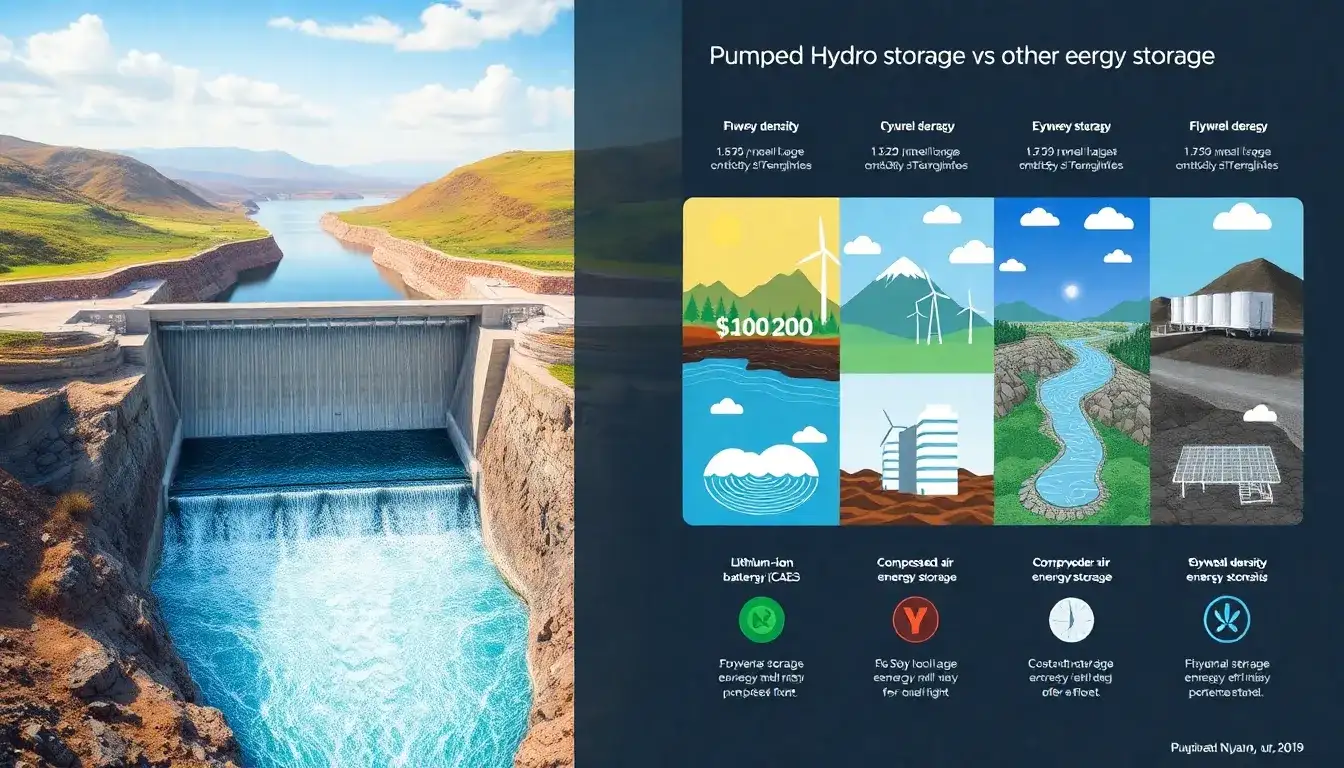
Pumped hydro storage (PHS) is one of the most efficient and widely used forms of energy storage technology. Here’s a comparison of PHS with other notable energy storage technologies:
Efficiency and Cost
- Efficiency: PHS operates at a round-trip efficiency of about 75-80%, making it one of the most efficient forms of energy storage.
- Cost: PHS is generally more cost-effective for large-scale storage projects compared to batteries, particularly for long-duration storage.
Environmental Impact
- Greenhouse Gas Emissions: PHS has a notably lower greenhouse gas emission profile compared to other technologies like compressed-air energy storage (CAES) and various types of batteries.
- Sustainability: PHS uses renewable resources and provides stable, sustainable energy storage.
Scalability and Flexibility
- Scalability: PHS is highly scalable and currently accounts for over 94% of global installed energy storage capacity, making it the dominant large-scale storage technology.
- Flexibility: PHS can provide long-duration energy storage and is capable of responding rapidly to changes in electricity demand, offering flexibility not matched by many other technologies.
Comparison with Battery Technologies
- Lithium-ion Batteries: While lithium-ion batteries are widely used for short-term energy storage, they are less cost-effective than PHS for long-duration storage. However, they offer greater flexibility in deployment locations and easier integration with renewable sources.
- Flow Batteries: Similar to lithium-ion, flow batteries are more suitable for smaller-scale applications but can offer benefits like longer durations without significant capacity degradation.
Key Features of Other Technologies
- Compressed Air Energy Storage (CAES): CAES is another long-duration storage technology but has higher greenhouse gas emissions compared to PHS.
- Lead-Acid and Vanadium Redox Flow Batteries: These technologies vary in terms of cost, lifespan, and environmental impact, with PHS generally offering superior long-term storage efficiency and sustainability.
In summary, PHS excels in efficiency, cost-effectiveness for large-scale projects, and sustainability compared to other energy storage technologies. However, batteries like lithium-ion offer more flexibility in deployment and better suit smaller-scale or short-duration applications.
Original article by NenPower, If reposted, please credit the source: https://nenpower.com/blog/how-does-pumped-hydro-storage-compare-to-other-energy-storage-technologies/

