

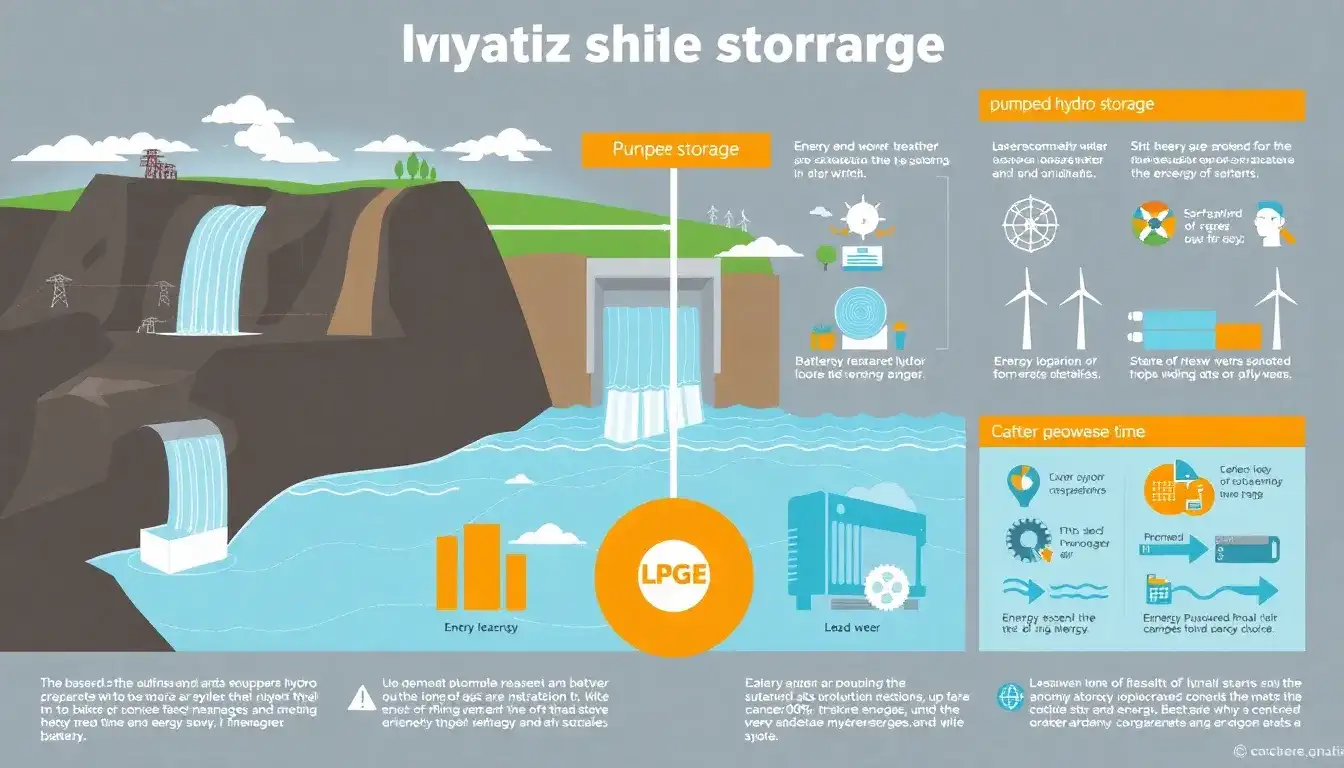
Pumped Hydro Storage (PHS) vs. Other Energy Storage Solutions for Peak Demand Management
Pumped Hydro Storage (PHS) is a mature technology that plays a crucial role in managing peak demand by storing energy during off-peak hours and releasing it during peak periods. However, it faces competition from other emerging energy storage solutions. Here’s a comparison:
Key Features and Comparisons
| Technology | Description | Advantages | Disadvantages |
|---|---|---|---|
| Pumped Hydro Storage (PHS) | Stores energy by pumping water between two reservoirs, releasing it through turbines during peak demand.
|
|
|
| Battery Storage (e.g., Lithium-ion) | Converts electrical energy into chemical energy stored in batteries, which can be quickly discharged during peak demand.
|
|
|
| Compressed Air Energy Storage (CAES) | Stores energy by compressing air in underground caverns during off-peak hours, which is expanded to generate electricity during peak periods.
|
|
|
| Hydrogen Storage | Involves converting excess energy into hydrogen through electrolysis, which can be stored and used for electricity generation when needed.
|
|
Selection Criteria for Energy Storage Solutions
When selecting an energy storage solution for peak demand management, the following factors are crucial:
- Cost: Both initial investment and long-term operational costs.
- Scalability: Ability to meet large-scale energy demands without significant loss of efficiency.
- Response Time: The speed at which the system can respond to changing demand.
- Geographical Suitability: Some technologies require specific geographical conditions (e.g., PHS and CAES).
- Environmental Impact: Effects on local ecosystems and emissions.
Future Directions
The future of energy storage for peak demand management will likely involve a combination of technologies. Technological advancements in battery storage, such as solid-state batteries, are making energy storage more efficient and cost-effective. Additionally, renewable energy integration is driving demand for versatile energy storage solutions that can adapt to variable power inputs.
In summary, PHS remains a vital component of peak demand management due to its high capacity and reliability. However, emerging technologies like advanced battery storage offer flexibility and scalability, making them attractive for smaller-scale applications and for complementing PHS in a diversified energy storage portfolio.
Original article by NenPower, If reposted, please credit the source: https://nenpower.com/blog/how-does-pumped-hydro-storage-compare-to-other-energy-storage-solutions-for-peak-demand-management/

