

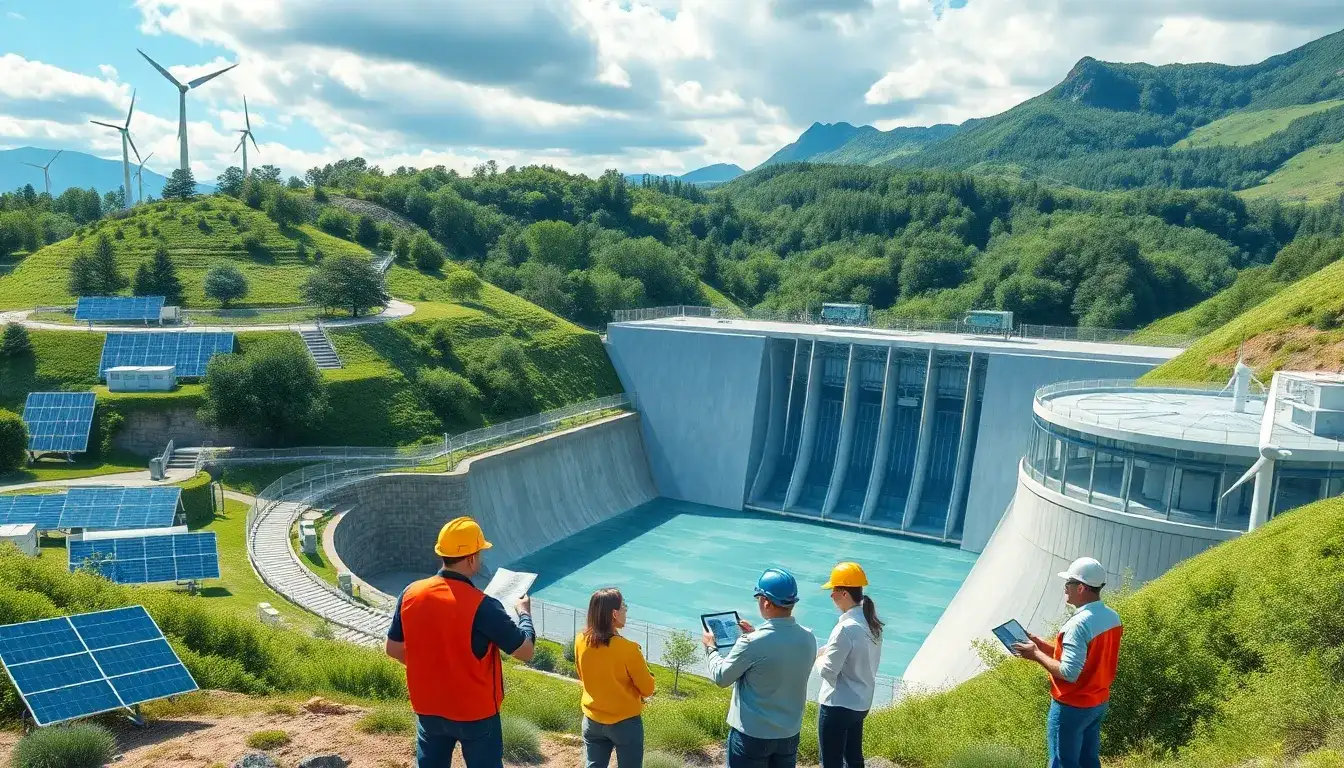
Pumped hydro energy storage (PHES) faces significant permitting and cost challenges that impact its development timeline and financial viability.
Permitting Challenges
- Lengthy Licensing Process: New pumped storage projects, particularly in the U.S., require licensing under Section 10(a) of the Federal Power Act by the Federal Energy Regulatory Commission (FERC), along with additional state and federal permits. This process typically takes three to five years or longer to obtain construction authorization. There is no expedited licensing process currently available for low-impact or closed-loop pumped storage projects, prolonging development start times.
- Complex Regulatory Requirements: The permitting process involves multiple layers of public and agency meetings, extensive applications, and iterative public reviews spread over several years. Even for closed-loop projects on brownfield sites, which are often environmentally friendlier, the same lengthy regulations and community engagement requirements apply, resulting in long approval durations.
- Environmental Concerns: Environmental and social risks are key barriers, requiring detailed studies and approvals that can delay projects. Closed-loop pumped storage is seen as potentially lowering some siting and permitting challenges compared to traditional pumped storage, but regulatory obstacles remain significant overall.
- Ongoing Efforts and Legislative Attempts: There have been policy efforts to reduce permitting timelines for closed-loop projects to approximately three years recognizing their value for renewable integration. However, such reforms have not yet been implemented fully and future permitting reforms remain uncertain.
Cost Challenges
- Long Development and Construction Timelines: Projects commonly take three to five years just for licensing, followed by another three to five years for construction, with total timelines often reaching six to ten years or more. These long durations expose projects to inflation and cost escalation in materials and labor, leading to budget overruns.
- Financing Difficulties: The prolonged and uncertain permitting process makes financing difficult because very few financial institutions are willing to support projects without guaranteed, timely authorization. Moreover, without adequate market mechanisms that reward long-duration storage services, revenue certainty for pumped storage developers is low, increasing investment risk.
- Market and Revenue Risks: In markets with liberalized electricity systems, pumped hydro projects often lack sufficient compensation for their key grid stability and energy security roles, making it harder to secure bankable revenue streams necessary for financing.
- Need for Government Support: To address these issues, support such as regulatory barrier removal, licensing streamlining, and provision of infrastructure (e.g., access roads) is critical to encourage capital investment and reduce financial risks associated with pumped storage projects.
In summary, pumped hydro energy storage projects face a complex and slow permitting process that can extend over many years without a fast-track option, especially under current U.S. regulations. These regulatory delays, combined with the lengthy construction periods, lead to significant cost escalation and financing challenges. Policy reforms to shorten permitting timelines and improved market mechanisms to ensure revenue certainty are key needs to overcome these barriers and unlock the potential of pumped hydro storage for renewable energy integration.
Original article by NenPower, If reposted, please credit the source: https://nenpower.com/blog/how-does-pumped-hydro-energy-storage-face-permitting-and-cost-challenges/

