

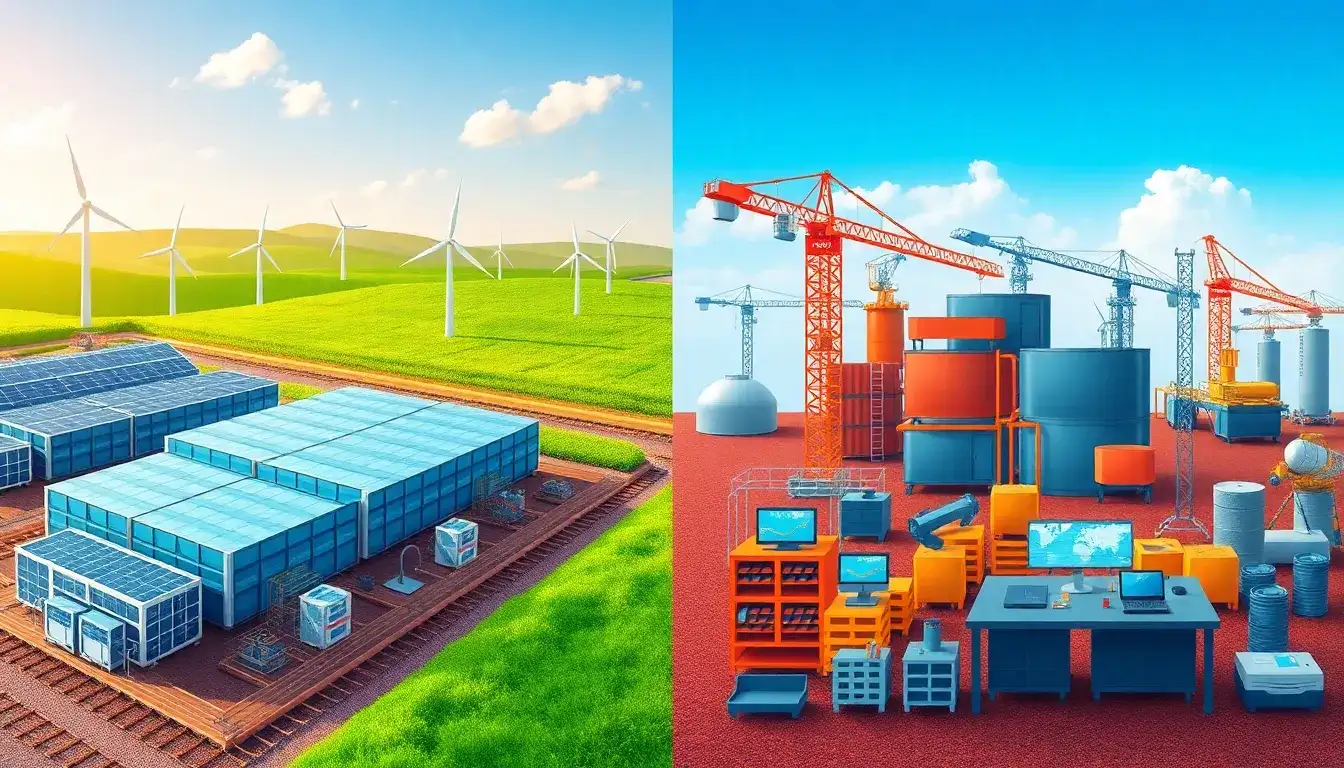
Project management in the energy storage sector differs from conventional industries due to unique technical, regulatory, and operational demands driven by renewable energy integration and grid stability requirements.
Scale and Complexity
Energy storage projects, such as battery systems, demand multi-stage scalability across geographically dispersed sites while synchronizing diverse technical components (e.g., inverters, battery modules, grid interfaces). Unlike traditional industries, these systems must balance intermittent renewable generation with grid demand, requiring precise scheduling to avoid delays that could disrupt energy reliability. For example, Tesla’s 80-MWh project for Southern California Edison required coordinating hundreds of stakeholders across engineering, procurement, and operations teams.
Regulatory and Policy Challenges
Energy storage projects operate within evolving policy frameworks, such as state-level incentives or emissions regulations, which directly influence project timelines and financing. Clean Energy States Alliance (CESA) initiatives highlight roles in state policy development, where project managers must navigate compliance for programs like long-duration storage (LDES) or community solar partnerships. Traditional industries often work within more stabilized regulatory environments.
Stakeholder and Operational Transition
Handoffs from project teams to operations are critical, as energy storage facilities require specialized knowledge for maintenance and grid integration. For instance, Southern California Edison’s transition plan included dedicated documentation portals and daily stakeholder meetings to onboard operations teams unfamiliar with battery storage systems. In contrast, industries like manufacturing often have established operational protocols requiring less retraining.
Financial and Contractual Frameworks
Energy storage projects often rely on innovative financing models, such as the UK’s Richborough framework, which uses 22 standardized contracts to streamline investor due diligence and enable incremental funding. Traditional sectors typically use more conventional financing structures with fewer contractual layers.
Key Differentiators
| Aspect | Energy Storage Projects | Traditional Industries |
|---|---|---|
| Scalability | Multi-site, modular deployments | Single-site focused |
| Regulatory Focus | Policy-driven compliance | Compliance with fixed standards |
| Stakeholder Roles | Cross-functional grid operators | Department-specific teams |
| Financing | Project-specific frameworks | Standardized models |
These differences underscore the need for adaptive project management strategies in energy storage, emphasizing policy agility, stakeholder collaboration, and modular scalability.
Original article by NenPower, If reposted, please credit the source: https://nenpower.com/blog/how-does-project-management-differ-in-energy-storage-compared-to-other-industries/

