

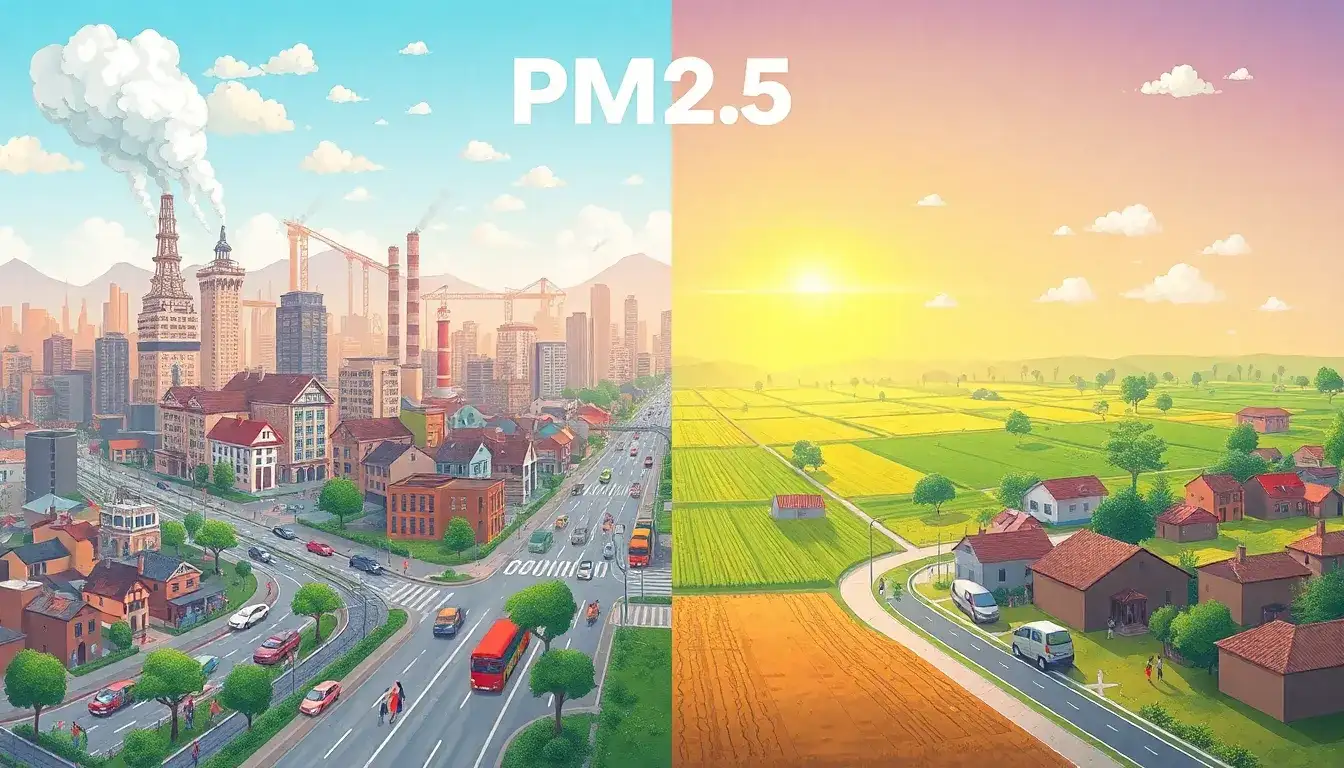
PM2.5 exposure differs notably between urban and rural areas for vulnerable populations, with several key patterns and health impact disparities observed:
Differences in PM2.5 Levels Between Urban and Rural Areas
- Urban areas consistently exhibit higher PM2.5 concentrations compared to rural areas. For instance, studies show urban tracts have significantly higher PM2.5 levels, with average urban concentrations around 15.4 to 15.9 μg/m³ versus about 10.2 to 10.6 μg/m³ in rural areas, indicating roughly a 5 μg/m³ higher concentration in urban settings.
- Household PM2.5 concentrations in urban settings can be more than double those in rural settings, as seen in South African studies where urban household levels reached about 29 μg/m³, far exceeding rural measurements.
- Despite higher PM2.5 mass concentrations in urban areas, some analyses suggest that exposure risks may sometimes appear similar between urban and rural populations when accounting for other factors.
Health Impacts and Vulnerable Populations
- Mortality risks associated with PM2.5 exposure show urban-rural disparities. In China, urban areas experienced greater cardiovascular and cerebrovascular mortality impacts from PM2.5, while rural areas experienced stronger respiratory mortality effects.
- The absolute number of deaths attributable to PM2.5 is higher in urban areas than rural, reflecting the higher pollution levels there (e.g., 16.5 vs. 3.4 deaths per 100,000 annually in urban vs. rural Chinese populations).
- Vulnerable populations in rural areas may face additional risks from factors like harder physical activities and indoor air pollution sources (e.g., passive smoking, use of solid fuels), which can amplify the health impact of lower ambient PM2.5 levels compared to urban residents.
- Urban populations tend to have better overall health stocks and resilience to environmental shocks, likely mitigating some adverse effects of PM2.5 exposure despite higher pollution.
Summary
- Urban areas have higher PM2.5 concentrations and more attributable mortality from cardiovascular causes.
- Rural populations, despite lower ambient PM2.5 levels, may suffer stronger respiratory impacts and face other exposure risks indoors.
- Vulnerable groups in both settings experience health disparities due to differences in pollution levels, exposure sources, and underlying health resilience.
Thus, PM2.5 exposure effects vary by urban-rural status and population vulnerability, necessitating spatially targeted public health interventions to reduce PM2.5-related health risks effectively in both environments.
Original article by NenPower, If reposted, please credit the source: https://nenpower.com/blog/how-does-pm2-5-exposure-differ-between-urban-and-rural-areas-for-vulnerable-populations/

