

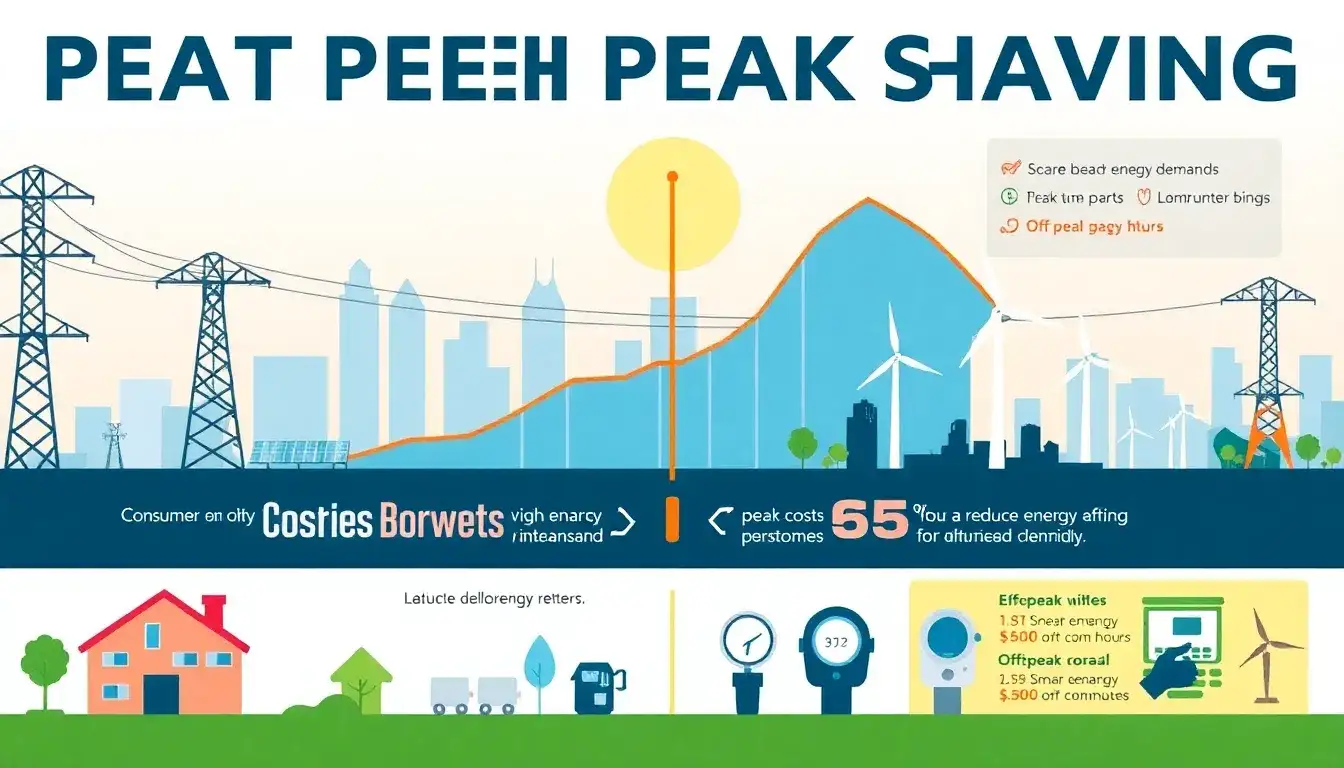
Peak shaving is a strategy employed by consumers to reduce their electricity costs by minimizing the highest demand peaks during periods of high electricity usage. This technique is particularly beneficial for commercial and industrial users who face demand charges, which can represent a significant portion of their electricity bills. Here’s how peak shaving impacts electricity costs:
Impact on Electricity Costs
- Reduced Demand Charges: Demand charges are based on the highest power consumption rate during a billing cycle, often measured in short intervals like 15 minutes. By shaving off these peaks, businesses can lower their demand charges, which can account for 30% to 70% of their electricity bill.
- Use of Energy Storage Systems: Peak shaving often involves the use of battery energy storage systems (BESS). These systems store energy during off-peak hours or when renewable energy is available and discharge it during peak times, thereby reducing reliance on the grid during expensive peak periods.
- Integration with Renewable Energy: Combining energy storage with renewable energy sources like solar can further reduce electricity costs by allowing businesses to utilize stored energy instead of buying it at peak rates.
- Grid Stability: By reducing peak demand, consumers contribute to maintaining grid stability, which can be beneficial for both the grid operator and other consumers in terms of reduced infrastructure costs and potential for future savings.
- Operational Flexibility: Peak shaving allows businesses to manage their energy use without significantly altering operational schedules, offering flexibility and sustainability benefits.
Challenges and Considerations
While peak shaving offers considerable benefits, it can require significant upfront investments in energy storage systems or on-site generation. Conducting energy audits and implementing monitoring systems can help businesses identify opportunities for peak shaving effectively.
Overall, peak shaving is an effective strategy for managing electricity costs, particularly for commercial and industrial consumers facing high demand charges during peak periods.
Original article by NenPower, If reposted, please credit the source: https://nenpower.com/blog/how-does-peak-shaving-impact-electricity-costs-for-consumers/

