

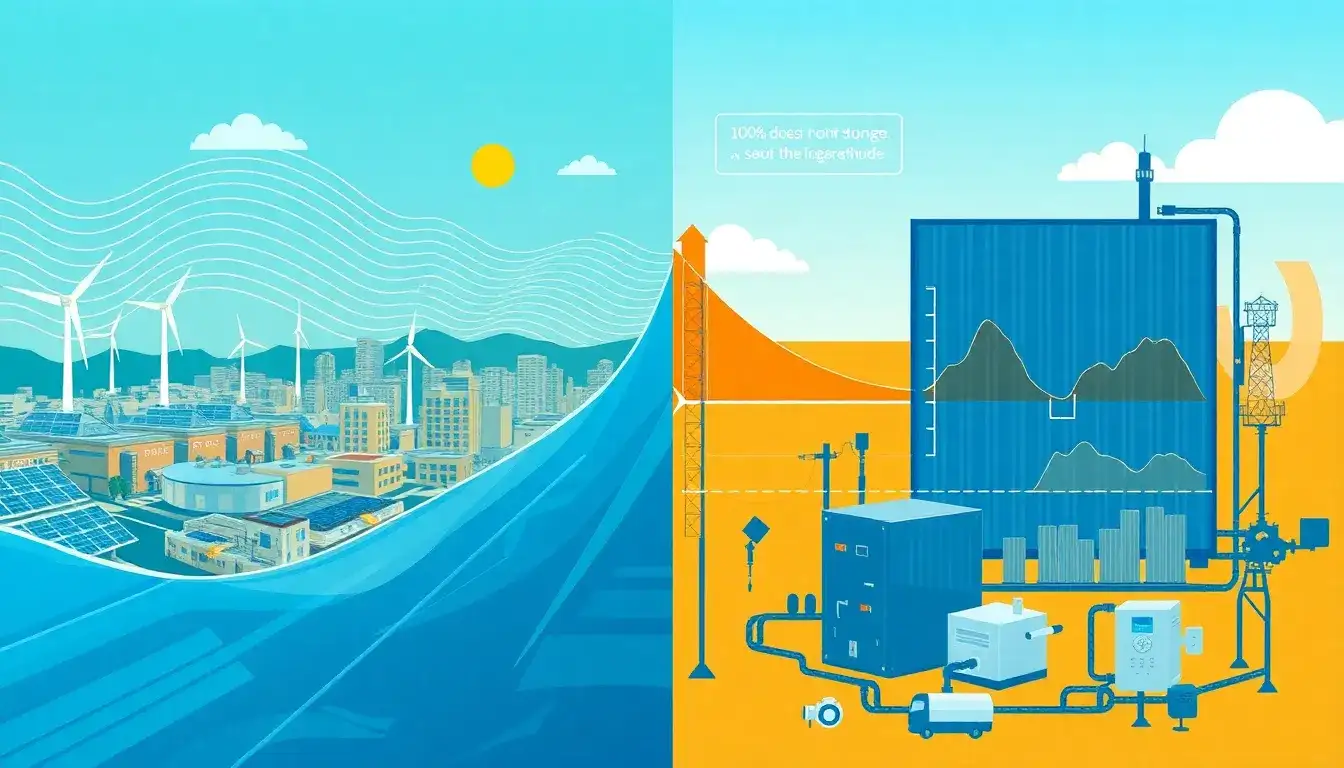
Peak shaving helps businesses with intermittent renewable energy sources by managing their energy demand to reduce peak grid consumption, thereby balancing renewable generation variability, lowering electricity costs, and improving grid stability.
How Peak Shaving Works with Intermittent Renewables
Intermittent renewable sources like solar PV and wind turbines produce electricity unevenly—solar panels generate power during the day, often producing excess energy, while wind can be unpredictable. Peak shaving uses battery energy storage systems (BESS) or on-site power generation to store excess renewable energy when production exceeds demand and release it during peak demand periods when renewable output is low or grid prices are high. This process “shaves” or reduces peak power consumption from the grid, smoothing the demand curve.
Benefits for Businesses Using Renewables
- Cost Savings: By using stored renewable energy during peak hours instead of drawing expensive electricity from the grid, businesses can avoid high demand charges that are based on peak power use, which can constitute 30-70% of their electricity bills.
- Grid Demand Reduction: Peak shaving decreases the load on the grid during high-demand times, mitigating the impact of renewable intermittency and helping maintain grid stability and reliability.
- Enhanced Renewable Utilization: Excess solar or wind energy generated during low-demand periods is not wasted but stored and used later, maximizing the value and integration of renewable energy into business operations.
- Operational Flexibility: Businesses with less-flexible loads that cannot easily shift energy-consuming activities in time can still benefit by discharging stored energy during peak periods instead of reducing production, thus maintaining operational continuity while cutting costs.
Typical Implementation Strategies
- Battery Energy Storage Systems: Store energy when renewable generation is high or when grid power is cheap, and discharge during peak demand to shave peaks effectively.
- On-site Generation: Complement renewables with natural gas generators or other captive power sources to reduce grid dependency during peaks.
- IoT and Real-time Monitoring: Use smart sensors and analytics to dynamically adjust energy consumption and optimize peak shaving strategies based on renewable output and demand patterns.
In summary, peak shaving enables businesses with intermittent renewable energy sources to store surplus renewable power and strategically reduce peak grid electricity consumption. This leads to financial savings by lowering demand charges, increases the effective use of renewable energy, and enhances grid stability by smoothing the variability associated with renewables.
Original article by NenPower, If reposted, please credit the source: https://nenpower.com/blog/how-does-peak-shaving-help-businesses-with-intermittent-renewable-energy-sources/

