

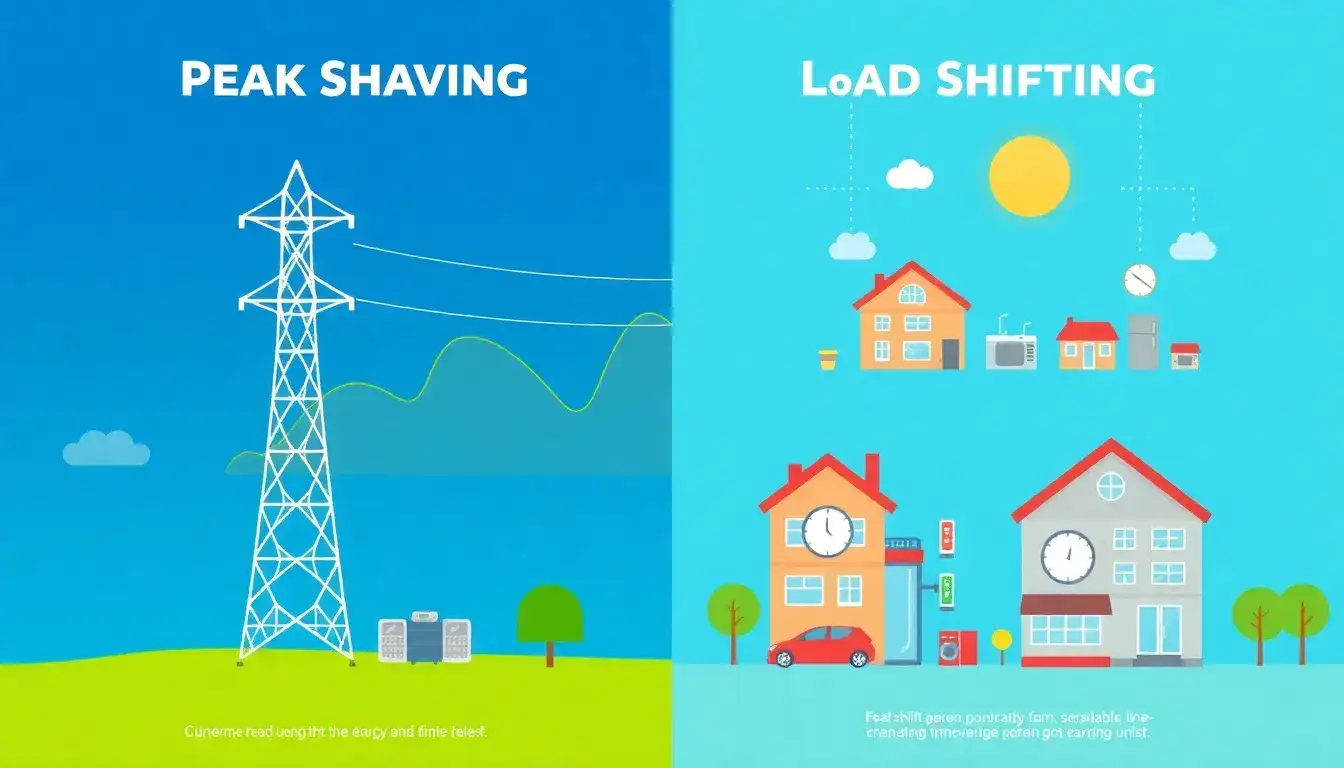
Peak Shaving vs. Load Shifting: Key Differences
Peak shaving and load shifting are two distinct energy management strategies used to optimize energy consumption and reduce costs, but they operate differently in terms of their objectives and implementation.
Peak Shaving
- Objective: Peak shaving focuses on reducing the maximum power demand during peak periods by either lowering consumption or supplementing the grid with alternative energy sources. This helps avoid high demand charges imposed during these times.
- Method: It often involves using on-site energy generation, such as solar panels or diesel generators, and energy storage systems like batteries. These systems provide power during peak hours to reduce grid reliance.
- Benefits:
- Reduces demand charges.
- Enhances grid stability by lowering peak loads.
- Does not require operational schedule changes.
- Drawbacks:
- Requires significant upfront investment in storage systems or generators.
- Systems need regular maintenance.
Load Shifting
- Objective: Load shifting involves moving energy consumption from peak hours to off-peak periods when electricity prices are lower.
- Method: This approach reschedules energy-intensive activities to times when demand and prices are lower, often utilizing time-of-use pricing.
- Benefits:
- Lowers operational costs by benefiting from cheaper off-peak rates.
- Easy to implement without significant capital investment.
- Improves overall energy efficiency.
- Drawbacks:
- Can disrupt normal business operations or require changes to work schedules.
- Is only suitable for businesses with flexible operational schedules.
Comparison Summary
- Peak Shaving: Reduces peak demand directly, often using alternative energy sources or storage.
- Load Shifting: Shifts energy use to off-peak times to avoid high charges and optimize energy costs.
Original article by NenPower, If reposted, please credit the source: https://nenpower.com/blog/how-does-peak-shaving-differ-from-load-shifting/

