

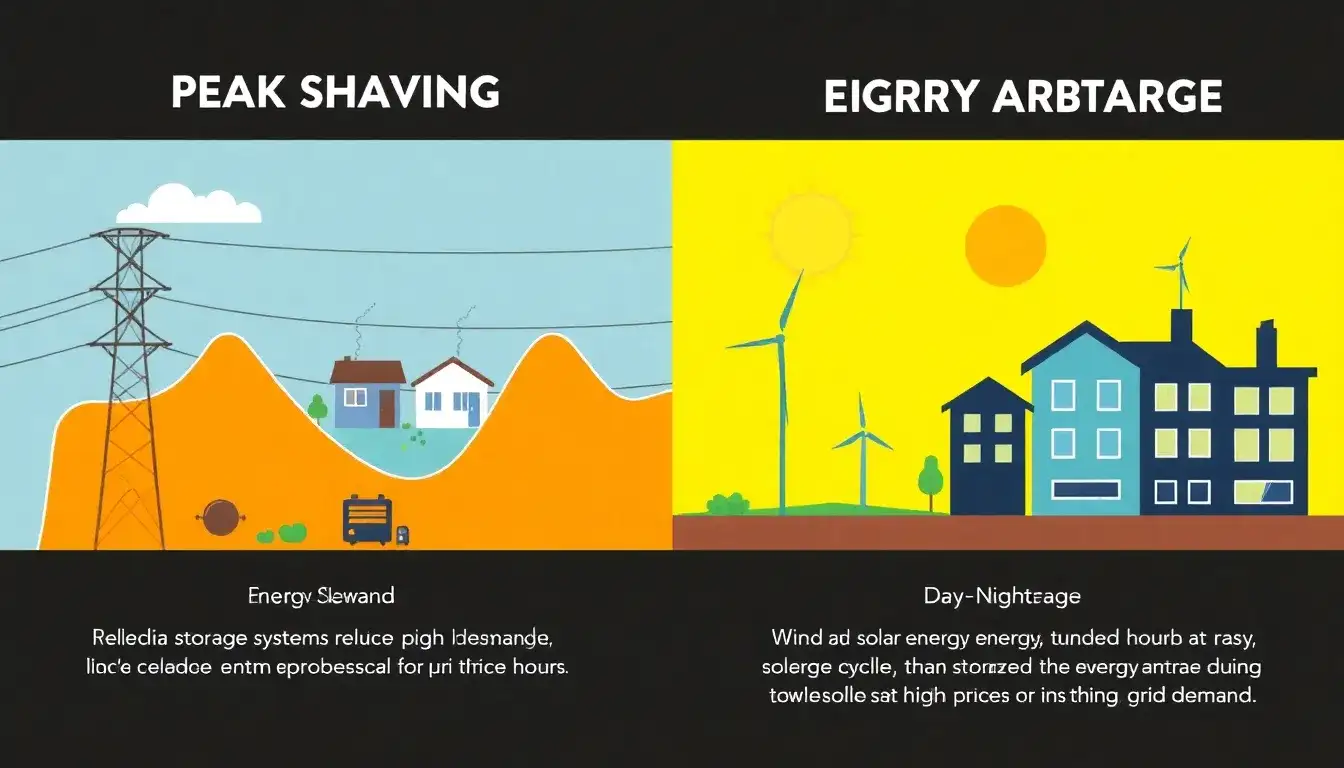
Peak shaving and energy arbitrage are both used to optimize energy consumption and reduce costs, but they serve different purposes and offer distinct benefits in terms of implementation and impact.
Overview of Peak Shaving and Energy Arbitrage
- Peak Shaving: This strategy involves reducing electricity consumption during periods of high demand. It is typically implemented when an electricity tariff includes demand charges, which are levied based on the highest power consumption measured during a billing period. By using energy storage systems or other measures to decrease peak demand, consumers can lower their energy bills and contribute to grid stability.
- Energy Arbitrage: This involves purchasing energy during low-price periods (off-peak hours) and selling it during high-price periods (peak hours). It exploits price variations over time or location to generate profits. Energy arbitrage is often facilitated by energy storage systems like batteries, which can buy and store energy at low prices and release it at high prices.
Benefits
Benefits of Peak Shaving:
- Cost Savings: Reduces demand charges by lowering peak consumption.
- Grid Stability: Helps maintain grid reliability by reducing strain during peak periods.
- Operational Flexibility: Can utilize stored energy to meet internal demand without relying on the grid.
Benefits of Energy Arbitrage:
- Profitability: Generates revenue from the price difference between low-cost energy purchase and high-cost energy sale.
- Increased Efficiency: Encourages optimal use of energy resources by aligning energy usage with economic incentives.
- Renewable Energy Integration: Facilitates integration of variable renewable sources by storing excess energy for later use.
Implementation
Implementation of Peak Shaving:
- Demand Management: Requires identifying peak demand periods and implementing strategies to reduce consumption during those times.
- Energy Storage: Often uses batteries or other storage solutions to provide power during peak periods, thereby reducing grid reliance.
- Tariff Structure: Works well under tariffs with demand charges.
Implementation of Energy Arbitrage:
- Price Monitoring: Involves monitoring energy market prices to identify optimal times for purchasing and selling energy.
- Energy Storage: Uses storage systems to buy energy at low prices and sell it during peak hours when prices are higher.
- Trading Strategies: Often employs sophisticated algorithms to optimize trading and maximize profits.
In summary, while both strategies aim to optimize energy usage, peak shaving focuses on reducing peak demand and stabilizing the grid, whereas energy arbitrage is centered on exploiting price differences to generate profits.
Original article by NenPower, If reposted, please credit the source: https://nenpower.com/blog/how-does-peak-shaving-differ-from-energy-arbitrage-in-terms-of-benefits-and-implementation/

