

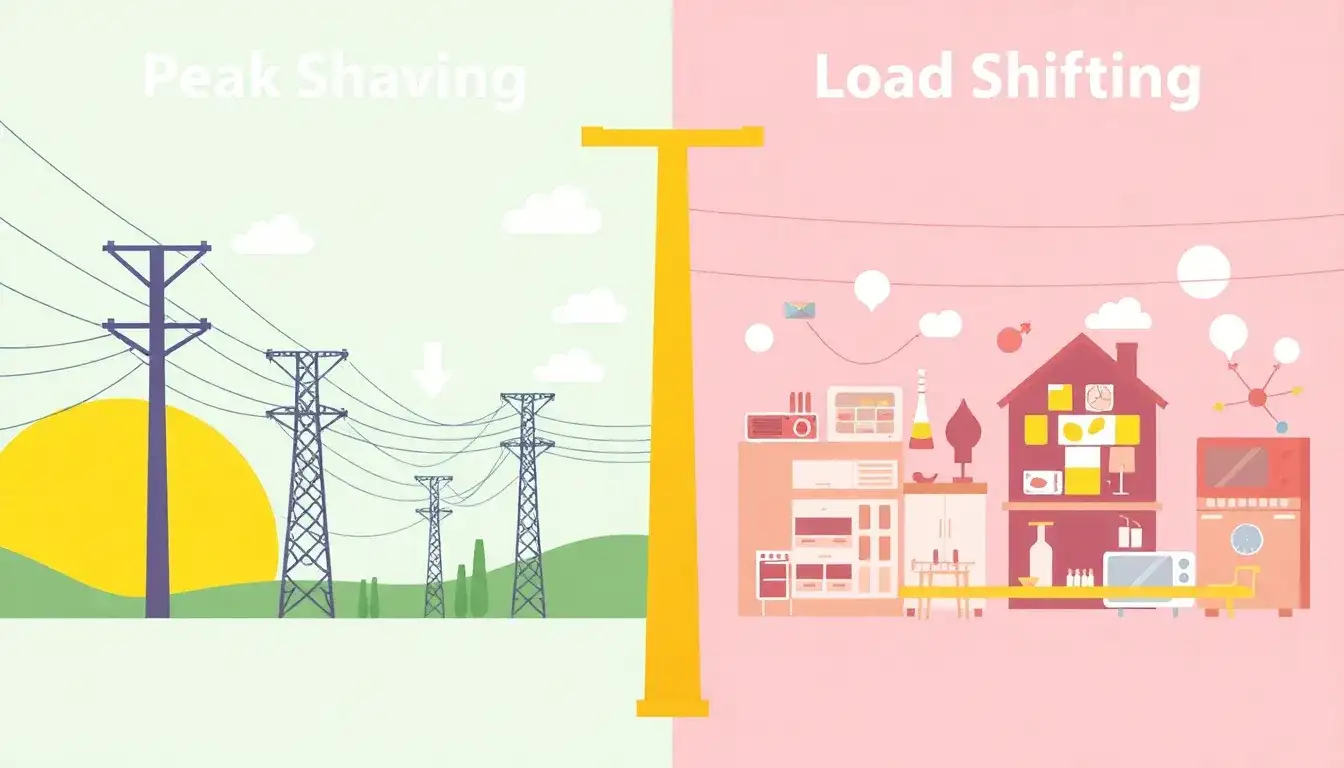
Peak Shaving vs. Load Shifting: Grid Efficiency Comparison
Peak shaving and load shifting are two energy management strategies aimed at improving grid efficiency, but they operate differently:
1. Peak Shaving:
- Objective: Reduces peak electricity demand during critical periods by supplementing grid power with on-site generation or energy storage systems.
- Method: Uses batteries, solar panels, or generators to lower peak demand, thereby reducing strain on the grid during high-demand times.
- Grid Efficiency Impact: Enhances grid stability by preventing overloads and reducing the need for peaking power plants, which are often less efficient and more polluting.
- Benefits: Offers cost savings through reduced demand charges and improves grid reliability by minimizing the likelihood of power outages.
2. Load Shifting:
- Objective: Moves energy usage from peak hours to off-peak periods.
- Method: Involves rescheduling non-essential tasks to times when energy costs are lower, typically utilizing cheaper off-peak rates.
- Grid Efficiency Impact: Smooths out demand curves, reducing the peak demand spikes that strain the grid. This helps maintain grid stability and optimizes resource utilization.
- Benefits: Promotes cost savings through lower electricity rates during off-peak hours, supports the integration of renewable energy sources into the grid, and enhances overall grid resilience.
Comparison of Grid Efficiency Outcomes:
| Strategy | Primary Impact on Grid Efficiency | Key Benefits |
|---|---|---|
| Peak Shaving | Reduces peak demand spikes, enhancing grid stability by preventing overloads. | Offers demand charge reductions and improves grid stability. |
| Load Shifting | Smooths out demand curves, optimizing grid resource utilization and reducing strain on the grid. | Promotes cost savings, supports renewable integration, and enhances grid resilience. |
Both strategies are essential for improving grid efficiency, though they address different aspects of energy management. Peak shaving focuses on reducing peak demand directly to stabilize the grid and lower costs, whereas load shifting optimizes energy usage patterns over time to match available resources efficiently. Combining both strategies with technologies like Battery Energy Storage Systems (BESS) can further amplify these benefits.
Original article by NenPower, If reposted, please credit the source: https://nenpower.com/blog/how-does-peak-shaving-compare-to-load-shifting-in-terms-of-grid-efficiency/

