

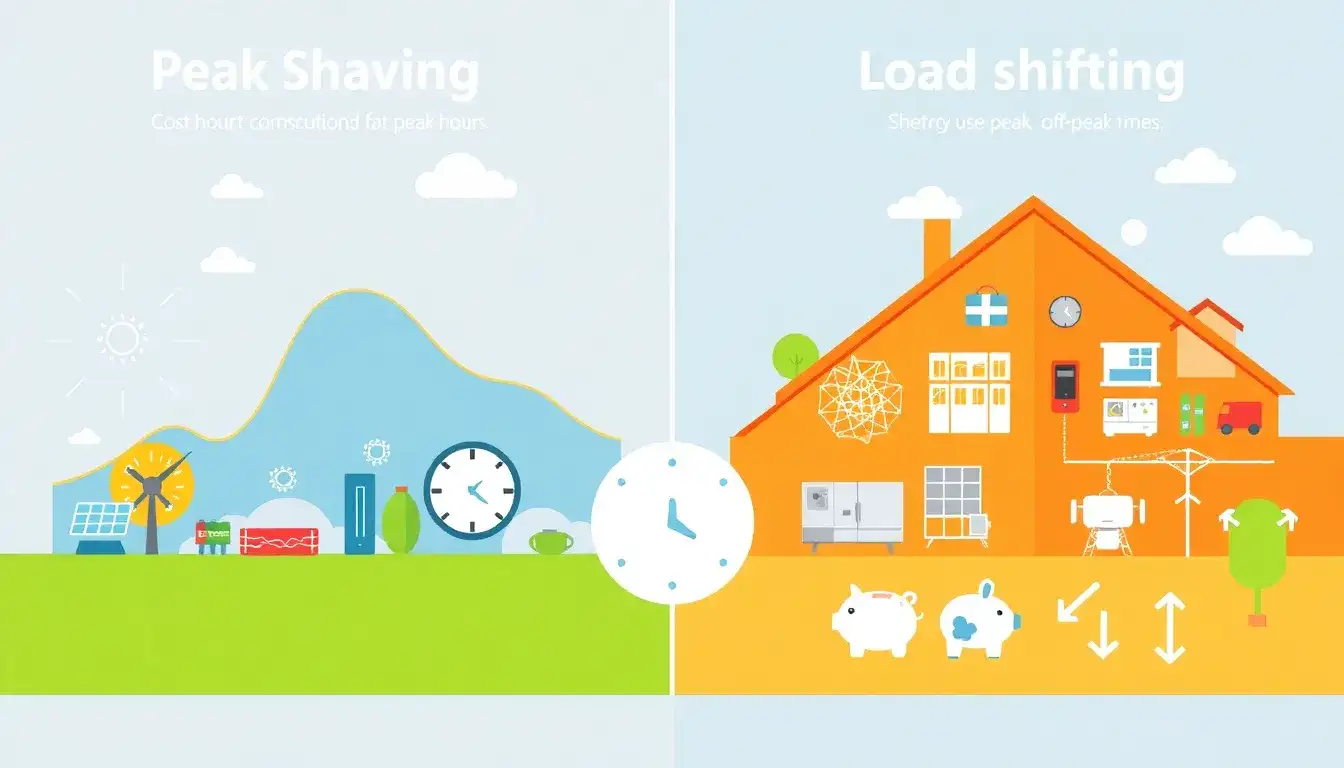
Peak shaving and load shifting are both effective strategies for managing energy consumption, but they differ in how they achieve cost savings. Here’s a comparison of these strategies:
Peak Shaving
- Mechanism: Peak shaving involves reducing the maximum energy demand during peak periods by using alternative energy sources such as on-site generation or energy storage systems like batteries.
- Cost Savings:
- Demand Charges Reduction: By lowering peak demand, facilities can significantly reduce demand charges, which are often a major component of their electricity bills.
- Grid Stability Benefits: Peak shaving helps maintain grid stability by reducing peak loads, which can otherwise stress the grid and lead to increased energy costs or even infrastructure upgrades.
- Example Savings: Peak shaving can achieve savings of over 12% on a single bill by managing demand during peak times.
Load Shifting
- Mechanism: Load shifting involves moving energy consumption from peak to off-peak hours when prices are typically lower.
- Cost Savings:
- Off-peak Pricing: By using energy during off-peak hours, businesses can benefit from lower electricity rates.
- Grid Balancing: Load shifting helps balance the grid by relocating energy use to times when demand is lower, reducing the need for peaking power plants.
- Example Savings: Facilities can save on peak demand charges by shifting non-essential loads to off-peak hours.
Comparison Summary
| Strategy | Mechanism | Cost Savings | Applicability |
|---|---|---|---|
| Peak Shaving | Reduces peak demand using alternative sources. | Reduces demand charges and improves grid stability. | Ideal for inflexible high-demand |
Original article by NenPower, If reposted, please credit the source: https://nenpower.com/blog/how-does-peak-shaving-compare-to-load-shifting-in-terms-of-cost-savings/

