

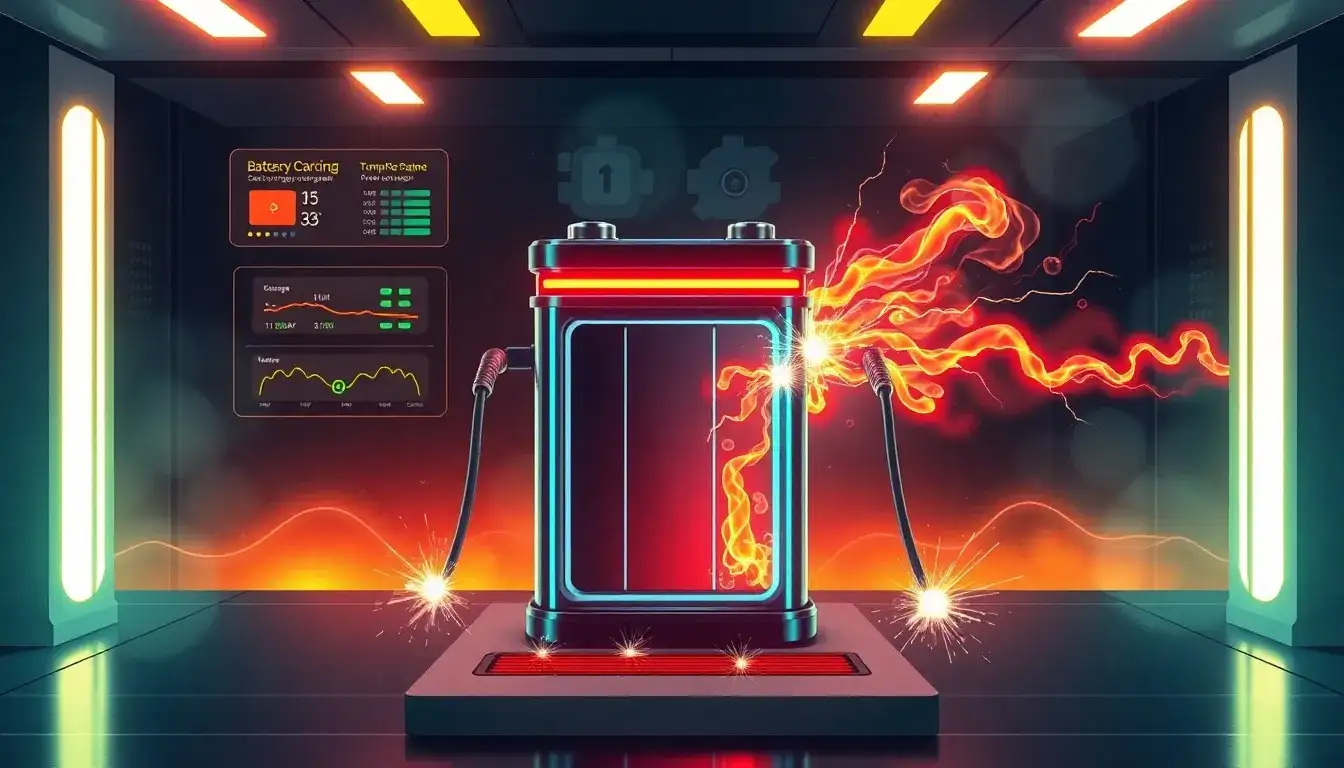
Overcharging and Thermal Runaway
- Increased Cell Voltage and Temperature: Overcharging causes an increase in cell voltage and temperature. When a battery is overcharged, the chemical reactions within it can accelerate, leading to excessive heat generation.
- Heat Accumulation: The heat generated during overcharging can exceed the battery’s ability to dissipate it. This leads to an accumulation of heat within the cell, potentially initiating a self-sustaining reaction that can escalate into thermal runaway.
- Exothermic Reactions: Overcharging triggers exothermic reactions that produce more heat and gases. These reactions can become self-sustaining, accelerating the heating process.
- Degradation of Battery Cells: High current overcharging can degrade battery cells by reducing their thermal stability. This makes them more susceptible to thermal runaway.
- Cascade Effect: Once one cell begins to overheat during a thermal runaway event, it can affect nearby cells, making them vulnerable to the same outcome. This creates a cascade effect where multiple cells can go into thermal runaway, leading to severe safety risks like fires or explosions.
Preventing Thermal Runaway from Overcharging
To mitigate these risks, it’s essential to use effective battery management systems (BMS). These systems monitor battery parameters like voltage, current, and temperature, ensuring safe operating conditions and preventing overcharge events. Implementing thermal protection measures, such as removing power to the battery during detected anomalies and using cooling systems, is also crucial for preventing thermal runaway.
Original article by NenPower, If reposted, please credit the source: https://nenpower.com/blog/how-does-overcharging-contribute-to-the-risk-of-thermal-runaway/

