

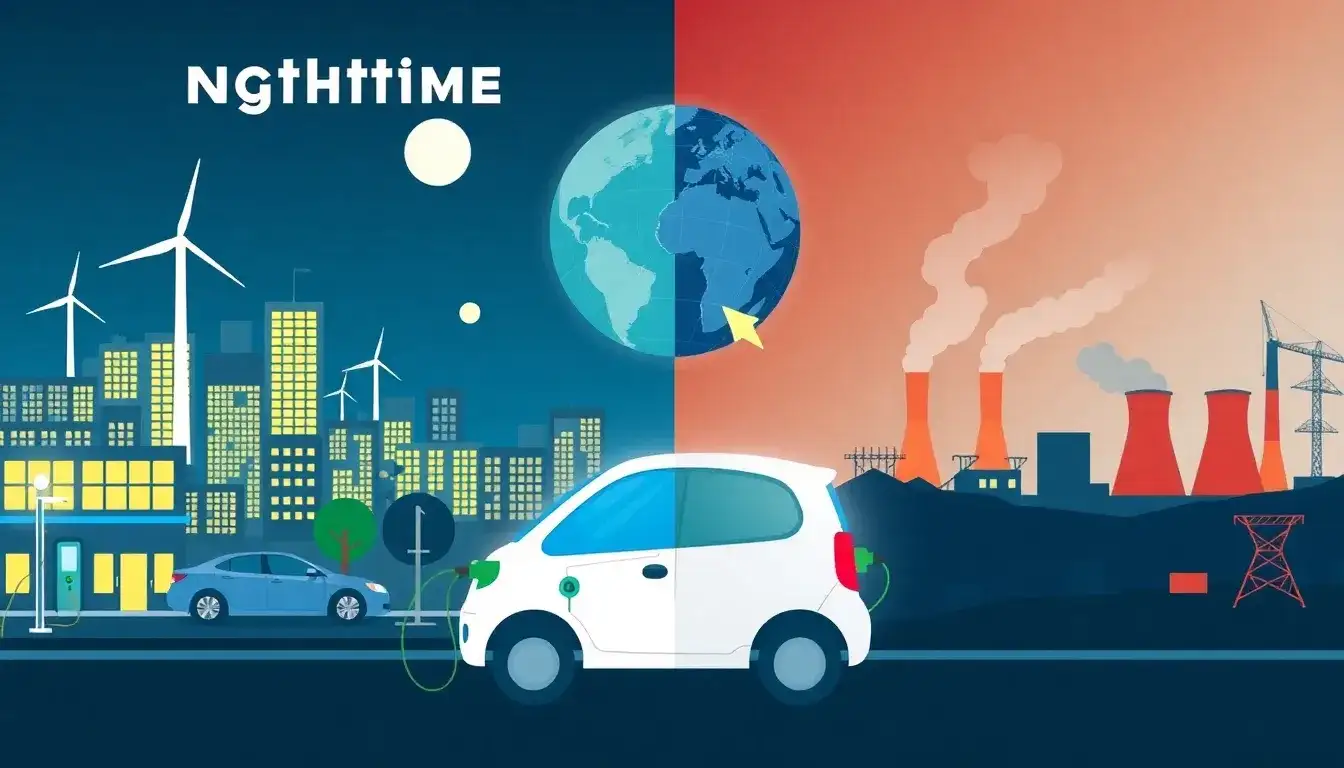
Nighttime charging of electric vehicles (EVs) can have a significant impact on their overall carbon emissions. Here are some key points to consider:
- Higher Carbon Footprint: Charging EVs at night may result in a higher carbon footprint compared to daytime charging. This is because the grid often relies more heavily on fossil fuels during nighttime hours, increasing the CO2 emissions associated with generating electricity for charging.
- Grid Mix: The grid mix varies by location and time. At night, the grid is less likely to be powered by renewable energy sources like solar and more likely to use fossil fuels, leading to increased emissions.
- Comparison to Daytime Charging: In contrast, charging during the day can be cleaner due to the availability of solar power, which contributes a significant portion of grid electricity during daylight hours. This can significantly reduce the emissions associated with EV charging.
- Potential for Emission Reduction: Studies suggest that shifting to daytime charging can lead to additional yearly emission reductions. For example, one study found that daytime charging could save about 10 kg of CO2 per electric scooter and 106 kg per electric sedan annually.
- GRID Impact: The widespread practice of nighttime charging also puts additional stress on the electrical grid, potentially increasing peak demand and exacerbating any strain on infrastructure during these hours.
Original article by NenPower, If reposted, please credit the source: https://nenpower.com/blog/how-does-nighttime-charging-impact-the-overall-emissions-of-evs/

