

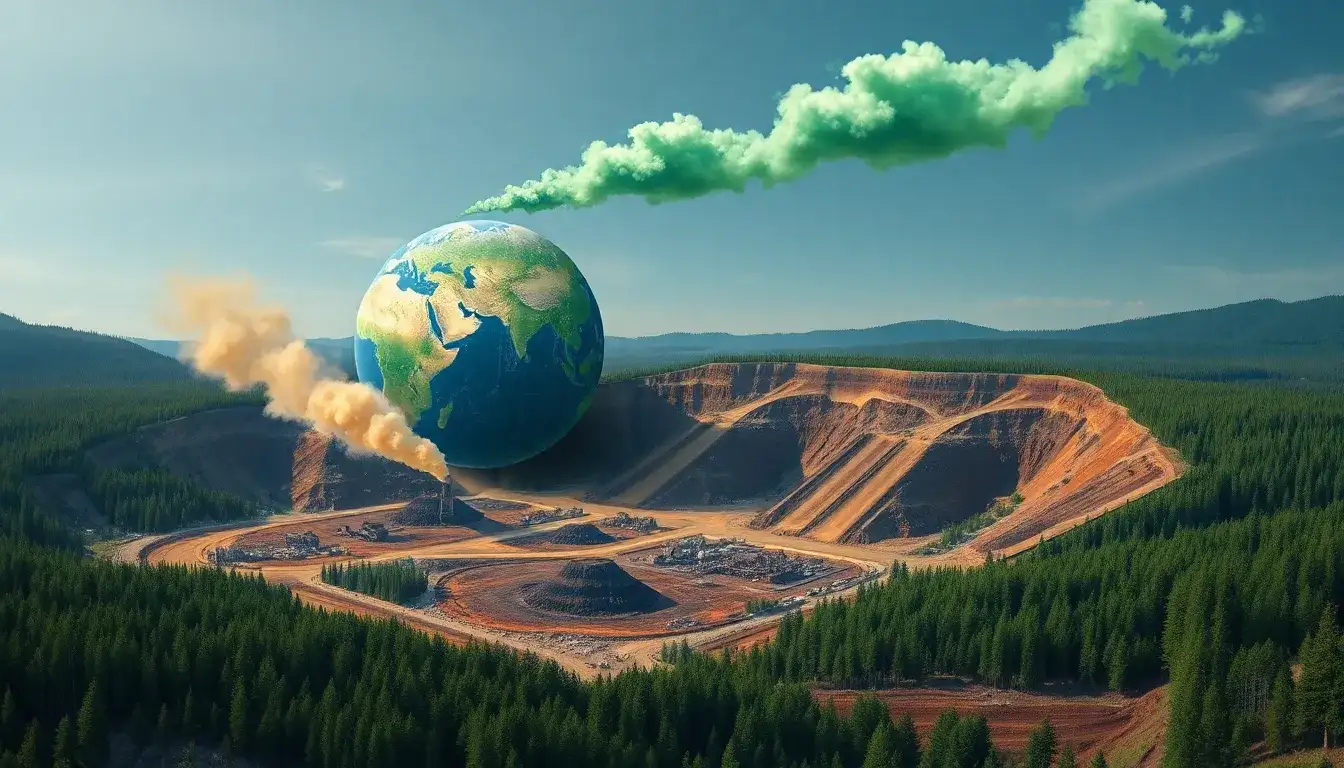
Nickel mining contributes to greenhouse gas emissions primarily through its energy-intensive production processes. Here are key factors to consider:
- Emissions Variability and Intensity:
- The production of class 1 nickel, often used in lithium-ion batteries, can emit between 5 and 22 tonnes of CO₂ equivalent per tonne of product.
- Ferronickel (class 2) production has a much higher carbon footprint, with emissions around 45 tonnes CO₂e per tonne of nickel content.
- Overall, nickel production emits significantly less than metals like aluminum but can be more carbon-intensive than copper or steel, especially for high-purity nickel.
- Production Process:
- The primary greenhouse gas emitted during nickel production is carbon dioxide (CO₂), with methane and nitrous oxide also contributing.
- Energy use in mining, extracting, and processing nickel is a significant source of emissions.
- Ore Grades and Efficiency:
- Lower-grade ores, which are becoming more prevalent, require more energy to extract and process, leading to higher emissions.
- Efficiencies in production can reduce emissions, but the industry’s expansion, such as in Indonesia, is expected to increase overall emissions due to rising demand and production levels.
- Geographical Impact:
- Countries like Indonesia are emerging as major nickel producers, contributing significantly to global nickel output and associated emissions. Indonesian producers are expected to see increased greenhouse gas emissions as production grows.
- Guidance for Reducing Emissions:
- Organizations like the Nickel Institute provide guidance on calculating and potentially reducing greenhouse gas emissions from nickel production.
Original article by NenPower, If reposted, please credit the source: https://nenpower.com/blog/how-does-nickel-mining-contribute-to-greenhouse-gas-emissions/

