

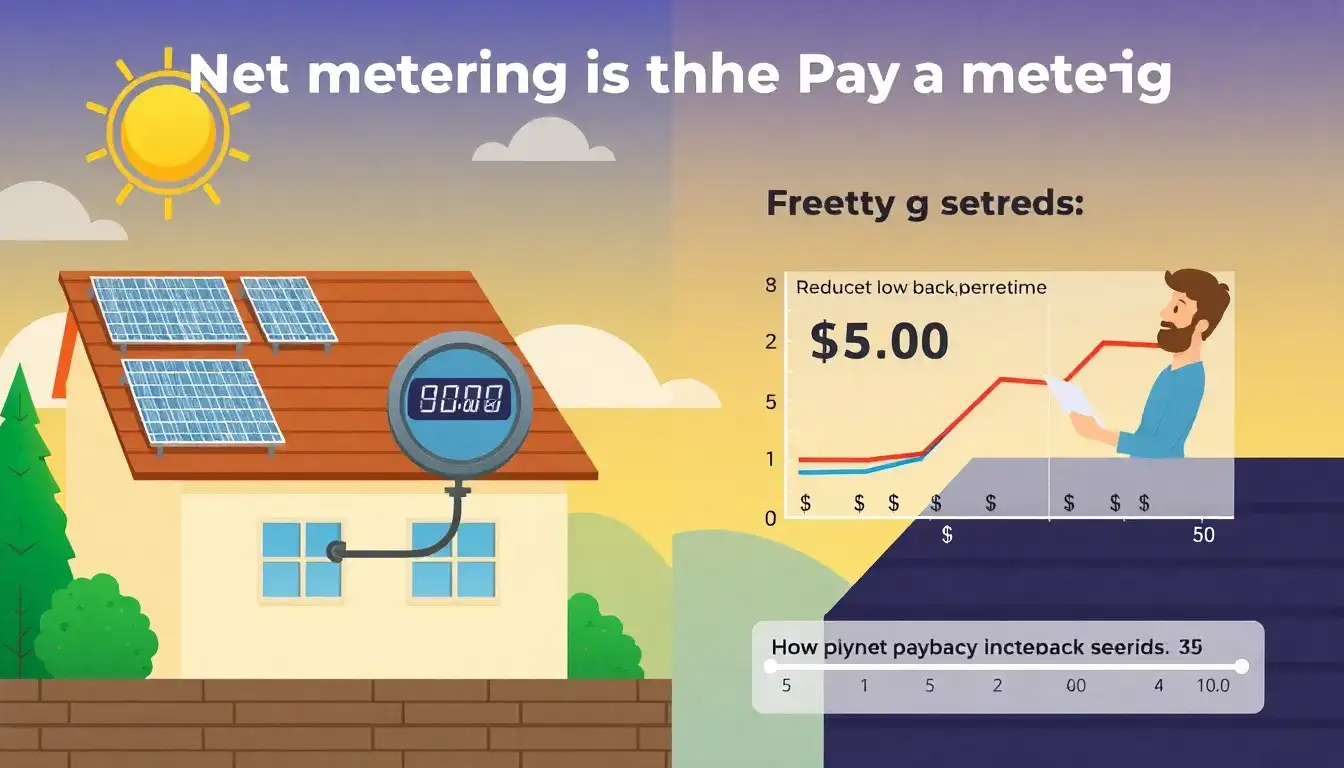
Net metering significantly impacts the payback period of solar panels by enabling homeowners and businesses to offset their electricity costs more effectively. Here’s how:
Impact of Net Metering on Solar Payback Period
- Reduced Electricity Bills: Net metering allows solar panel owners to sell excess energy back to the grid at retail rates, reducing their electricity bills. This can result in significant annual savings, which in turn shorten the payback period.
- Financial Incentives: By selling excess energy, solar owners can accumulate credits that reduce their bills over time, effectively increasing the financial returns on their investment.
- Increased ROI: The ability to sell excess energy increases the overall return on investment (ROI), as owners can benefit from both using and selling their solar-generated electricity.
Factors Affecting Net Metering Benefits
- Location and Policy: The effectiveness of net metering varies by location, as some states offer better rates for excess energy sold back to the grid than others. Additionally, policy changes can impact how much and how often excess energy can be sold.
- Utility Rates: Areas with higher electricity costs tend to see a faster payback period, as the savings from net metering are more substantial.
Overall Impact on Payback Period
By incorporating net metering, solar panel owners can decrease their payback period by increasing their annual savings. This makes solar a more attractive financial investment, as it can potentially pay for itself faster than without these policies.
Overall, net metering plays a crucial role in enhancing the financial viability of solar panel installations by allowing owners to maximize their energy savings and financial returns.
Original article by NenPower, If reposted, please credit the source: https://nenpower.com/blog/how-does-net-metering-impact-the-payback-period-of-solar-panels/

