

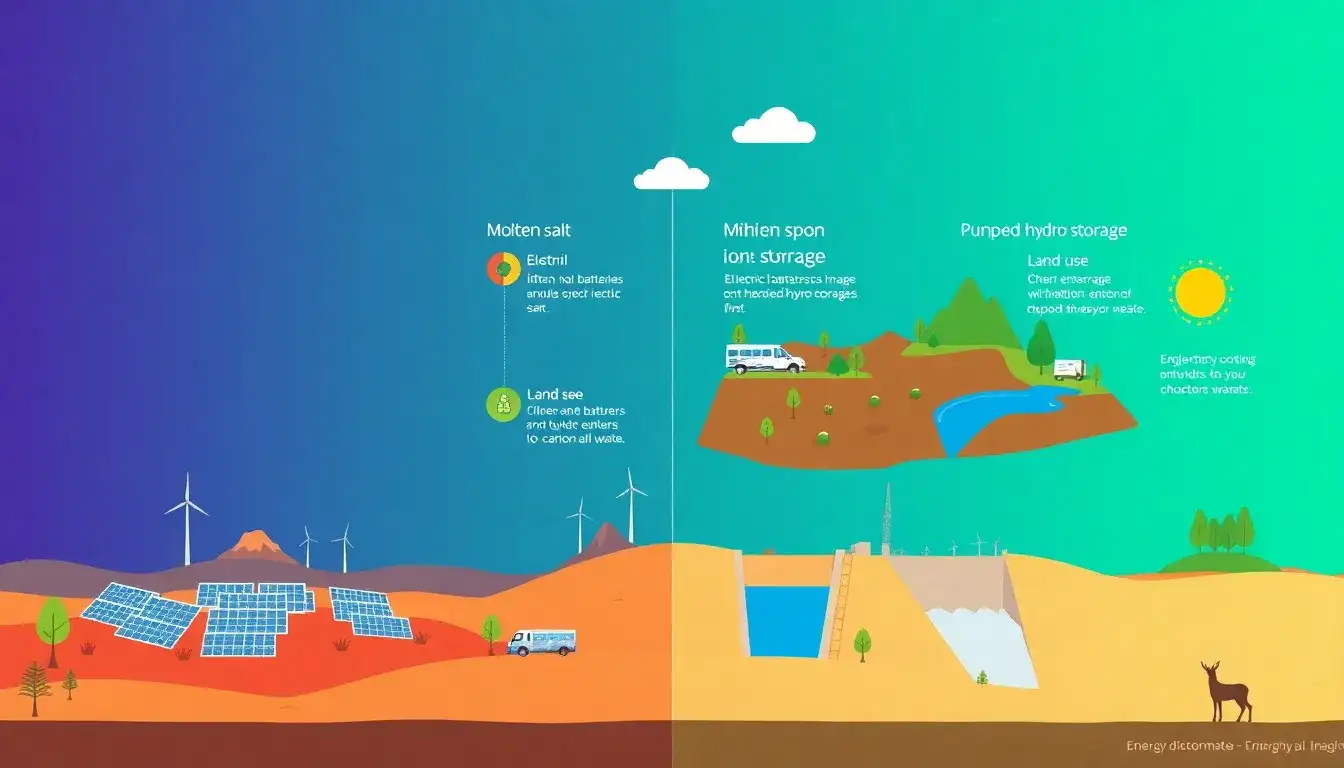
Molten salt energy storage (MSS) demonstrates lower environmental impact compared to conventional fossil-fueled systems and some other storage methods when integrated with concentrated solar power (CSP) plants. Here’s a detailed comparison:
1. Greenhouse Gas Emissions
- MSS vs. Fossil Fuel Systems: MSS displaces coal and natural gas generation, reducing life cycle GHG emissions by up to 210% compared to natural gas backup systems (due to avoided fossil fuel use).
- CSP Plant Components: The solar field contributes 79% of a CSP plant’s environmental impact (steel production, etc.), while MSS itself has minimal operational emissions.
2. Resource Use and Toxicity
- Materials: MSS uses abundant, non-toxic salts (e.g., nitrate mixtures) with low environmental footprint and no reliance on scarce resources.
- Life Cycle Water Use: MSS-integrated plants show similar water consumption to natural gas backup systems but reduce dependence on freshwater through dry-cooling options.
3. Comparison to Other Storage Solutions
- Batteries: While MSS avoids rare-earth metals (e.g., lithium, cobalt), it requires high-temperature infrastructure. Batteries face challenges in mining-related pollution and end-of-life recycling.
- Pumped Hydro: MSS requires less land than pumped hydro in arid regions and avoids ecosystem disruption from dams.
- Thermal Storage Alternatives: MSS outperforms synthetic oil-based systems in heat retention and material safety.
4. Limitations
- Solar Field Impact: The CSP solar field’s steel and concrete footprint dominates the plant’s lifecycle impact, not the MSS itself.
- Energy Density: MSS requires larger physical footprints compared to newer battery technologies but compensates with long-duration storage capabilities.
In summary, MSS offers a sustainable thermal storage solution with minimal operational emissions, though its environmental benefits depend on displacing fossil fuels and optimizing solar field materials.
Original article by NenPower, If reposted, please credit the source: https://nenpower.com/blog/how-does-molten-salt-energy-storage-compare-to-other-energy-storage-solutions-in-terms-of-environmental-impact/

