

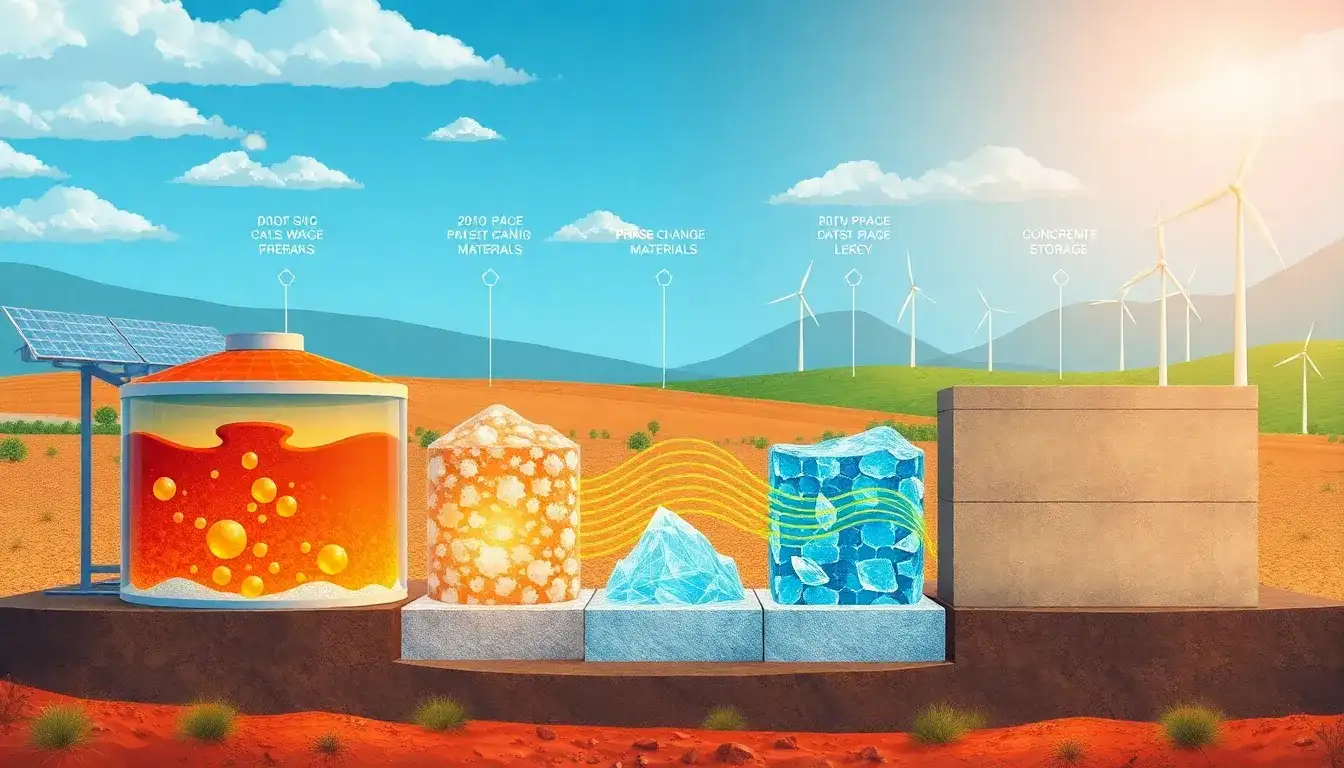
Comparison of Molten Salt Thermal Energy Storage (TES) with Other Methods
Key Advantages of Molten Salt TES
- Energy density: 40–110 kWh/ton and 75–200 kWh/m³, suitable for large-scale concentrated solar power (CSP) plants.
- Temperature range: Operates between 150°C–560°C, enabling steam generation for conventional turbines.
- Lifetime: Lasts 20+ years with 10,000+ cycles.
- Cost: Storage costs range from 15–25 €/kWhth, dramatically lower than lithium-ion batteries (33× cheaper per stored kWh).
- Efficiency: 90–99% thermal efficiency.
Comparison to Other Technologies
Liquid Air Energy Storage (LAES)
- Pros: High energy density and low environmental impact.
- Cons: Lower efficiency and complex infrastructure requirements.
Liquid Nitrogen Engines (LNE)
- Pros: High efficiency for low-power applications.
- Cons: Requires high-pressure tanks and limited scalability.
Dual-Tank vs. Single-Tank Molten Salt
Molten salt systems achieve 100% more heat storage per unit volume than dual-tank configurations due to reduced infrastructure costs.
Applications
- Best for: Utility-scale CSP plants, industrial heat storage (>150°C).
- Less suitable: Urban or small-scale applications where lower temperatures or portability are required.
While molten salt remains optimal for CSP, emerging technologies like LAES fill niches in urban environments, underscoring the need for application-specific TES solutions.
Original article by NenPower, If reposted, please credit the source: https://nenpower.com/blog/how-does-molten-salt-compare-to-other-thermal-energy-storage-methods/

